An independent Canadian knowledge project

Focused and Verified

Canadian knowledge base

Search by keyword

Choose one keyword, or combine two. Broader keywords include their descendants.

Keywords: Military service and remembrance

Clear search
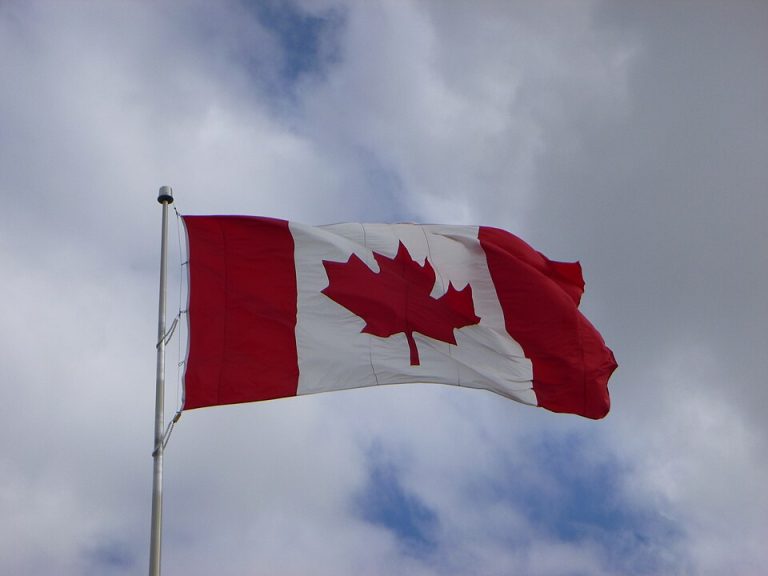
The Canadian flag photographed in 2017, used as an illustration of national identity.
CA-K1839Citizenship Test

Canada’s air training and wartime contribution

During the Second World War, Canada was a major centre of Allied aircrew training through the British Commonwealth Air Training Plan. The guide presents this alongside the Battle of Britain, the Atlantic convoys and the liberation of Europe.

Factual accuracy review: No recorded challenge

Contributor: Citizen.ca

Verified against cited sourcesVerified on 2026-11-01↗
Photo: William B. Grice · Photo licence: CC BY-SA 4.0 · Credit & context
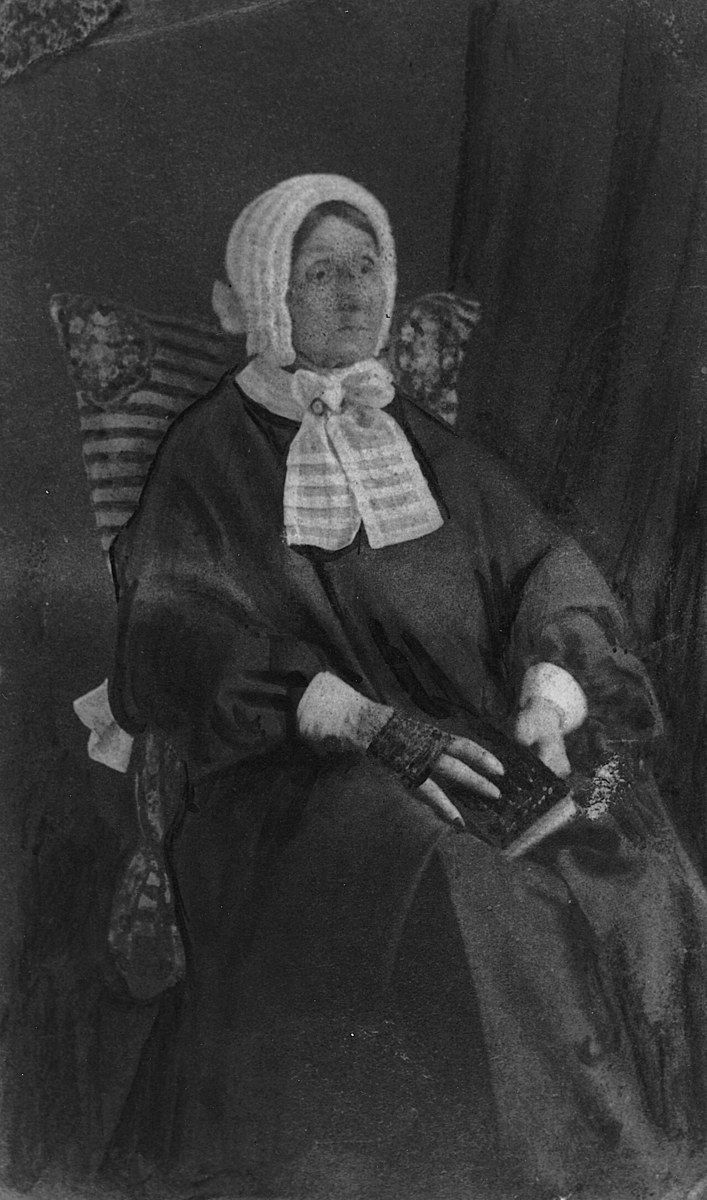
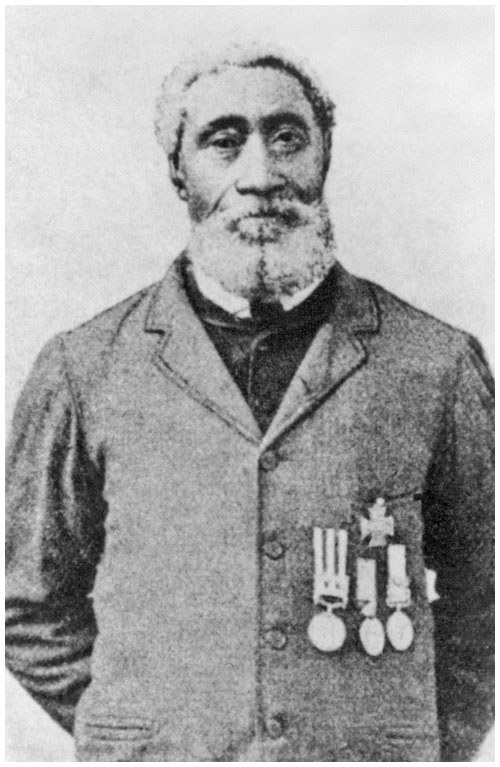
Laura Secord in her later years, around 1865 (McCord Museum).
CA-K1828Citizenship Test

The War of 1812 and the defence of British North America

British forces, First Nations allies and local volunteers resisted American invasions during the War of 1812. The guide highlights Isaac Brock, Tecumseh, Charles de Salaberry and Laura Secord as important figures.

Factual accuracy review: No recorded challenge

Contributor: Citizen.ca

Verified against cited sourcesVerified on 2026-11-01↗
Photo: Anonymous (photographer unidentified) · Photo licence: Public domain · Credit & context
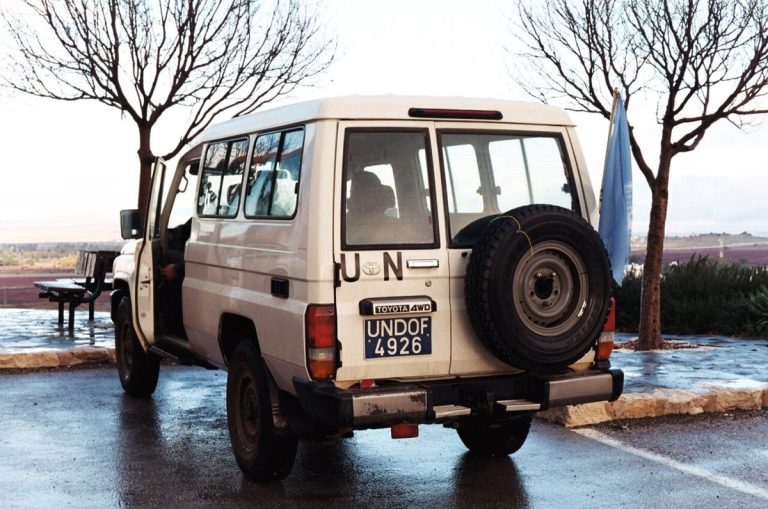
A vehicle of the United Nations Disengagement Observer Force in the Golan Heights.
CA-K1378History

Canadian peacekeepers in the Golan Heights, since 1974

Canada has kept a peacekeeping presence in the Golan Heights of Syria since 1974, when it joined the United Nations Disengagement Observer Force after the Yom Kippur War. It is one of Canada’s longest-running international commitments, and more than 12,000 Canadians have served there.

Factual accuracy review: No recorded challenge

Contributor: Citizen.ca

Verified against cited sourcesVerified on 2026-10-27↗
Photo: Spaceboyjosh · Photo licence: CC BY-SA 4.0 · Credit & context
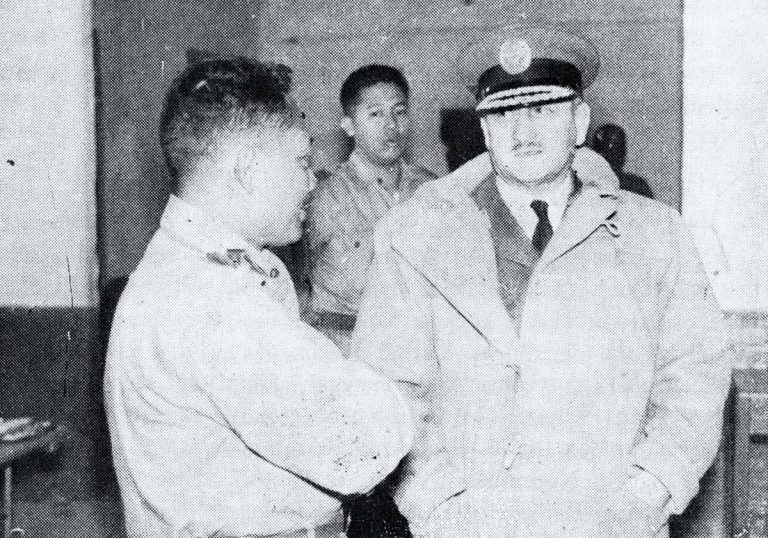
Major-General E.L.M. Burns, commander of the UN Emergency Force, 1957.
CA-K1375History

Canadian peacekeepers in Egypt and the Suez Crisis

During the Suez Crisis of 1956, Canadian diplomat Lester B. Pearson proposed a peacekeeping force, and the United Nations launched its first large-scale peacekeeping mission, the United Nations Emergency Force, commanded by Canada’s Major-General E.L.M. “Tommy” Burns. Canadians served with UN troops in Egypt from 1956 to 1967 and again from 1973 to 1979; Pearson received the 1957 Nobel Peace Prize.

Factual accuracy review: No recorded challenge

Contributor: Citizen.ca

Verified against cited sourcesVerified on 2026-10-27↗
Photo: Indonesian Ministry of Information and the Information Department of the Indonesian Army · Photo licence: Public domain · Credit & context
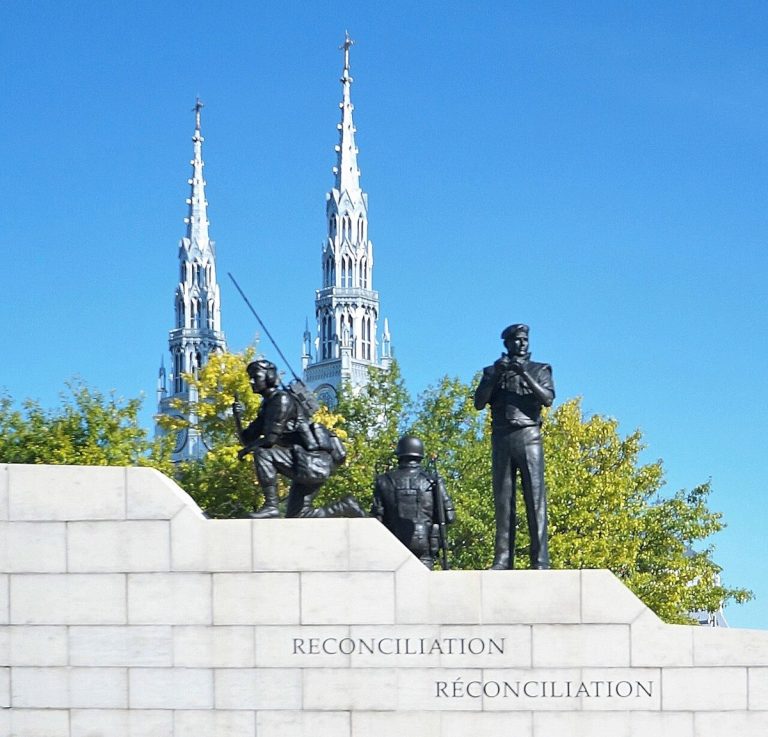
Reconciliation: The Peacekeeping Monument, Ottawa.
CA-K1374History

Canada and international peacekeeping

Members of the Canadian Armed Forces have served in dozens of peacekeeping efforts with the United Nations, NATO and other multinational operations. Peacekeepers are neutral international troops sent to countries in turmoil to reduce tensions and restore peace, monitoring ceasefires, patrolling buffer zones, clearing landmines and providing humanitarian aid.

Factual accuracy review: No recorded challenge

Contributor: Citizen.ca

Verified against cited sourcesVerified on 2026-10-27↗
Photo: Pierre André Leclercq · Photo licence: CC BY 4.0 · Credit & context
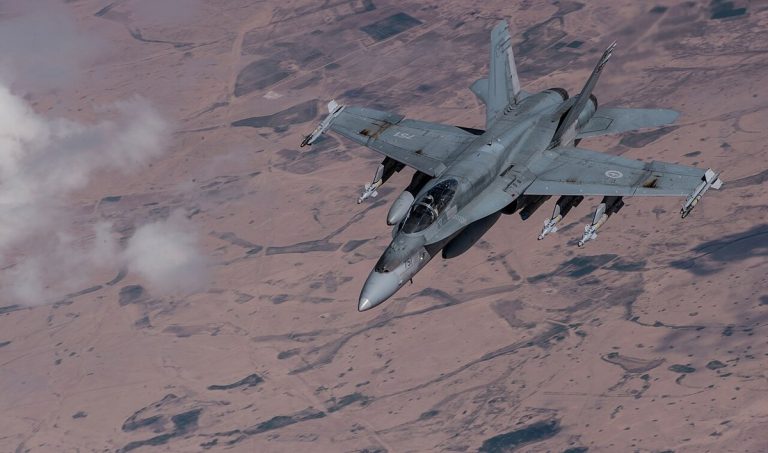
A Royal Canadian Air Force CF-188 Hornet during coalition operations against Daesh, March 2015.
CA-K1370History

Canada against Daesh in Iraq and Syria: Operation IMPACT

Operation IMPACT began as the Canadian Armed Forces’ support to the Global Coalition formed in 2014 to degrade and defeat Daesh in Iraq and Syria. Canadian CF-18 Hornets flew 1,378 sorties between October 30, 2014, and February 15, 2016. The mission then focused on training and building the military capabilities of Iraq, Jordan and Lebanon.

Factual accuracy review: No recorded challenge

Contributor: Citizen.ca

Verified against cited sourcesVerified on 2026-10-27↗
Photo: Staff Sgt. Perry Aston · Photo licence: Public domain · Credit & context
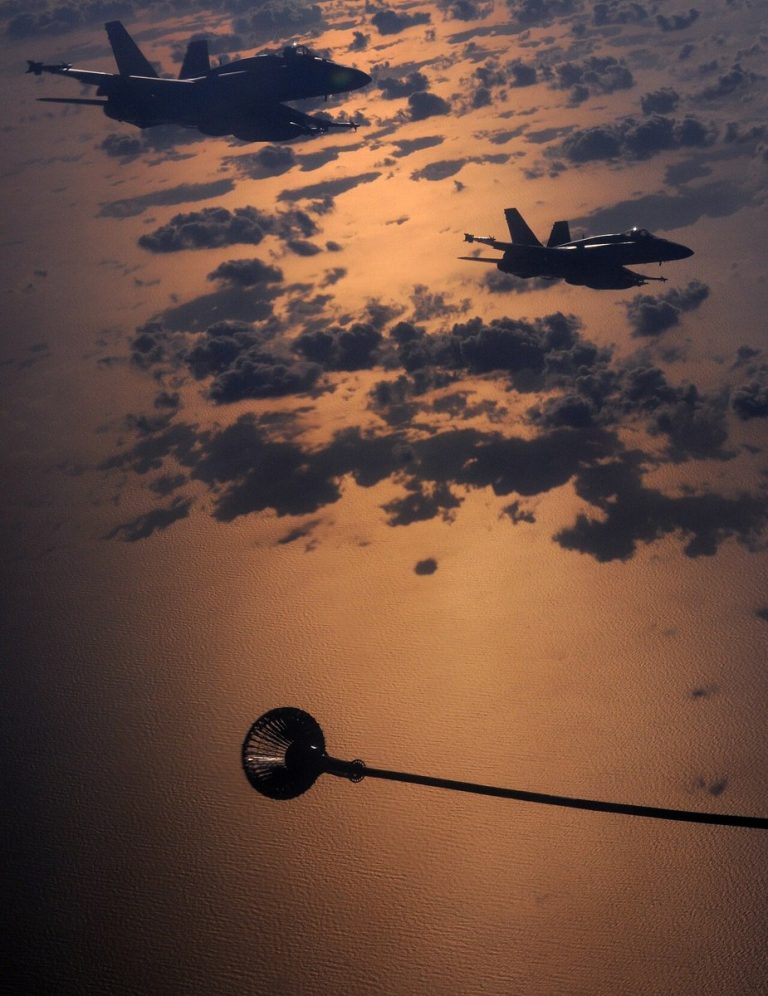
Canadian CF-18s waiting to refuel from a Royal Air Force tanker over Libya, July 2011.
CA-K1369History

Canada in Libya, 2011

In 2011 Canada took part in the NATO-led Operation Unified Protector in Libya through Operation Mobile. It began in February with the evacuation of Canadians and other foreign nationals, then, after the UN Security Council imposed a no-fly zone on 17 March, became a combat operation involving naval ships and fighter, transport, patrol, helicopter and refuelling aircraft. It ended on October 31, 2011, after Gadhafi’s death.

Factual accuracy review: No recorded challenge

Contributor: Citizen.ca

Verified against cited sourcesVerified on 2026-10-27↗
Photo: SAC Sally Raimondo / MOD · Photo licence: OGL v1.0 · Credit & context
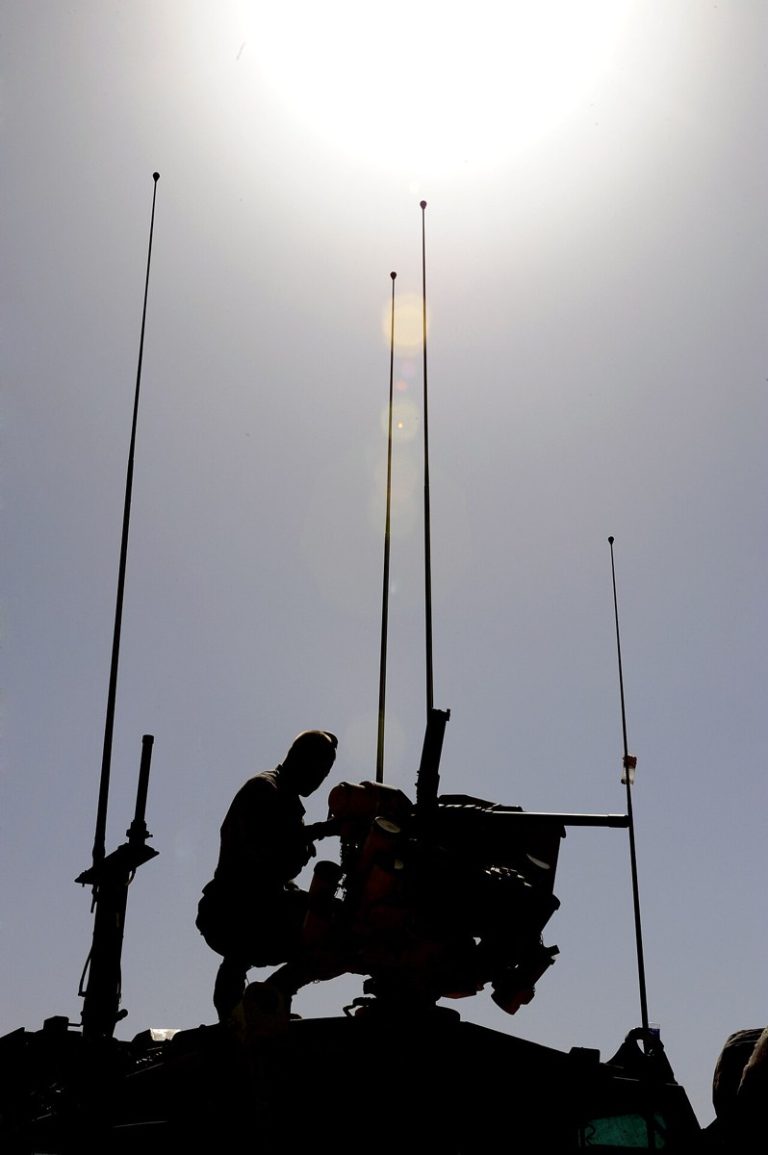
Canadian soldiers and RG-31 vehicles in Afghanistan, October 2008.
CA-K1368History

Canada in Afghanistan, 2001–2014

After the attacks of 11 September 2001, Canada joined the international coalition against the Taliban regime in Afghanistan, which had sheltered Al-Qaeda. More than 40,000 Canadians served there, the largest deployment of Canadian troops since the Second World War, in a conflict that lasted more than 12 years, the longest in Canada’s history. Canada led Operation MEDUSA, its largest combat operation since the Korean War.

Factual accuracy review: No recorded challenge

Contributor: Citizen.ca

Verified against cited sourcesVerified on 2026-10-27↗
Photo: ISAF photo by U.S. Air Force TSgt Laura K. Smith · Photo licence: Public domain · Credit & context
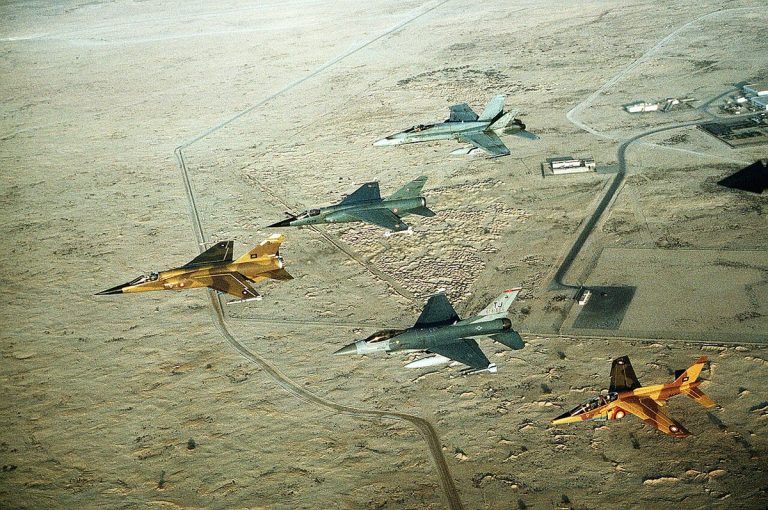
A Canadian CF-18 Hornet flying with coalition fighter jets during Operation Desert Shield.
CA-K1366History

Canada in the Gulf War, 1990–1991

After Iraq invaded Kuwait on 2 August 1990, more than 4,000 Canadians served in the Persian Gulf with a coalition formed to drive Iraqi forces out. Canada’s part, Operation Friction, was mainly warships and aircraft. It was the first conflict in which Canadian women played an active combat role.

Factual accuracy review: No recorded challenge

Contributor: Citizen.ca

Verified against cited sourcesVerified on 2026-10-27↗
Photo: Staff Sgt. Lee Corkran · Photo licence: Public domain · Credit & context
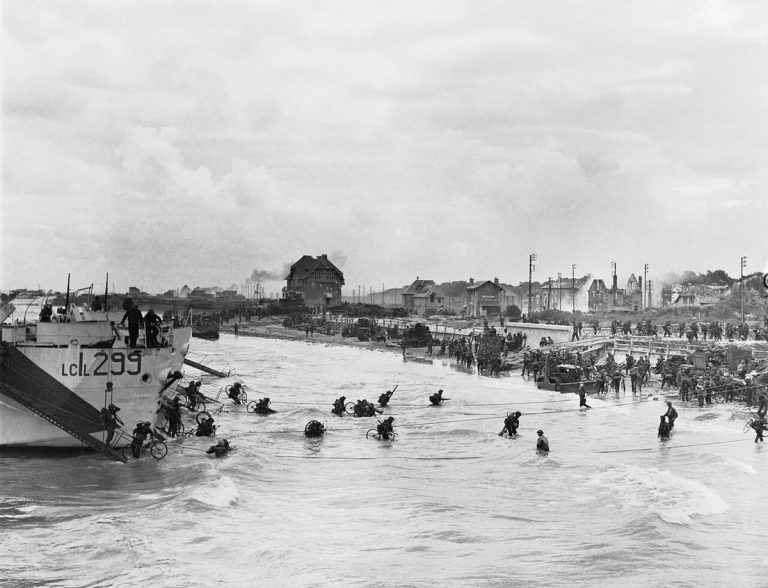
Soldiers of the 9th Canadian Infantry Brigade landing at Juno Beach, 6 June 1944.
CA-K1365History

Canada in the Second World War, 1939–1945

Germany’s invasion of Poland in 1939 began more than six years of fighting on land, at sea and in the air that ended in 1945. More than one million Canadians and Newfoundlanders served in uniform at home and around the world; over 45,000 gave their lives and another 55,000 were wounded.

Factual accuracy review: No recorded challenge

Contributor: Citizen.ca

Verified against cited sourcesVerified on 2026-10-27↗
Photo: Canadian Official photographer · Photo licence: Public domain · Credit & context
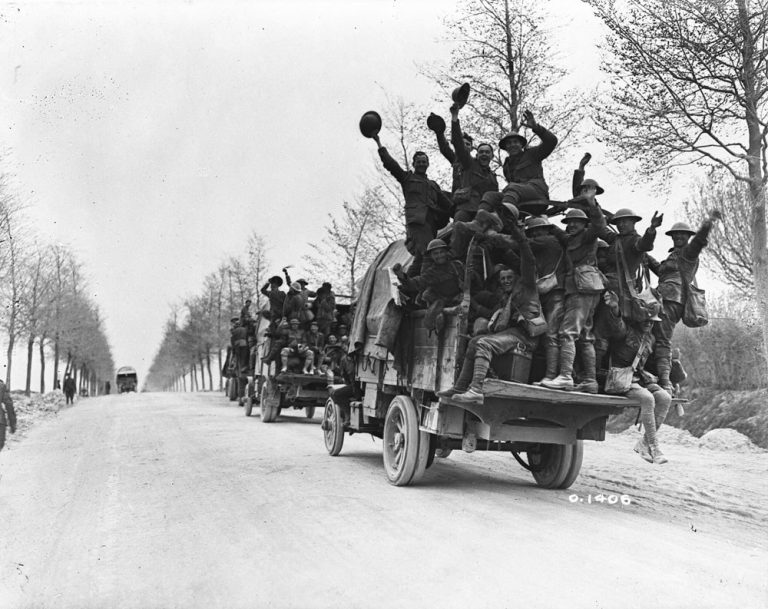
Canadian troops heading for a rest after the capture of Vimy Ridge, May 1917.
CA-K1364History

Canada in the First World War, 1914–1918

When Britain declared war in August 1914, Canada, whose external affairs were still governed by the United Kingdom, was automatically at war. More than 650,000 Canadians and Newfoundlanders served in what was then called the Great War; more than 66,000 died and more than 172,000 were wounded. Canada signed the Treaty of Versailles separately from Britain.

Factual accuracy review: No recorded challenge

Contributor: Citizen.ca

Verified against cited sourcesVerified on 2026-10-27↗
Photo: Castle, W.I. (William Ivor), official Canadian War photographer · Photo licence: Public domain · Credit & context
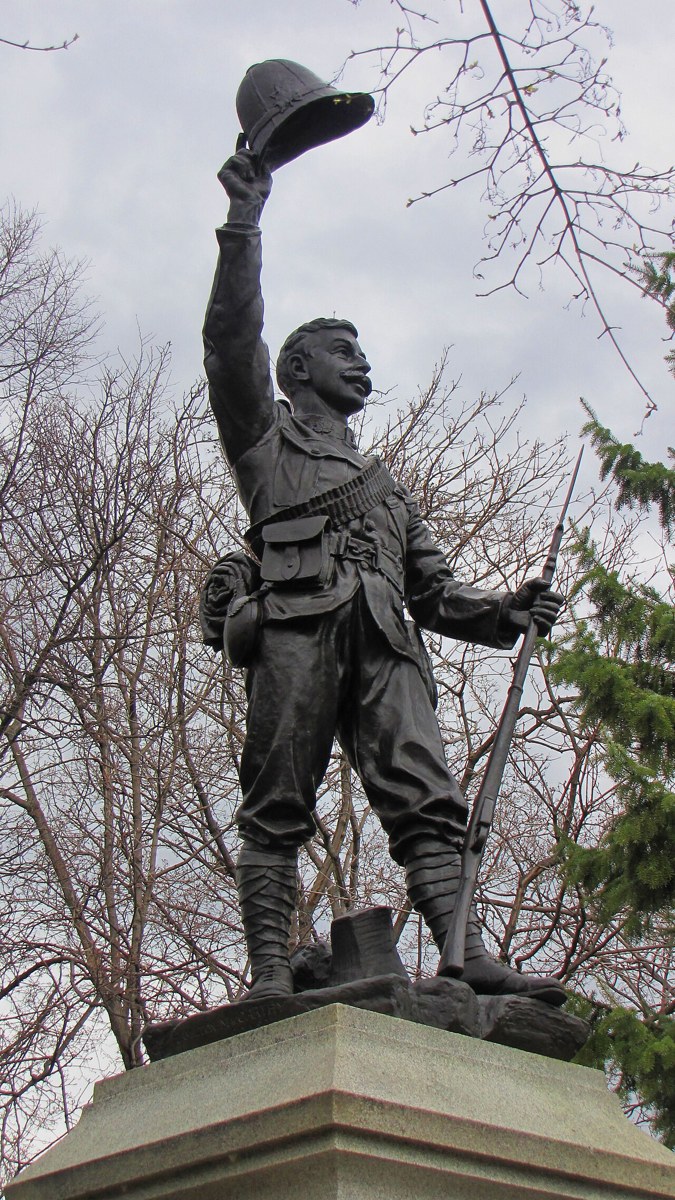
Memorial to soldiers who died in the South African War, by Hamilton MacCarthy, Confederation Park, Ottawa.
CA-K1363History

Canada in the South African War, 1899–1902

The South African War, also known as the Boer War, was fought in southern Africa from 1899 to 1902 between the British Empire and the Boers. More than 7,000 Canadians volunteered to serve alongside British forces, and five earned the Victoria Cross. In February 1900 Canadians played an important role at Paardeberg, the first major British victory of the war.

Factual accuracy review: No recorded challenge

Contributor: Citizen.ca

Verified against cited sourcesVerified on 2026-10-27↗
Photo: D. Gordon E. Robertson · Photo licence: CC BY-SA 3.0 · Credit & context
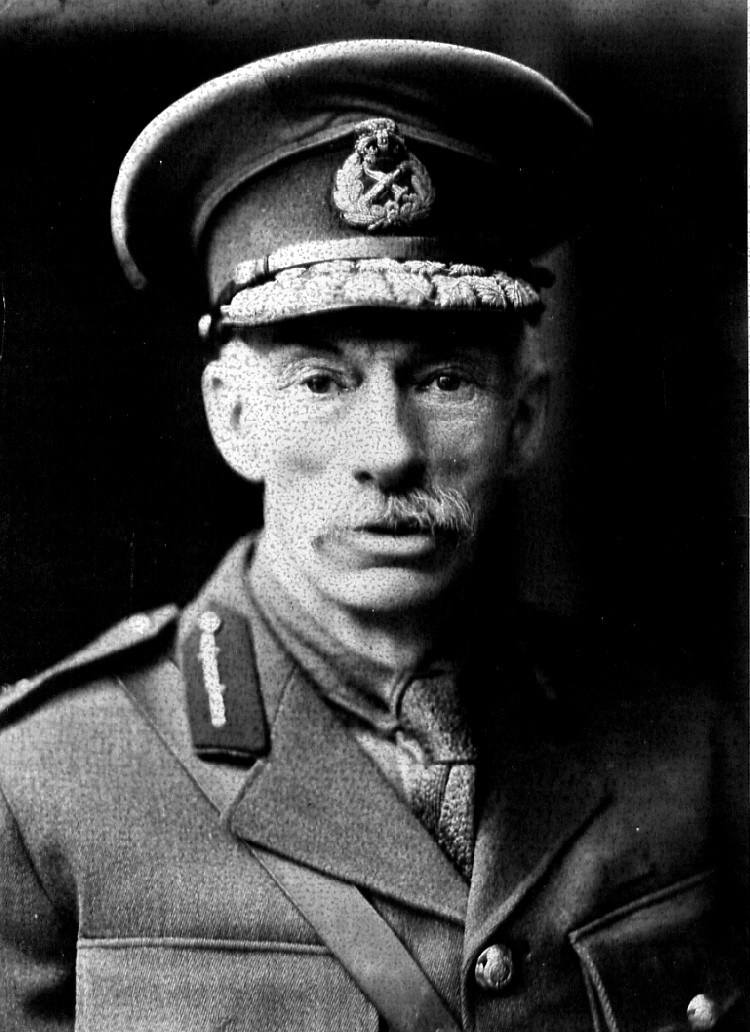
Brigadier-General Ernest Alexander Cruikshank.
CA-K965Institutions

E.A. Cruikshank, soldier and historian

Ernest Alexander Cruikshank, born in Bertie Township, Ontario, was a journalist and translator before joining the militia in 1877, rising to brigadier-general in 1915 and directing the general staff’s historical section. He chaired the Historic Sites and Monuments Board of Canada from its creation in 1919 until his death, and wrote many papers and books on Ontario and Canadian history.

Factual accuracy review: No recorded challenge

Contributor: Citizen.ca

Verified against cited sourcesVerified on 2026-10-27↗
Photo: Unknown author · Photo licence: Public domain · Credit & context
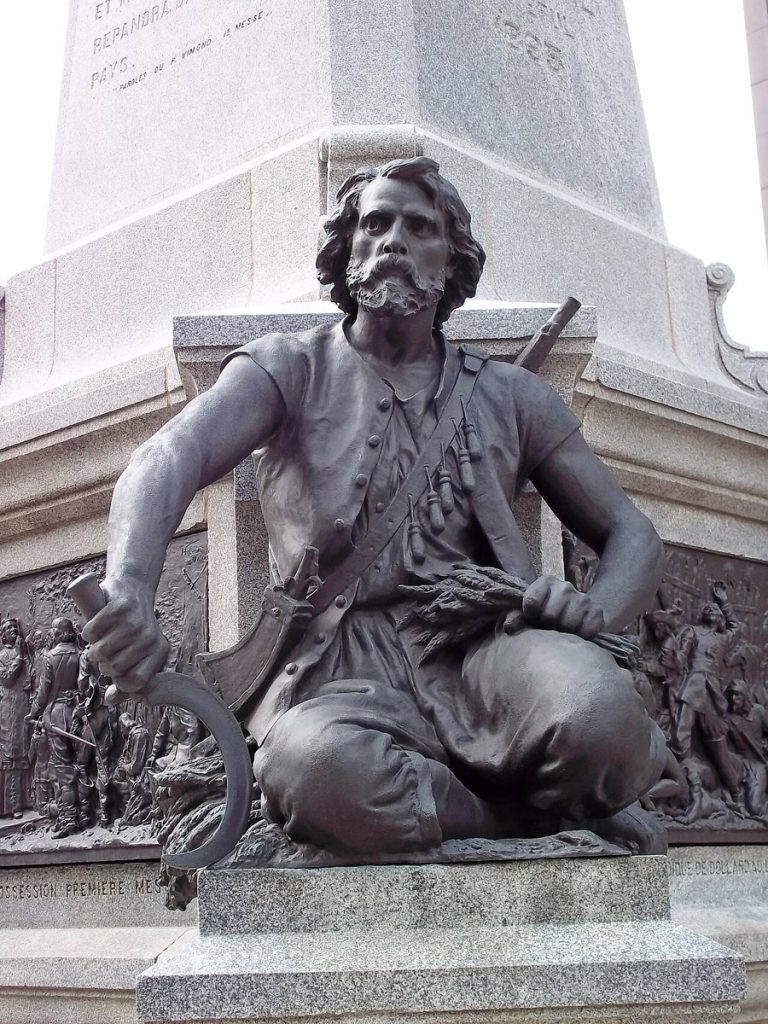
Charles Le Moyne on the Maisonneuve Monument, Place d’Armes, Montréal.
CA-K939History

Charles Le Moyne and his family

Charles Le Moyne de Longueuil et de Châteauguay (1626–1685), soldier, trader and first seigneur of Longueuil, founded a family prominent in the military, commercial and administrative life of New France, ennobled by Louis XIV. His Canadian-born sons, including d’Iberville, de Sainte-Hélène and de Bienville, fought France’s enemies across North America on land and sea and served as colonizers and administrators.

Factual accuracy review: No recorded challenge

Contributor: Citizen.ca

Verified against cited sourcesVerified on 2026-10-27↗
Photo: Jean Gagnon · Photo licence: CC BY-SA 3.0 · Credit & context
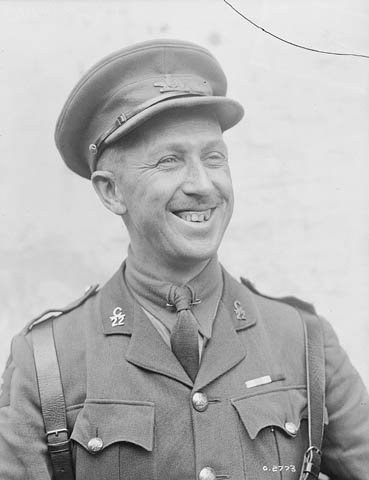
Major Georges P. Vanier, 22nd Battalion, 1918.
CA-K913History

Georges Vanier, soldier, diplomat and Governor General

Georges Vanier helped found the Royal 22e Régiment, served with it in the First World War and commanded it from 1925 to 1928. He represented Canada at the League of Nations, in London and in Paris, becoming Canada’s first ambassador to France in 1944. As Governor General from 1959 to 1967, the first French Canadian in that role since Confederation, he devoted himself to national unity.

Factual accuracy review: No recorded challenge

Contributor: Citizen.ca

Verified against cited sourcesVerified on 2026-10-27↗
Photo: Canada. Dept. of National Defence. Unknown photographer. · Photo licence: Public domain · Credit & context
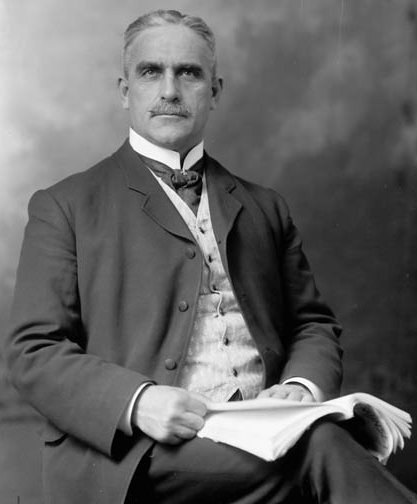
Col. Sam Hughes, 1905 (William James Topley).
CA-K801History

Sir Sam Hughes, Minister of Militia

Sam Hughes, soldier, journalist and Member of Parliament for Lindsay from 1892 to 1921, helped create a distinctly Canadian army. As Minister of Militia and Defence from 1911 to 1916, he raised the Canadian Expeditionary Force that fought in the First World War and was knighted, but disputes with colleagues and subordinates forced him from Cabinet in 1916.

Factual accuracy review: No recorded challenge

Contributor: Citizen.ca

Verified against cited sourcesVerified on 2026-10-26↗
Photo: William James Topley · Photo licence: Public domain · Credit & context
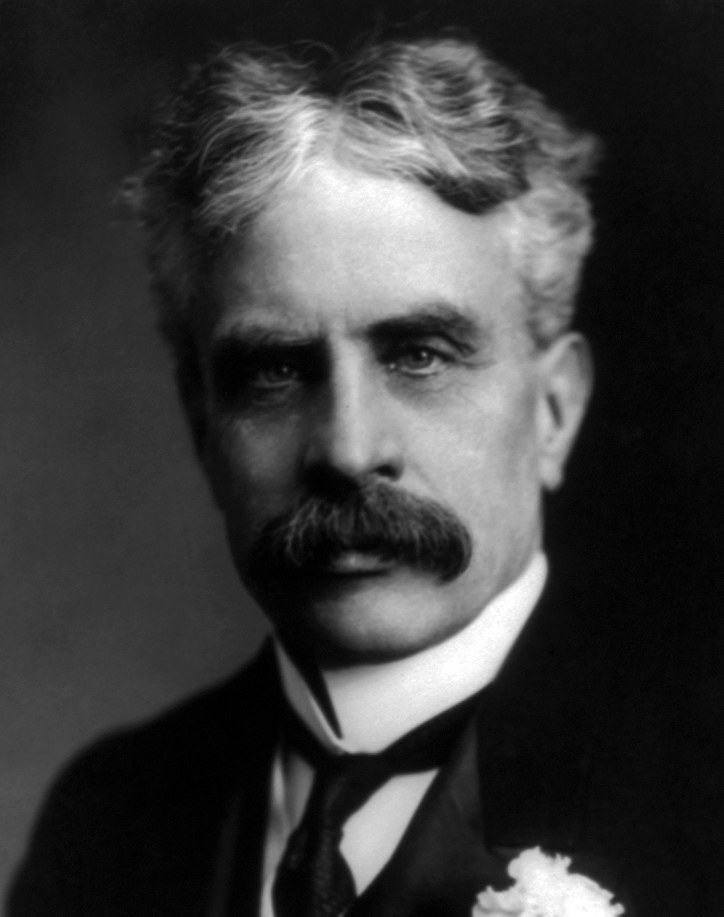
Sir Robert Borden, 1911 (Notman studio).
CA-K784History

Sir Robert Borden, wartime prime minister

Sir Robert Borden, born at Grand-Pré, Nova Scotia, led the Conservative Party from 1901 and was Prime Minister from 1911 to 1920. He guided Canada through the First World War, imposed conscription for overseas service in 1917 and formed a Union government of Liberals and Conservatives. He is remembered above all for insisting that Canada act as an autonomous nation in international diplomacy.

Factual accuracy review: No recorded challenge

Contributor: Citizen.ca

Verified against cited sourcesVerified on 2026-10-26↗
Photo: Notman, Boston · Photo licence: Public domain · Credit & context
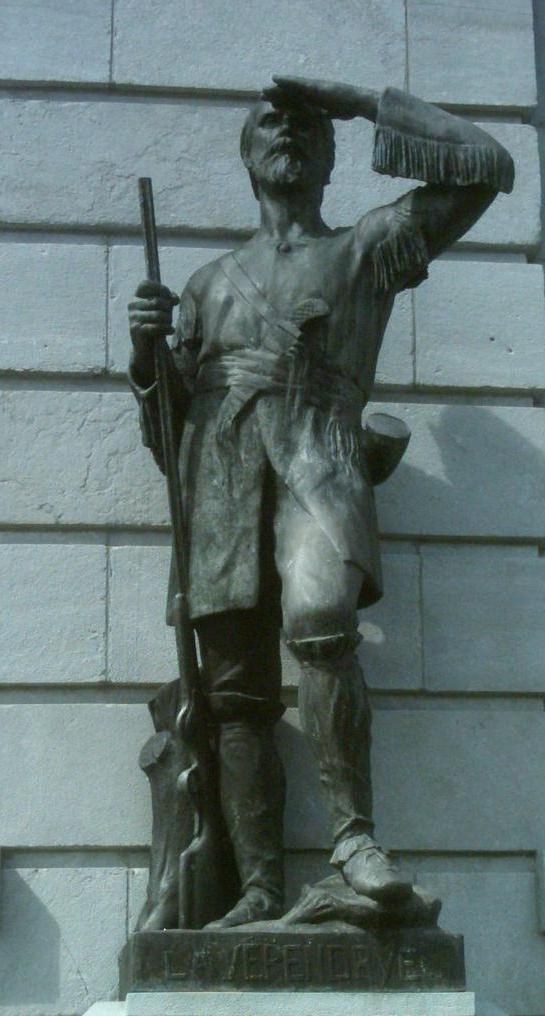
Statue of La Vérendrye on the façade of the Parliament Building, Québec City.
CA-K759Places & geography

La Vérendrye and the posts of the West

Pierre Gaultier de La Vérendrye of Trois-Rivières, soldier, trader and explorer, founded with his sons between 1731 and 1743 a series of posts beyond Lake Superior that became bases for French exploration of the West. They included Forts Saint-Pierre, Rouge and La Reine, at today’s Fort Frances, Winnipeg and Portage la Prairie.

Factual accuracy review: No recorded challenge

Contributor: Citizen.ca

Verified against cited sourcesVerified on 2026-10-26↗
Photo: sculpteur:Jean Bailleul / photo: Jean Gagnon · Photo licence: CC BY-SA 3.0 · Credit & context
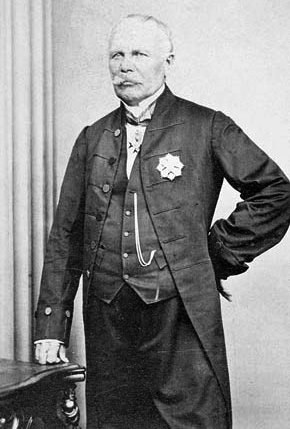
Sir Étienne-Paschal Taché (J.-I. Benoît, Library and Archives Canada).
CA-K702History

Sir Étienne-Paschal Taché, who presided at the Québec Conference

Étienne-Paschal Taché of Montmagny, a physician and soldier who fought at Châteauguay and Plattsburgh in the War of 1812, sat in the legislature and Legislative Council of the Province of Canada. In 1864 he headed the Taché–Macdonald coalition, presided at the Québec Conference and sponsored the Québec Resolutions in the Legislative Council.

Factual accuracy review: No recorded challenge

Contributor: Citizen.ca

Verified against cited sourcesVerified on 2026-10-26↗
Photo: Jules-Isaïe Benoît · Photo licence: Public domain · Credit & context
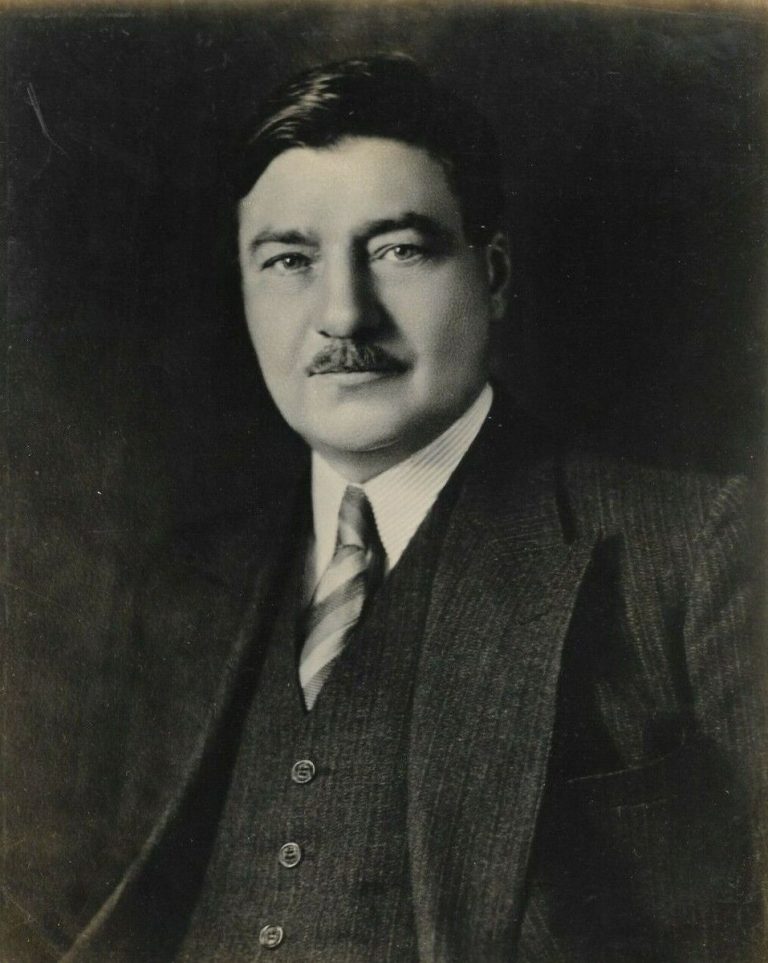
Charles Gavan Power, between 1936 and 1942.
CA-K675History

“Chubby” Power and the wartime RCAF

Charles Gavan “Chubby” Power, a First World War veteran and longtime Quebec MP, was Minister of National Defence for Air from 1940 to 1944. He oversaw wartime RCAF expansion, supported distinct Canadian squadrons, helped establish the Air Cadets and advanced the British Commonwealth Air Training Plan, which trained more than 130,000 Allied aircrew in Canada.

Factual accuracy review: No recorded challenge

Contributor: Citizen.ca

Verified against cited sourcesVerified on 2026-10-26↗
Photo: Canadian Government Motion Picture Bureau · Photo licence: Public domain · Credit & context