An independent Canadian knowledge project

Focused and Verified

Canadian knowledge base

Search by keyword

Choose one keyword, or combine two. Broader keywords include their descendants.

Keywords: Themes, values and contributions

Clear search
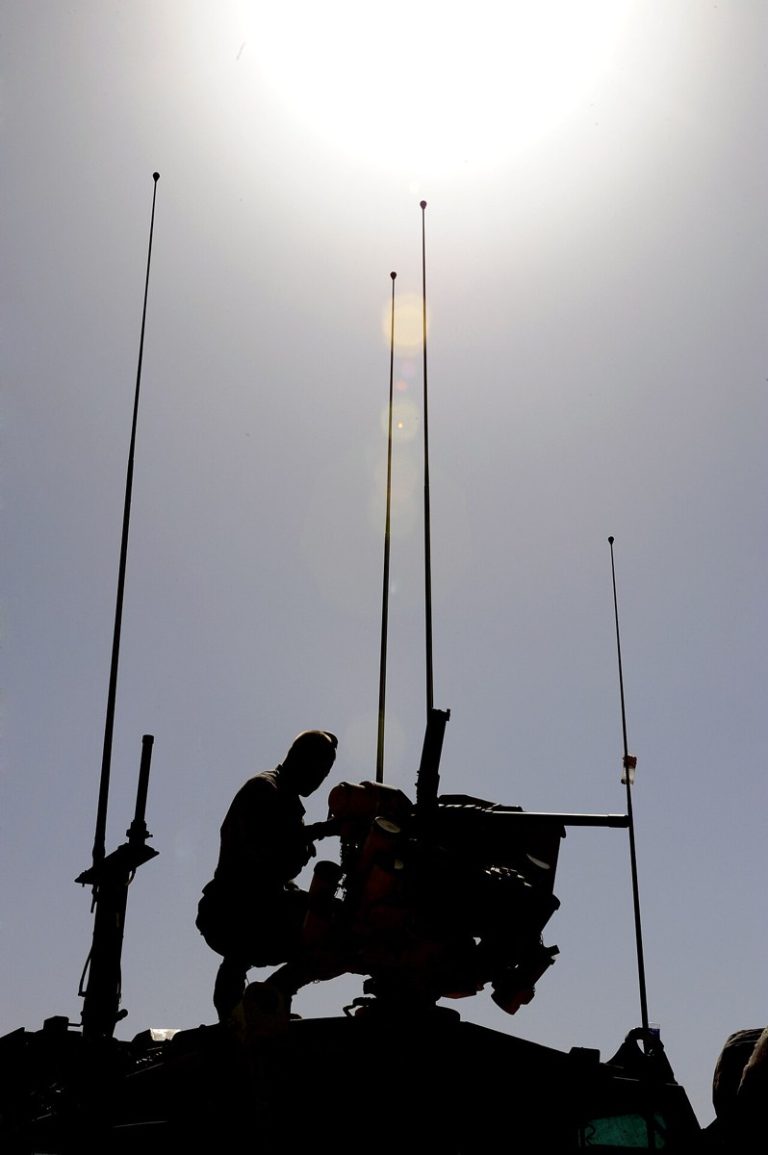
Canadian soldiers and RG-31 vehicles in Afghanistan, October 2008.
CA-K1368History

Canada in Afghanistan, 2001–2014

After the attacks of 11 September 2001, Canada joined the international coalition against the Taliban regime in Afghanistan, which had sheltered Al-Qaeda. More than 40,000 Canadians served there, the largest deployment of Canadian troops since the Second World War, in a conflict that lasted more than 12 years, the longest in Canada’s history. Canada led Operation MEDUSA, its largest combat operation since the Korean War.

Factual accuracy review: No recorded challenge

Contributor: Citizen.ca

Verified against cited sourcesVerified on 2026-10-27↗
Photo: ISAF photo by U.S. Air Force TSgt Laura K. Smith · Photo licence: Public domain · Credit & context
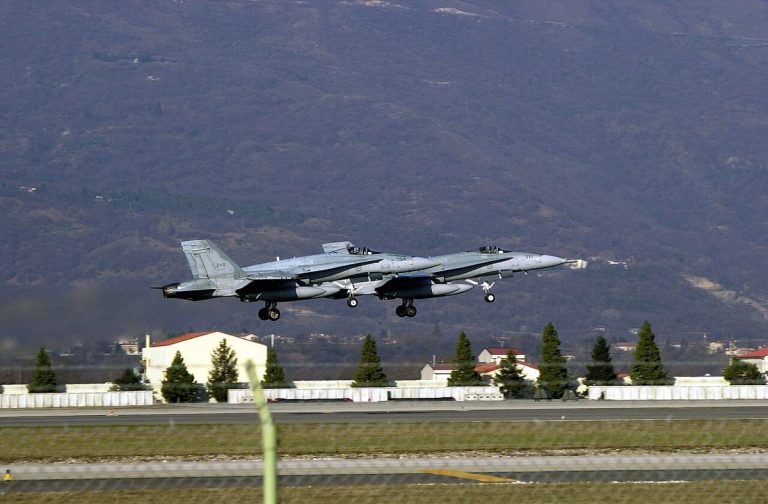
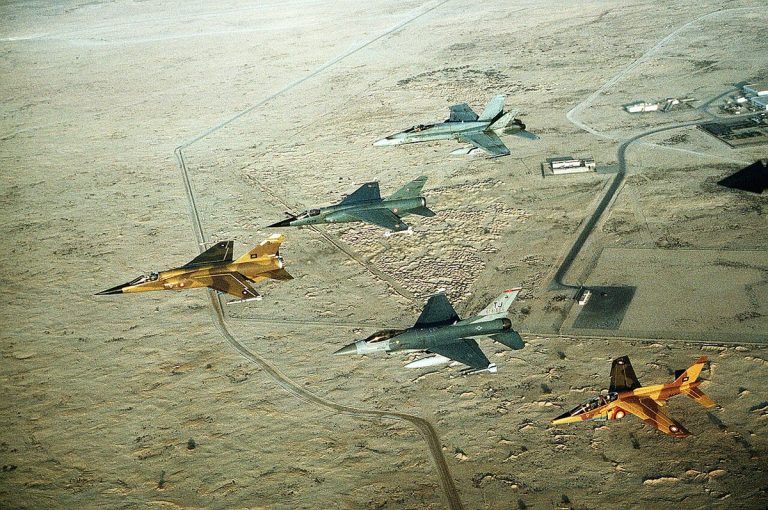
Canadian CF-18 aircraft departing Aviano Air Base, Italy, after supporting Operations Allied Force and Echo; photographed in December 2000.
CA-K1367History

Canada in the Kosovo air campaign, 1999

In 1999 Canadian CF-18 pilots flew combat missions in NATO’s 79-day air campaign over Kosovo, Operation ALLIED FORCE, which ran from March to June 1999 to end violence and repression in Kosovo. Canada’s part, Operation Echo, had begun in June 1998 when CF-18 Hornets deployed to Aviano, Italy.

Factual accuracy review: No recorded challenge

Contributor: Citizen.ca

Verified against cited sourcesVerified on 2026-10-27↗
Photo: Staff Sgt. Jennifer C. Wallis, U.S. Air Force · Photo licence: Public domain · Credit & context
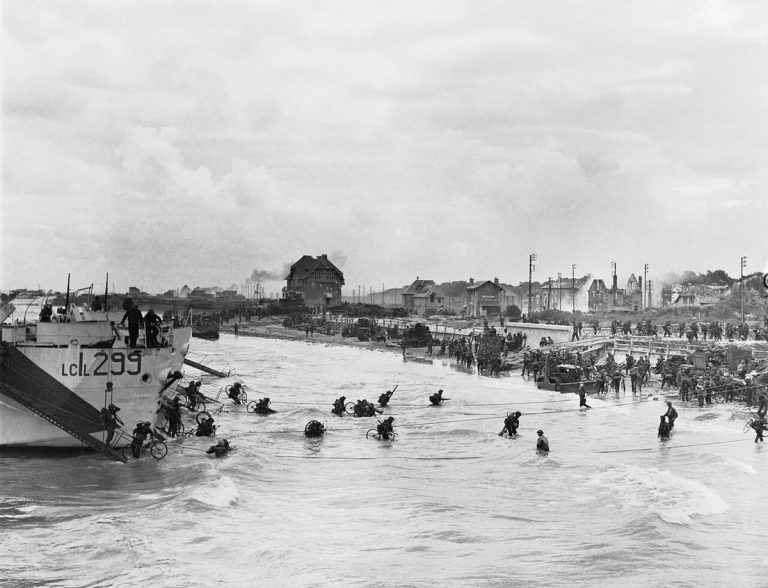
A Canadian CF-18 Hornet flying with coalition fighter jets during Operation Desert Shield.
CA-K1366History

Canada in the Gulf War, 1990–1991

After Iraq invaded Kuwait on 2 August 1990, more than 4,000 Canadians served in the Persian Gulf with a coalition formed to drive Iraqi forces out. Canada’s part, Operation Friction, was mainly warships and aircraft. It was the first conflict in which Canadian women played an active combat role.

Factual accuracy review: No recorded challenge

Contributor: Citizen.ca

Verified against cited sourcesVerified on 2026-10-27↗
Photo: Staff Sgt. Lee Corkran · Photo licence: Public domain · Credit & context
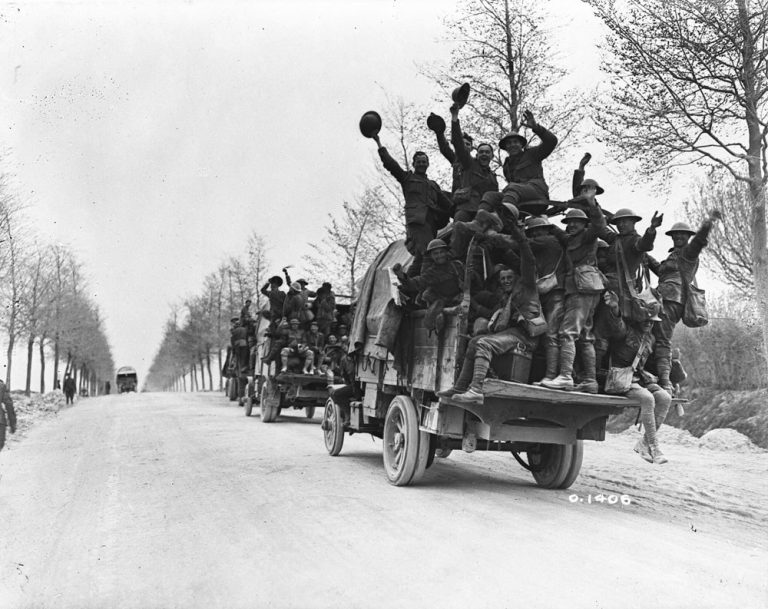
Soldiers of the 9th Canadian Infantry Brigade landing at Juno Beach, 6 June 1944.
CA-K1365History

Canada in the Second World War, 1939–1945

Germany’s invasion of Poland in 1939 began more than six years of fighting on land, at sea and in the air that ended in 1945. More than one million Canadians and Newfoundlanders served in uniform at home and around the world; over 45,000 gave their lives and another 55,000 were wounded.

Factual accuracy review: No recorded challenge

Contributor: Citizen.ca

Verified against cited sourcesVerified on 2026-10-27↗
Photo: Canadian Official photographer · Photo licence: Public domain · Credit & context
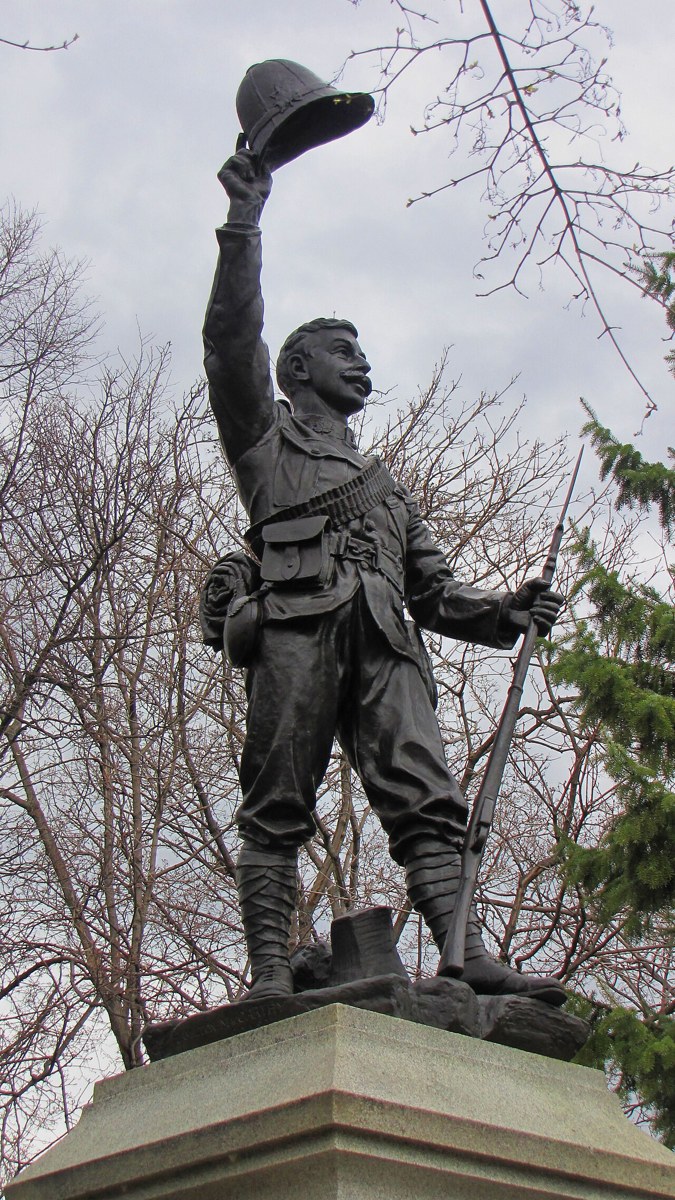
Canadian troops heading for a rest after the capture of Vimy Ridge, May 1917.
CA-K1364History

Canada in the First World War, 1914–1918

When Britain declared war in August 1914, Canada, whose external affairs were still governed by the United Kingdom, was automatically at war. More than 650,000 Canadians and Newfoundlanders served in what was then called the Great War; more than 66,000 died and more than 172,000 were wounded. Canada signed the Treaty of Versailles separately from Britain.

Factual accuracy review: No recorded challenge

Contributor: Citizen.ca

Verified against cited sourcesVerified on 2026-10-27↗
Photo: Castle, W.I. (William Ivor), official Canadian War photographer · Photo licence: Public domain · Credit & context

Memorial to soldiers who died in the South African War, by Hamilton MacCarthy, Confederation Park, Ottawa.
CA-K1363History

Canada in the South African War, 1899–1902

The South African War, also known as the Boer War, was fought in southern Africa from 1899 to 1902 between the British Empire and the Boers. More than 7,000 Canadians volunteered to serve alongside British forces, and five earned the Victoria Cross. In February 1900 Canadians played an important role at Paardeberg, the first major British victory of the war.

Factual accuracy review: No recorded challenge

Contributor: Citizen.ca

Verified against cited sourcesVerified on 2026-10-27↗
Photo: D. Gordon E. Robertson · Photo licence: CC BY-SA 3.0 · Credit & context
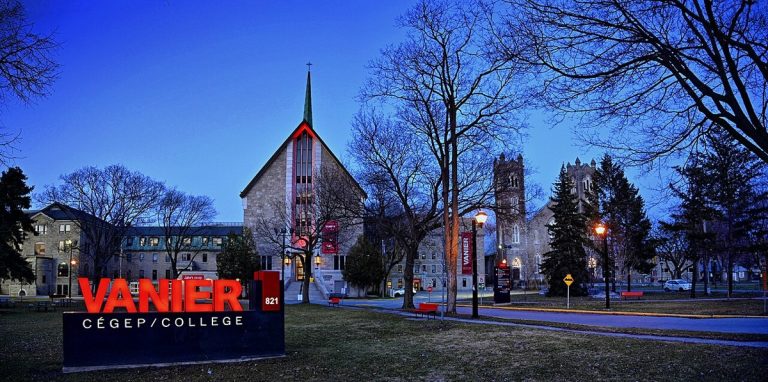
Vanier College, Montréal.
CA-K1244Institutions

Vanier College, Montréal

Vanier College, a publicly funded English-language CEGEP in Montréal, opened on September 8, 1970, welcoming close to 1,400 students in its first cohort. It is named for General Georges P. Vanier, soldier, diplomat and Governor General of Canada.

Factual accuracy review: No recorded challenge

Contributor: Citizen.ca

Verified against cited sourcesVerified on 2026-10-27↗
Photo: Pierre5018 · Photo licence: CC BY-SA 4.0 · Credit & context
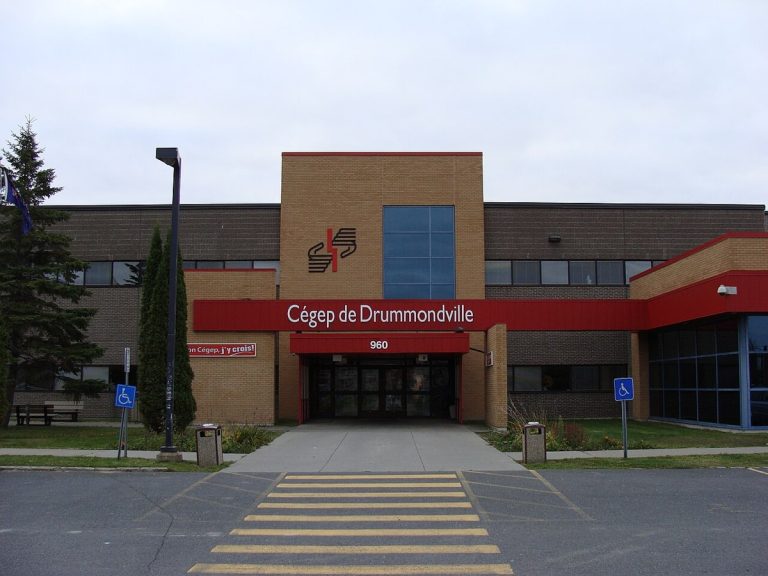
Entrance of the Cégep de Drummondville.
CA-K1242Institutions

Cégep de Drummondville

In 1968 the Collège de Drummondville became the first institution to offer college-level teaching in Drummondville, a year after the CEGEPs were created, with about 500 students. In 1972 the colleges of Drummondville, Saint-Hyacinthe and Sorel were grouped as the Collège régional Bourgchemin, a regional experiment that ended in 1980.

Factual accuracy review: No recorded challenge

Contributor: Citizen.ca

Verified against cited sourcesVerified on 2026-10-27↗
Photo: Khayman · Photo licence: CC BY-SA 3.0 · Credit & context
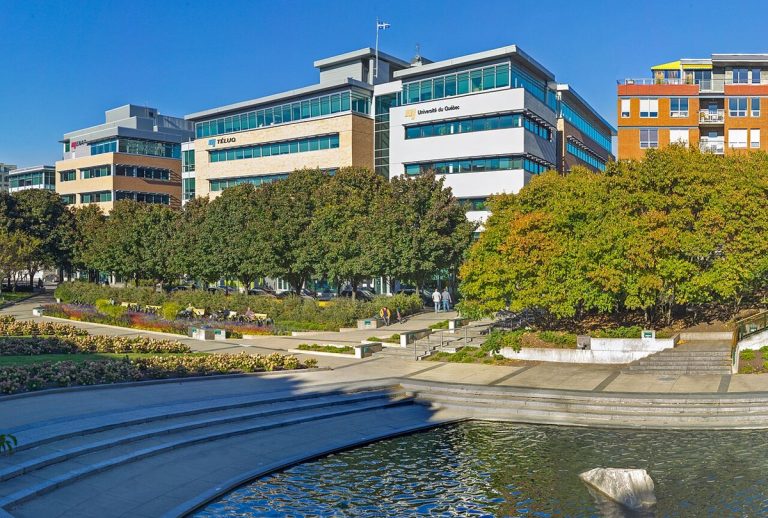
TÉLUQ building, Québec City.
CA-K1227Institutions

Université TÉLUQ, Quebec’s distance-learning university

Université TÉLUQ began in 1972 as an experimental “Télé-université” project to make university studies accessible to as many people as possible. It offered its first course in 1974, an introduction to co-operatives created with Desjardins, and has devoted itself entirely to distance education.

Factual accuracy review: No recorded challenge

Contributor: Citizen.ca

Verified against cited sourcesVerified on 2026-10-27↗
Photo: Dominique Fourcaudot (COMM-TÉLUQ) · Photo licence: CC BY-SA 4.0 · Credit & context
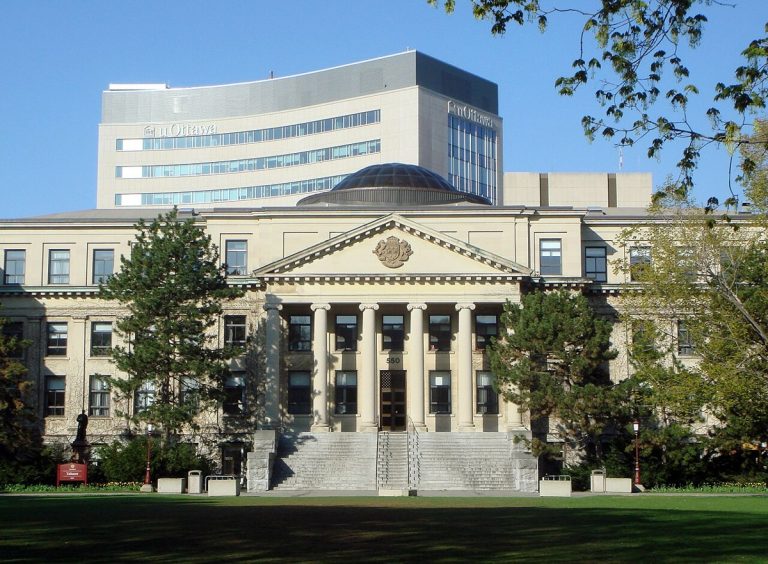
Tabaret Hall, University of Ottawa.
CA-K1224Institutions

University of Ottawa, from the College of Bytown

The University of Ottawa began as the College of Bytown, founded in 1848 by the Oblates of Mary Immaculate as a bilingual Catholic college where students studied in English and French. Renamed the College of Ottawa, it received university status by royal charter in 1866 and a pontifical charter in 1889.

Factual accuracy review: No recorded challenge

Contributor: Citizen.ca

Verified against cited sourcesVerified on 2026-10-27↗
Photo: RobCA · Photo licence: Public domain · Credit & context

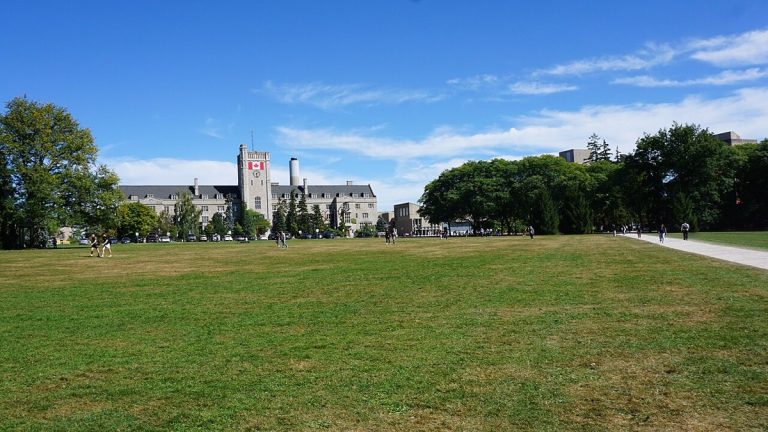
Johnston Green, University of Guelph.
CA-K1223Institutions

University of Guelph

The University of Guelph was established in 1964 from the Ontario Agricultural College, the Ontario Veterinary College and the Macdonald Institute. The agricultural college traces its origins to the Ontario School of Agriculture and Experimental Farm, opened in May 1874.

Factual accuracy review: No recorded challenge

Contributor: Citizen.ca

Verified against cited sourcesVerified on 2026-10-27↗
Photo: JFVoll · Photo licence: CC BY-SA 3.0 · Credit & context