An independent Canadian knowledge project

Focused and Verified

Canadian knowledge base

Search by keyword

Choose one keyword, or combine two. Broader keywords include their descendants.

Keywords: 1800–1899

Clear search
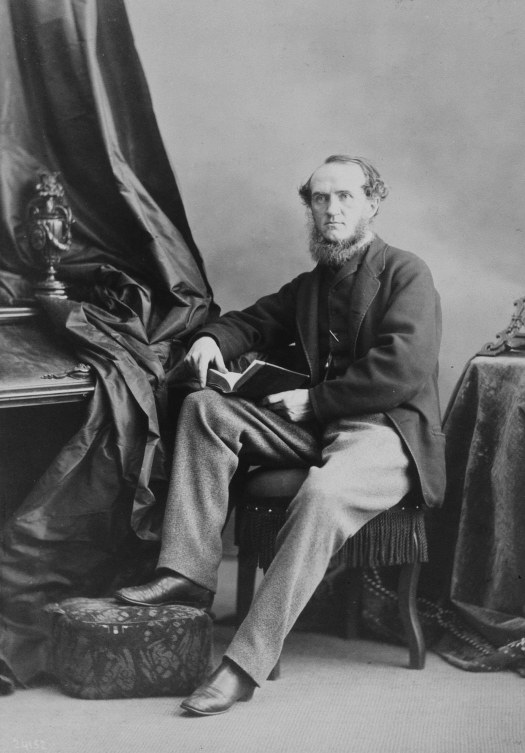
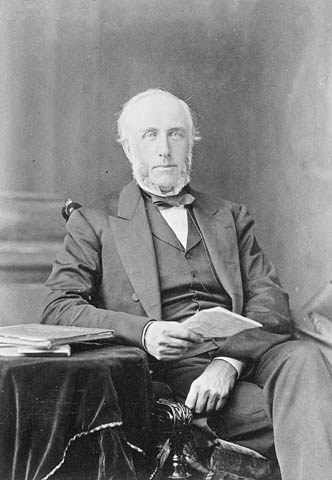
A portrait of George Brown, Father of Confederation.
CA-K277History

George Brown, The Globe and the Great Coalition

George Brown (1818–1880) founded the influential newspaper The Globe in 1844 and became a leading reformer and head of the “Clear Grit” party. In 1864 he was a key figure in the Great Coalition that made Confederation possible, and he co-founded the Anti-Slavery Society of Canada.

Factual accuracy review: No recorded challenge

Contributor: Citizen.ca

Verified against cited sourcesVerified on 2026-10-26↗
Photo: Hunter & Co. · Photo licence: Public domain · Credit & context
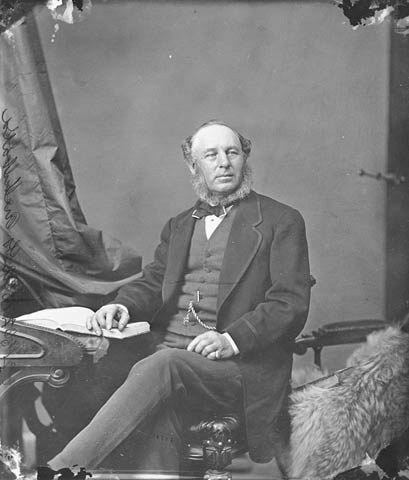
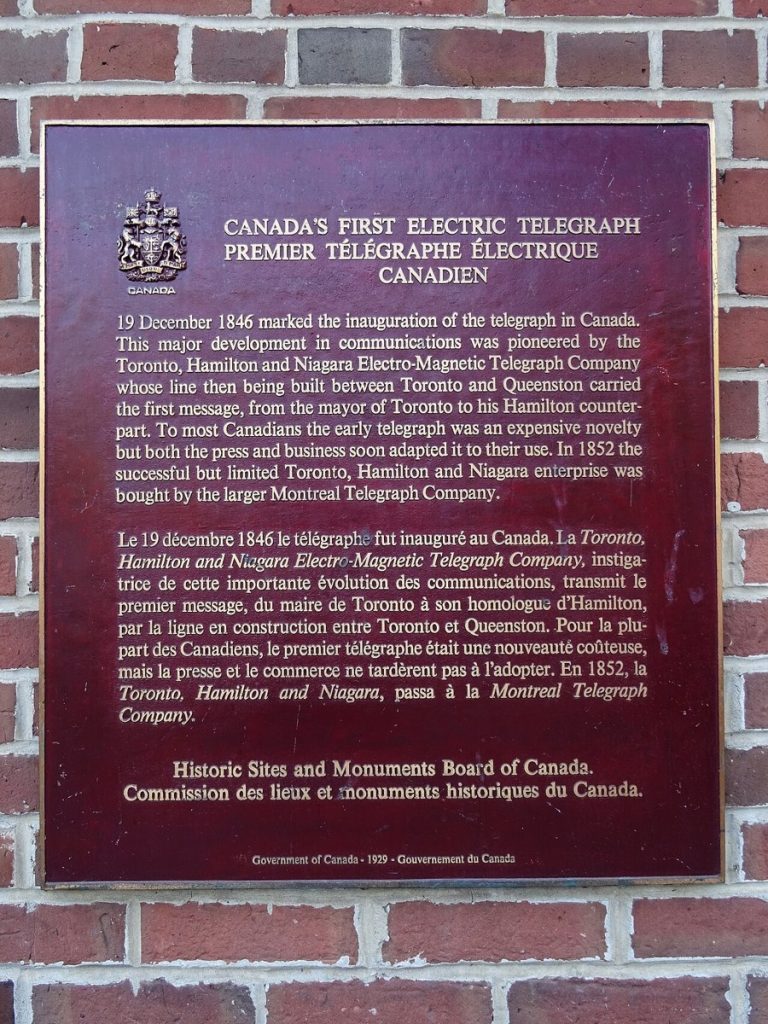
A portrait of Sir Adams George Archibald.
CA-K275Indigenous peoples & reconciliation

Adams Archibald, Métis land rights and Treaties 1 and 2

Adams George Archibald (1814–1892), first lieutenant-governor of Manitoba and the North-West Territories (1870–1872), was charged with administering the Manitoba Act’s guarantee of Métis land rights, which proved difficult amid settler encroachment and while Canadian militia subjected Métis people to a “reign of terror.” In 1871 he represented the Crown in negotiating Treaties 1 and 2, but several promises he made were not written into the treaties.

Factual accuracy review: No recorded challenge

Contributor: Citizen.ca

Verified against cited sourcesVerified on 2026-10-26↗
Photo: User Magnus Manske on en.wikipedia · Photo licence: Public domain · Credit & context
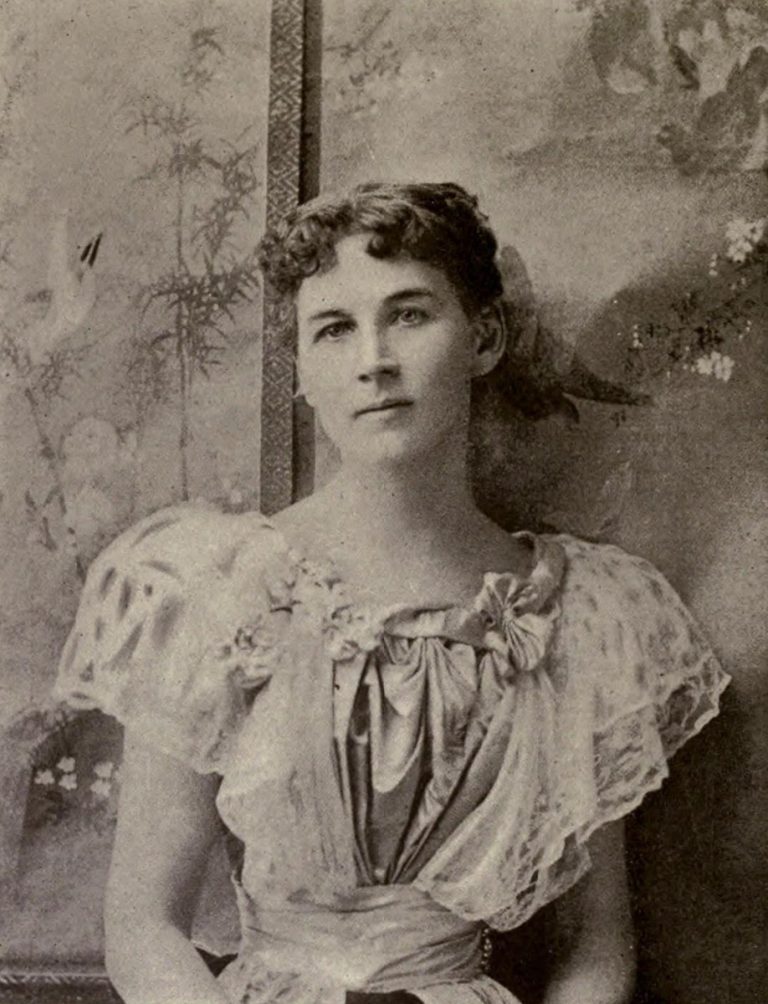
The Historic Sites and Monuments Board plaque for Canada’s First Electric Telegraph in Toronto, photographed in 2018.
CA-K270Economy & trade

Canada’s first electric telegraph, 1846

The telegraph was inaugurated in Canada on 19 December 1846, when the Toronto, Hamilton and Niagara Electro-Magnetic Telegraph Company’s line carried the first message, from the mayor of Toronto to the mayor of Hamilton. At first an expensive novelty, the telegraph was soon adopted by the press and business.

Factual accuracy review: No recorded challenge

Contributor: Citizen.ca

Verified against cited sourcesVerified on 2026-10-26↗
Photo: Spudgun67 · Photo licence: CC BY-SA 4.0 · Credit & context
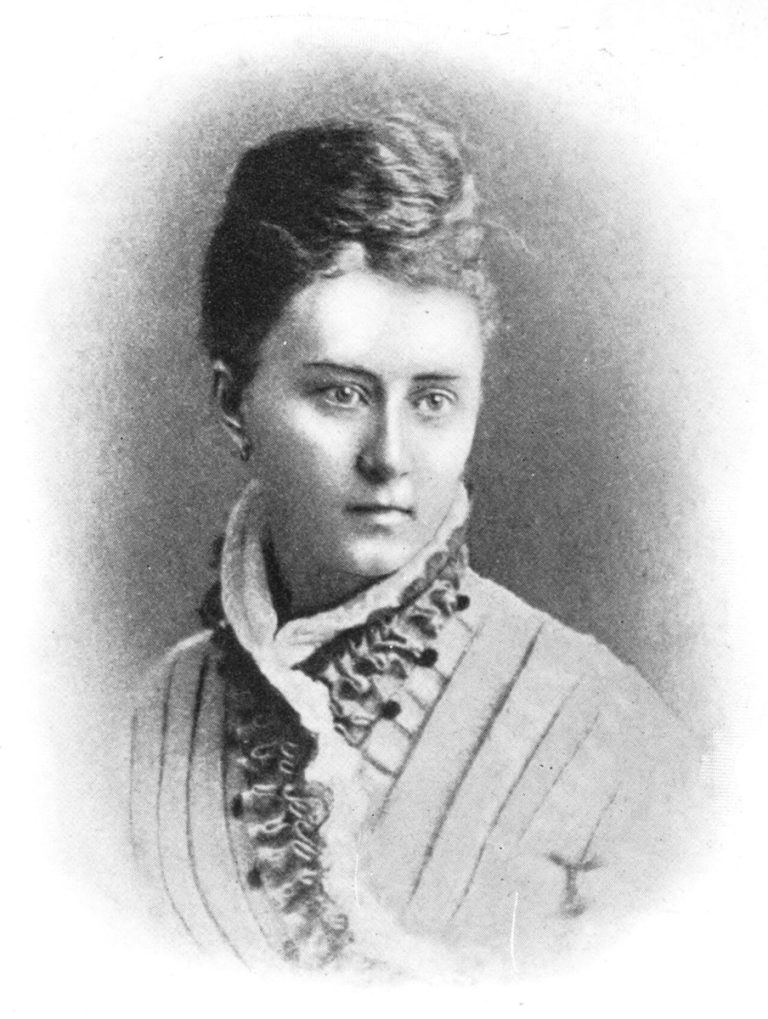
A portrait of Sara Jeannette Duncan, taken no later than 1903.
CA-K265Culture & sport

Sara Jeannette Duncan and The Imperialist

Sara Jeannette Duncan (1861–1922), a pioneering late-19th-century journalist, challenged norms by examining women’s changing roles, the need for a national culture and Canadian politics. After leaving Canada in 1890 she lived in India and England and wrote more than 20 popular books, including The Imperialist (1904), a Canadian classic set in a fictionalized Brantford.

Factual accuracy review: No recorded challenge

Contributor: Citizen.ca

Verified against cited sourcesVerified on 2026-10-26↗
Photo: not stated · Photo licence: Public domain · Credit & context
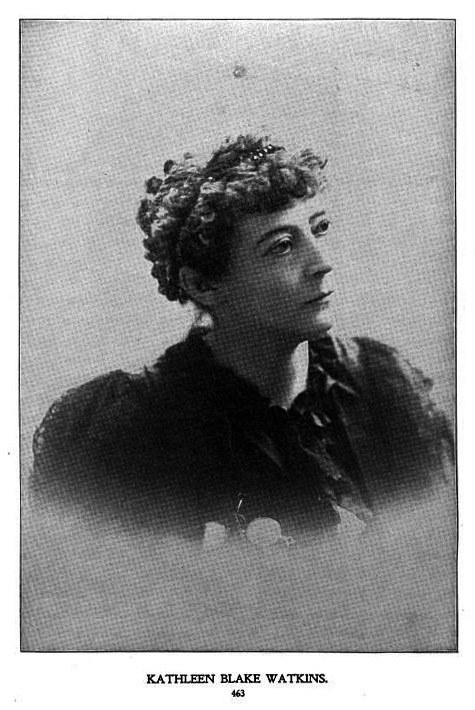
A portrait of Isabella Valancy Crawford, published around 1919.
CA-K264Culture & sport

Isabella Valancy Crawford, poet

Irish-born Isabella Valancy Crawford (1850–1887) came to Canada as a girl, settled in Peterborough and supported her family by writing after 1875. Largely unknown in her short life, she is now considered one of the finest Canadian poets of her generation, best remembered for the long poems “Malcolm’s Katie” and “Old Spookses’ Pass.”

Factual accuracy review: No recorded challenge

Contributor: Citizen.ca

Verified against cited sourcesVerified on 2026-10-26↗
Photo: Caswell, Edward S. (Edward Samuel), 1861-1938 · Photo licence: Public domain · Credit & context
A portrait of Kathleen Blake Coleman, 1896.
CA-K263Culture & sport

Kit Coleman, pioneering journalist

Kathleen Blake Coleman (1856–1915), writing as “Kit,” ran the “Woman’s Kingdom” pages of Toronto’s Daily Mail, later the Mail and Empire, from 1889 to 1911, winning a wide following with her witty, irreverent style. As the first American-accredited woman war correspondent, she covered the Spanish-American War in Cuba in 1898.

Factual accuracy review: No recorded challenge

Contributor: Citizen.ca

Verified against cited sourcesVerified on 2026-10-26↗
Photo: Photographer unidentified · Photo licence: Public domain · Credit & context
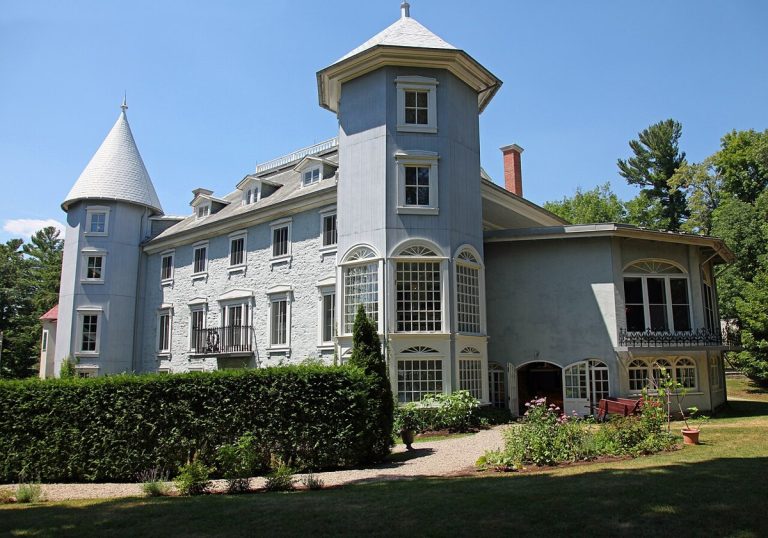
The Manoir-Papineau in Montebello, Quebec, photographed in 2018.
CA-K258History

Louis-Joseph Papineau, leader of the Patriotes

Louis-Joseph Papineau (1786–1871) strove to reform Lower Canada’s political institutions and strengthen democracy. As Speaker of the House of Assembly and leader of the Parti canadien, later the Parti patriote, he became the leading political figure of the 1837–1838 uprisings; in 1850 he settled at his manor in Montebello.

Factual accuracy review: No recorded challenge

Contributor: Citizen.ca

Verified against cited sourcesVerified on 2026-10-26↗
Photo: Marc-Lautenbacher · Photo licence: CC BY-SA 4.0 · Credit & context
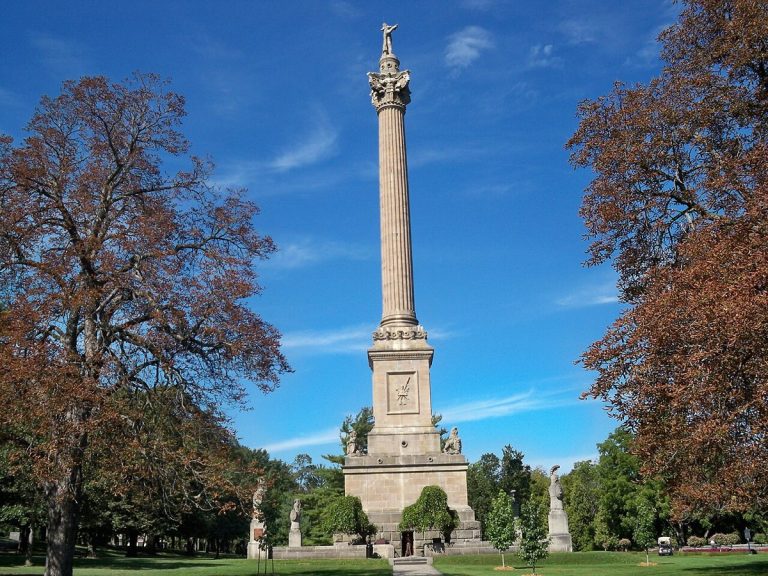
Brock’s Monument at Queenston Heights, Ontario, site of a War of 1812 battle in which the Colored Corps fought, photographed in 2012.
CA-K248History

Black militia units in Upper Canada, 1812–1850

Upper Canadians of African descent served in the militia to share in the duties and rights of British subjects. In the War of 1812, many joined regular units or the segregated Colored Corps, which worked on fortifications and fought at Queenston Heights and other Niagara battles; they also served during the Upper Canada Rebellion, many until 1850.

Factual accuracy review: No recorded challenge

Contributor: Citizen.ca

Verified against cited sourcesVerified on 2026-10-26↗
Photo: Mmcintyre · Photo licence: CC BY-SA 3.0 · Credit & context
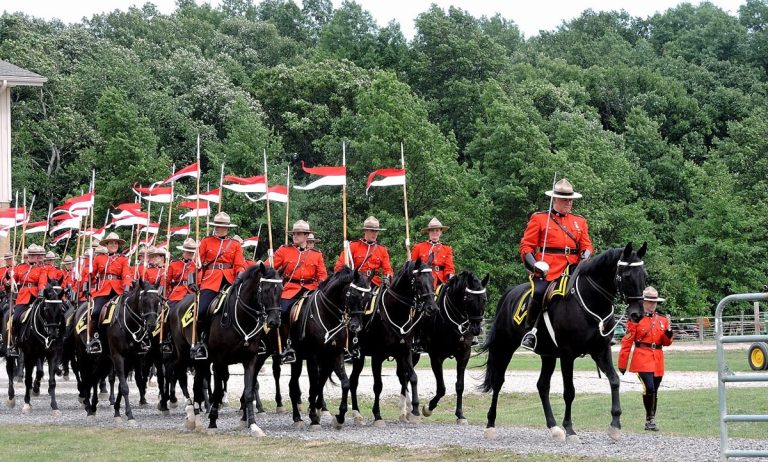
The RCMP Musical Ride performing in 2016.
CA-K247Symbols

The RCMP Musical Ride, first performed in 1887

The RCMP Musical Ride, a precision performance by scarlet-uniformed police on horseback set to music, was first performed in Regina in 1887 by the North-West Mounted Police. The RCMP has bred and trained black horses for the Ride since the 1940s, and it is one of the distinctive symbols of Canadian identity at home and abroad.

Factual accuracy review: No recorded challenge

Contributor: Citizen.ca

Verified against cited sourcesVerified on 2026-10-26↗
Photo: Andrea_44 from Leamington, Ontario , Canada · Photo licence: CC BY 2.0 · Credit & context
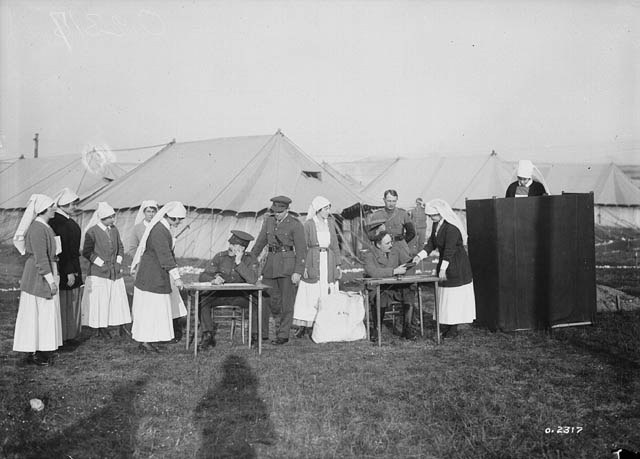
Nursing Sisters at a Canadian hospital in France voting in the 1917 federal election (photograph by William Rider-Rider).
CA-K246History

Nursing Sisters, the first women with military rank

Canadian military nurses have cared for the sick and wounded in battle since 1885. In 1904, professional nurses joined the Canadian Army Medical Corps as Nursing Sisters, the first women in the British Empire to receive military rank; in the two world wars hundreds were decorated and dozens died from enemy action.

Factual accuracy review: No recorded challenge

Contributor: Citizen.ca

Verified against cited sourcesVerified on 2026-10-26↗
Photo: William Rider-Rider · Photo licence: Public domain · Credit & context
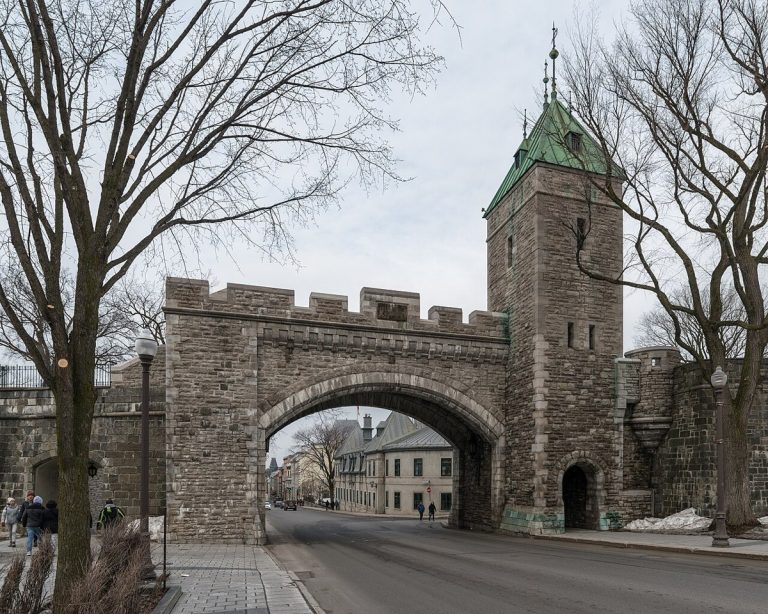
Porte Saint-Louis, a gate in the walls of Old Québec, photographed in 2017.
CA-K235History

Old Québec, a walled city

The Historic District of Old Québec, a UNESCO World Heritage Site since 1985, covers 135 hectares, and close to half its buildings were built before 1850. Québec has retained almost all its fortifications, a defining feature of the historic district.

Factual accuracy review: No recorded challenge

Contributor: Citizen.ca

Verified against cited sourcesVerified on 2026-10-26↗
Photo: DXR · Photo licence: CC BY-SA 4.0 · Credit & context
The William Saunders Building at the Central Experimental Farm, Ottawa, photographed in 2014.
CA-K229Economy & trade

William Saunders and the Experimental Farms

William Saunders (1836–1914), an expert in scientific agriculture, became the first director of the federal Department of Agriculture’s new Experimental Farms Branch in 1886. He created many promising varieties of fruit and grain and began the research that led to Marquis wheat, developed by his son Charles.

Factual accuracy review: No recorded challenge

Contributor: Citizen.ca

Verified against cited sourcesVerified on 2026-10-26↗
Photo: Matti Blume · Photo licence: CC BY-SA 4.0 · Credit & context
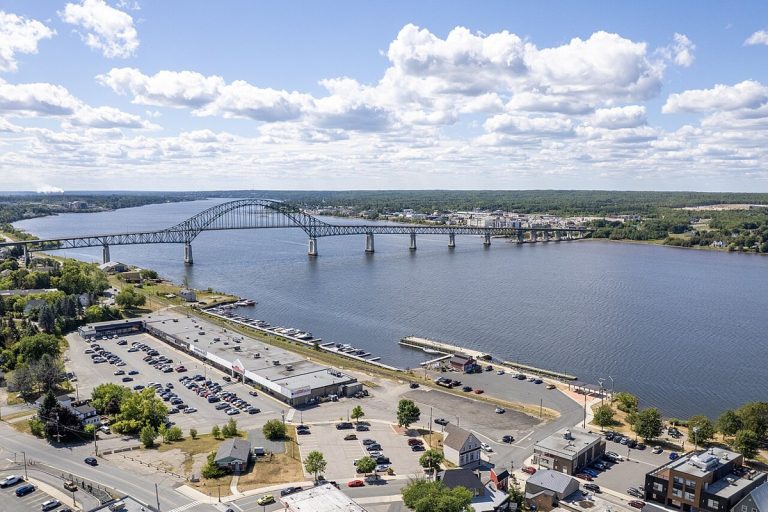
The Miramichi River and Centennial Bridge in Miramichi, New Brunswick, in 2025.
CA-K224History

The Miramichi Fire of 1825

In October 1825, the Miramichi Fire burned an estimated 15,500 km² of northeastern New Brunswick, killing hundreds of people, leaving thousands homeless and affecting both settlers and Mi’kmaq. About £50,000 was raised for relief, thought to be the largest disaster relief effort in pre-Confederation Canadian history.

Factual accuracy review: No recorded challenge

Contributor: Citizen.ca

Verified against cited sourcesVerified on 2026-10-26↗
Photo: Gabriel Picard · Photo licence: CC BY-SA 4.0 · Credit & context
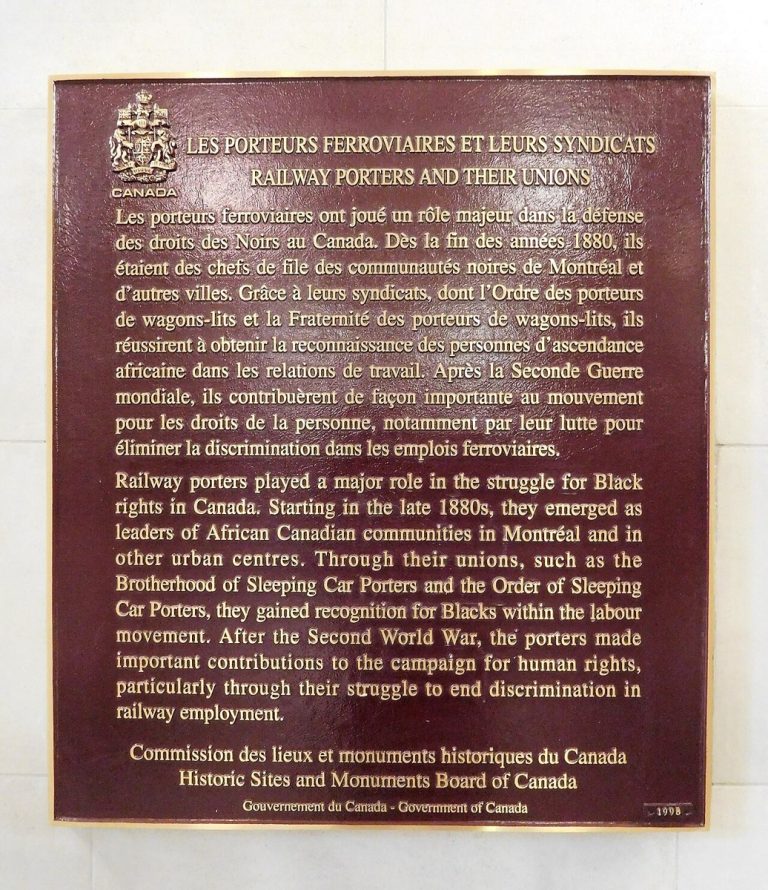
The Parks Canada plaque for Railway Porters and their Unions in Montréal, photographed in 2019.
CA-K219History

Black railway porters and their unions

From the late 1880s, Black railway porters emerged as leaders of African Canadian communities in Montréal and other cities. Through unions such as the Brotherhood of Sleeping Car Porters and the Order of Sleeping Car Porters, they won recognition for Black workers in the labour movement and, after the Second World War, fought to end discrimination in railway employment.

Factual accuracy review: No recorded challenge

Contributor: Citizen.ca

Verified against cited sourcesVerified on 2026-10-26↗
Photo: Jeangagnon · Photo licence: CC BY-SA 4.0 · Credit & context
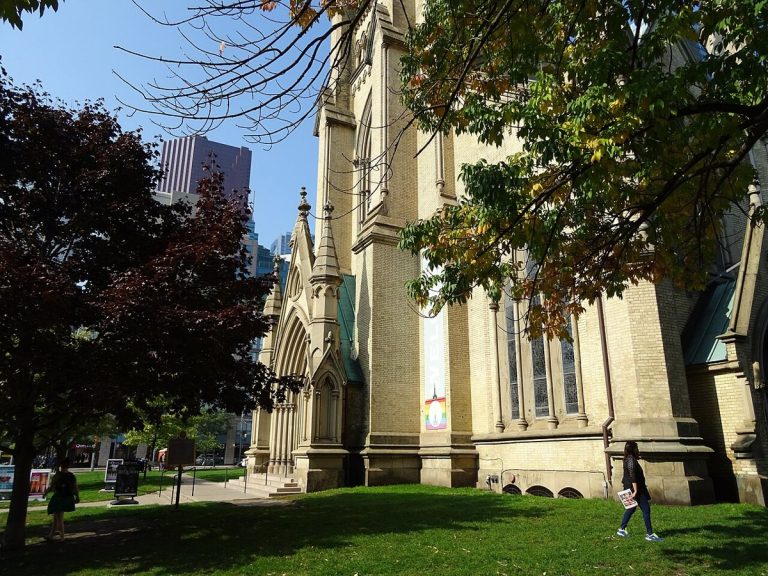
The Cathedral Church of St. James in Toronto, where a plaque for this designation is to be installed, photographed in 2018.
CA-K218History

Emancipation Day, 1 August

Emancipation Day celebrations mark 1 August 1834, when British legislation abolishing slavery took effect in what is now Canada. Nineteenth-century celebrations in what are now Ontario, Quebec, Nova Scotia, New Brunswick and British Columbia became an annual tradition that strengthened Black communities and supported the struggle for equality.

Factual accuracy review: No recorded challenge

Contributor: Citizen.ca

Verified against cited sourcesVerified on 2026-10-26↗
Photo: Spudgun67 · Photo licence: CC BY-SA 4.0 · Credit & context
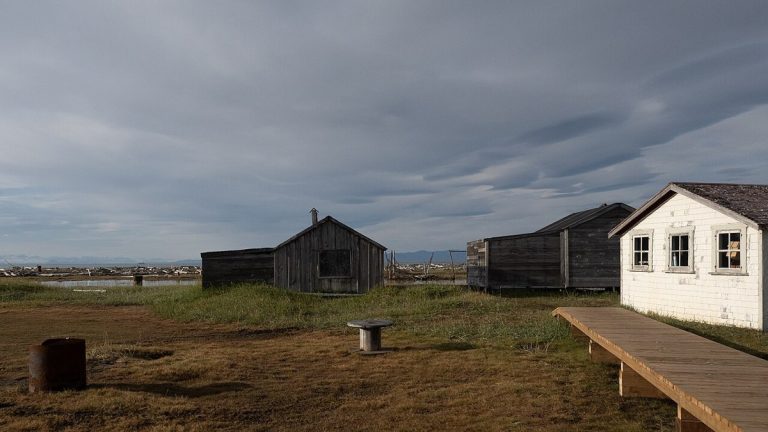
Pauline Cove on Qikiqtaruk (Herschel Island), Yukon, photographed in 2025.
CA-K216Places & geography

Qikiqtaruk (Herschel Island), Arctic whaling base

Qikiqtaruk (Herschel Island), off the Yukon coast, became the principal base for American whalers in the western Arctic in 1890. Parks Canada’s commemorative plaque records a community of about 2,000 whalers and Inuit during the peak winter of 1894–1895.

Factual accuracy review: No recorded challenge

Contributor: Citizen.ca

Verified against cited sourcesVerified on 2026-10-26↗
Photo: Carina Gsottbauer · Photo licence: CC BY-SA 4.0 · Credit & context
A self-portrait by William Notman, Montréal, 1866–1867.
CA-K208Culture & sport

William Notman, “Photographer to the Queen”

William Notman (1826–1891), born in Scotland, came to Montréal in 1856 and became one of the most successful Canadian photographers of the 19th century. His photographs of the Prince of Wales’s 1860 visit won him the title “Photographer to the Queen,” and his studios eventually extended from Montréal to Ottawa, Toronto, Saint John, Albany and Boston.

Factual accuracy review: No recorded challenge

Contributor: Citizen.ca

Verified against cited sourcesVerified on 2026-10-26↗
Photo: William Notman · Photo licence: Public domain · Credit & context
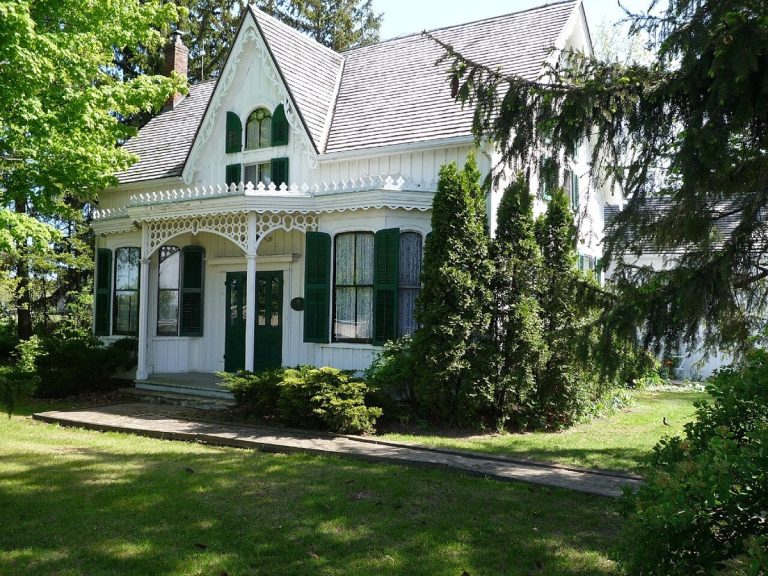
The Erland Lee Museum in Stoney Creek, Ontario, the farmhouse where the constitution was drafted, photographed in 2008.
CA-K205History

The first Women’s Institute, Stoney Creek, 1897

In 1897, inspired by domestic science reformer Adelaide Hoodless, Janet Lee drafted the constitution of the Stoney Creek Women’s Institute at her farmhouse in Ontario. The Women’s Institutes spread across Canada and the world, bringing rural women together to learn skills, promote civic reform and break the isolation of rural life.

Factual accuracy review: No recorded challenge

Contributor: Citizen.ca

Verified against cited sourcesVerified on 2026-10-26↗
Photo: Kristenkerr · Photo licence: Public domain · Credit & context
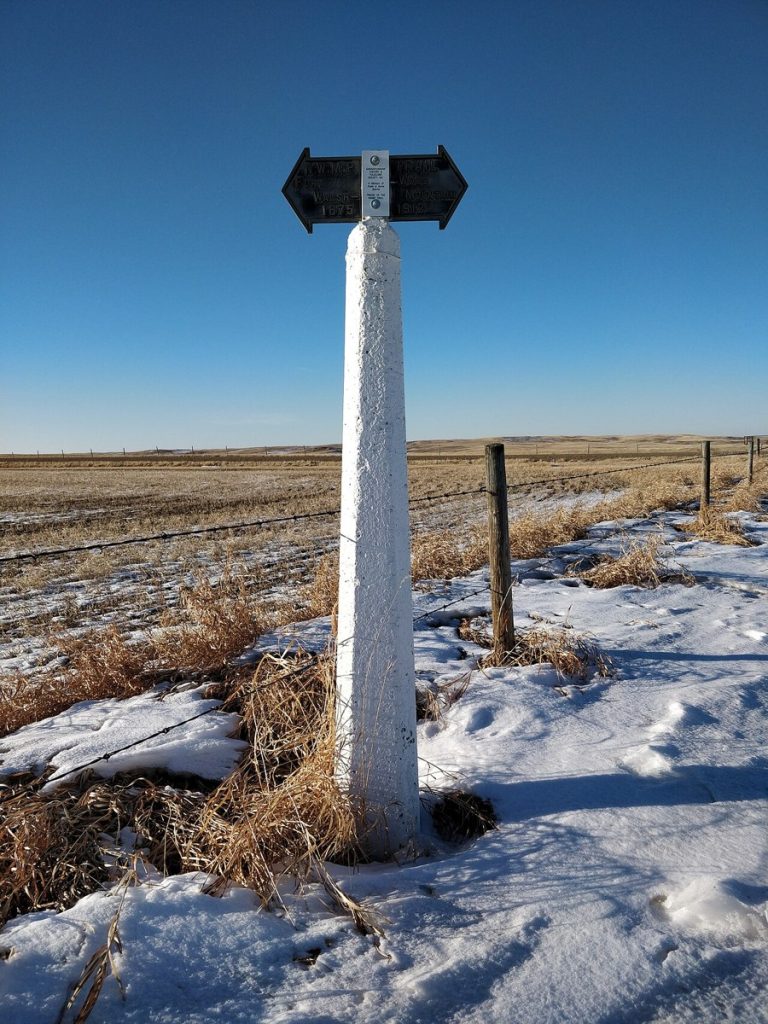
A North-West Mounted Police trail marker near Glen McPherson, Saskatchewan, on the former route between Fort Walsh and Wood Mountain, in 2021.
CA-K204History

The North-West Mounted Police, 1873

The North-West Mounted Police was established in 1873 by Prime Minister John A. Macdonald’s government as a paramilitary force of 300 mounted constables, to assert Canadian control over the North-West Territories. Arriving in 1874 after a 1,300-kilometre trek from Dufferin, Manitoba, the force set up posts without the consultation or permission of First Nations and enforced laws that disregarded Indigenous laws and ways of life.

Factual accuracy review: No recorded challenge

Contributor: Citizen.ca

Verified against cited sourcesVerified on 2026-10-26↗
Photo: Awmcphee · Photo licence: CC BY-SA 3.0 · Credit & context
Wild horses on a Sable Island beach, photographed in 2016; the image does not show the historic rescue establishment.
CA-K203History

The Sable Island Humane Establishment, 1801–1958

From 1801 to 1958, the Sable Island Humane Establishment rescued passengers and crews and recovered cargo from hundreds of vessels wrecked on the shifting shoals of Sable Island, about 290 kilometres southeast of Halifax. Founded long before the Canadian Coast Guard, it marked the beginning of government responsibility for marine safety.

Factual accuracy review: No recorded challenge

Contributor: Citizen.ca

Verified against cited sourcesVerified on 2026-10-26↗
Photo: Paul Gierszewski · Photo licence: CC BY-SA 4.0 · Credit & context
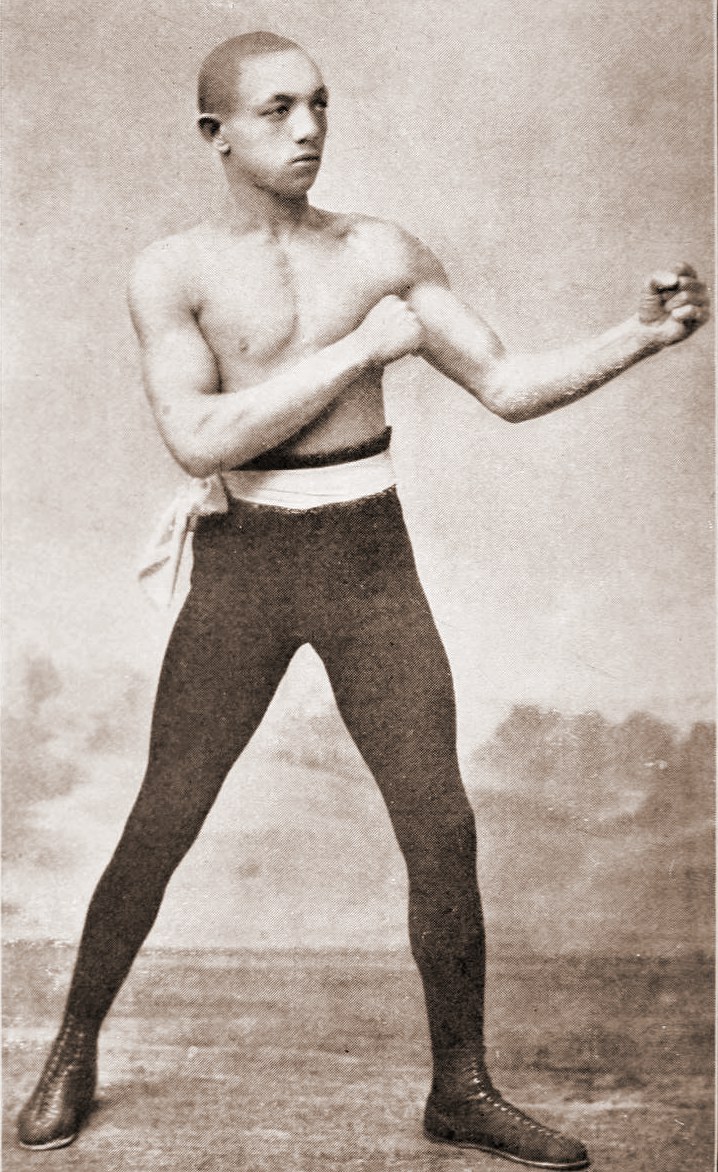
A photograph of George Dixon, taken before 1909.
CA-K201Culture & sport

George Dixon, first Black world boxing champion

George Dixon (1870–1908), born in Africville, Nova Scotia, was the first Black boxer and the first Canadian to win a world title, taking the bantamweight title in 1890 and the featherweight title in 1891. His training innovations, including shadowboxing, are still in use, and he used his popularity to open opportunities for Black boxers.

Factual accuracy review: No recorded challenge

Contributor: Citizen.ca

Verified against cited sourcesVerified on 2026-10-26↗
Photo: unattributed · Photo licence: Public domain · Credit & context
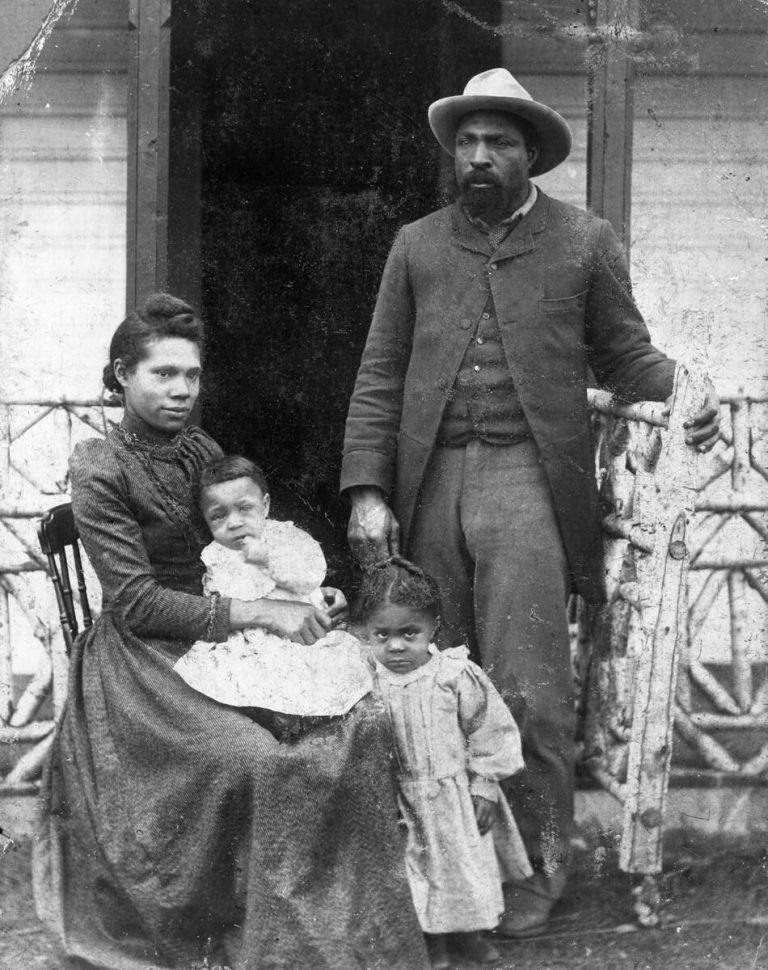
John Ware with his wife Mildred and children Robert and Nettie, 1896.
CA-K200History

John Ware, Black cowboy of the Canadian West

John Ware (c. 1850–1905), a Black cowboy who had been enslaved, entered the District of Alberta in 1882 with a trail crew driving cattle to the Bar U Ranch. Despite racism and rough frontier conditions, he built his own ranch with his wife Mildred and their children, and his skill and generosity earned him a prominent place in the history of the Canadian West.

Factual accuracy review: No recorded challenge

Contributor: Citizen.ca

Verified against cited sourcesVerified on 2026-10-26↗
Photo: Unknown authorUnknown author · Photo licence: Public domain · Credit & context
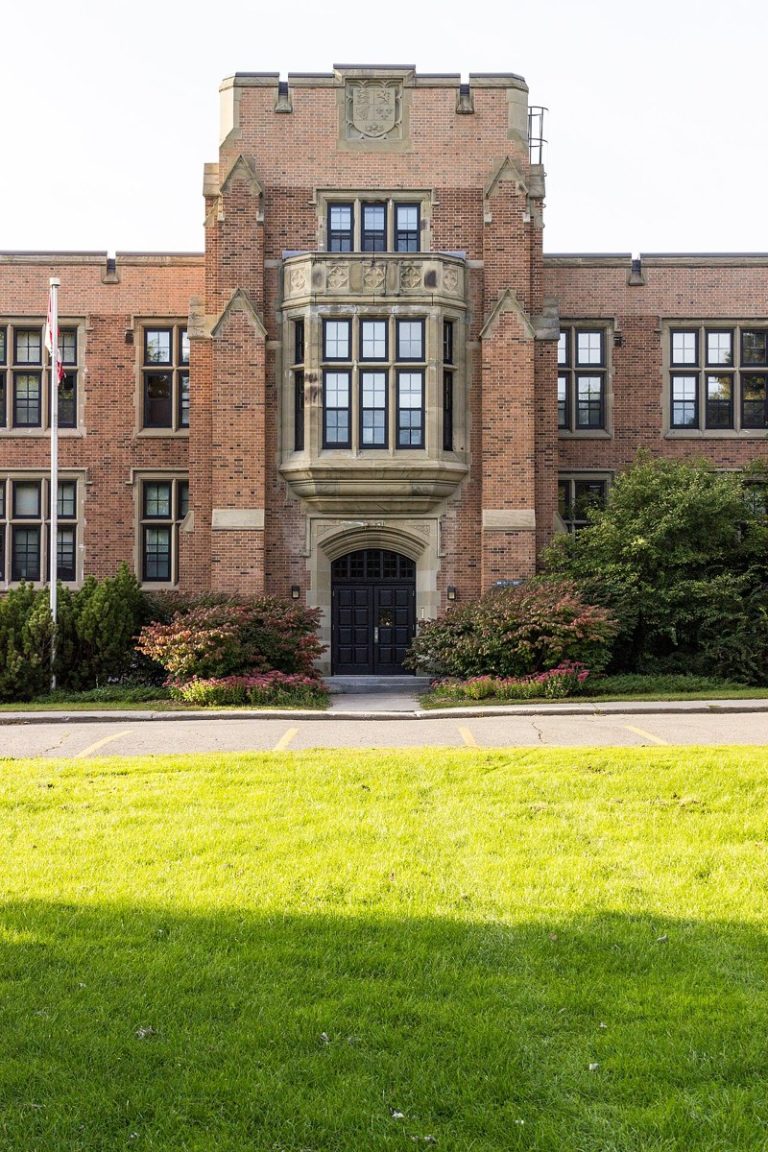
The Richard Pierpoint Building, a courthouse in London, Ontario, named in his honour, photographed in 2026.
CA-K199History

Richard Pierpoint, Black Loyalist

Richard Pierpoint (c. 1744–c. 1838), born in Bundu in present-day Senegal, was captured and sold into slavery in the Thirteen Colonies around 1760. He fought as a free man with Butler’s Rangers in the American Revolution, settled in Niagara, and during the War of 1812 contributed to the creation of the Colored Corps; afterward he asked for passage to West Africa but was given land in Upper Canada instead.

Factual accuracy review: No recorded challenge

Contributor: Citizen.ca

Verified against cited sourcesVerified on 2026-10-26↗
Photo: Chris Woodrich · Photo licence: CC BY-SA 4.0 · Credit & context
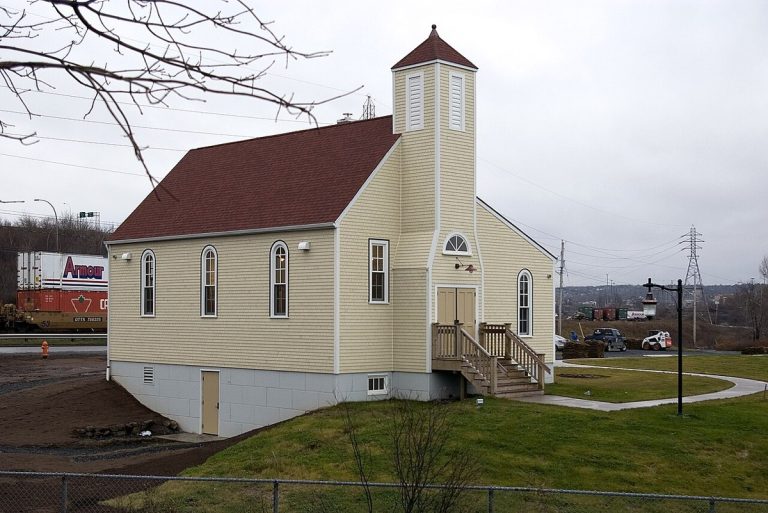
The Africville Museum in Halifax, housed in a replica of the Seaview African United Baptist Church, photographed in 2012.
CA-K198Culture & sport

The Colored Hockey League of the Maritimes, 1895

The Colored Hockey League of the Maritimes, formed in 1895 by African Canadian Baptist leaders in Dartmouth and Halifax, was the only all-Black men’s ice hockey league in Canada and soon expanded across Nova Scotia and Prince Edward Island. Its championships drew multiracial crowds, though players endured racism, and the league advanced the fight for equality.

Factual accuracy review: No recorded challenge

Contributor: Citizen.ca

Verified against cited sourcesVerified on 2026-10-26↗
Photo: DRheaume · Photo licence: CC BY-SA 3.0 · Credit & context