An independent Canadian knowledge project

Focused and Verified

Canadian knowledge base

Search by keyword

Choose one keyword, or combine two. Broader keywords include their descendants.

Keywords: Person

Clear search
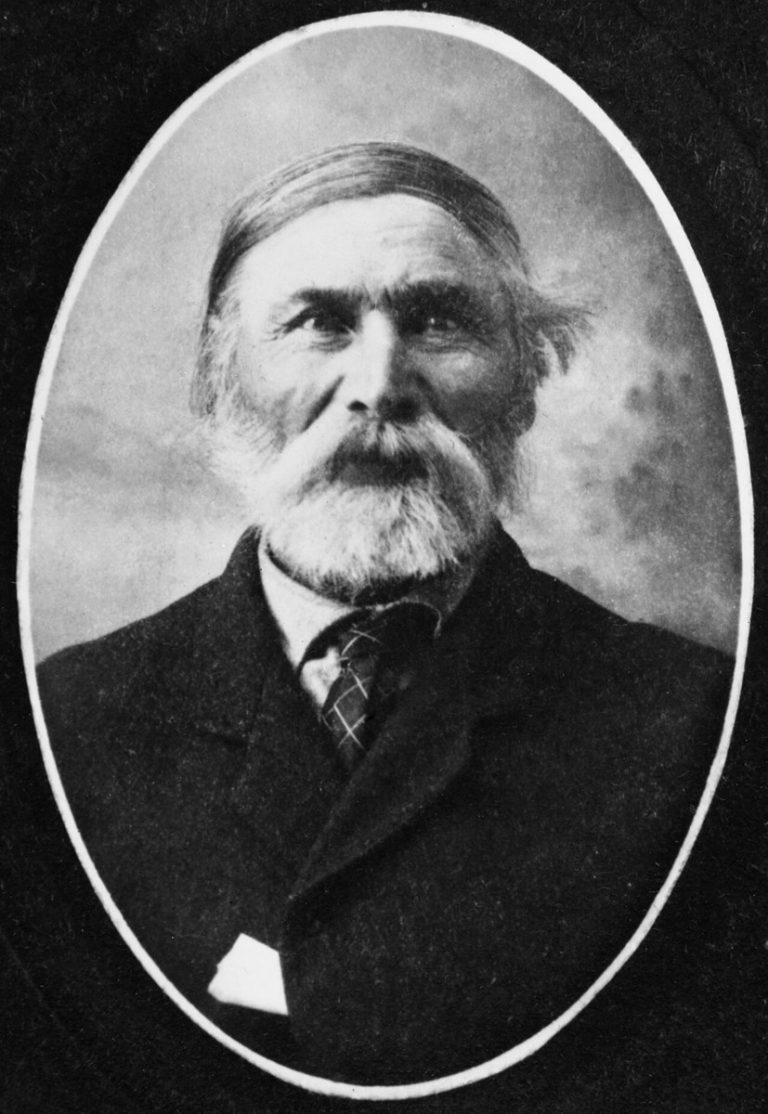
A portrait of James Isbister, taken before 1915.
CA-K196Indigenous peoples & reconciliation

James Isbister, English Métis leader

James Isbister (1833–1915), an English Métis leader, founded the Isbister Métis settlement at Prince Albert, where he and Margaret Bear began farming in 1862. He helped unite English and French Métis in seeking recognition of their land rights, and in 1884 was one of four delegates who travelled to Montana to invite Louis Riel to lead the Métis protest movement.

Factual accuracy review: No recorded challenge

Contributor: Citizen.ca

Verified against cited sourcesVerified on 2026-10-26↗
Photo: Unknown authorUnknown author · Photo licence: Public domain · Credit & context
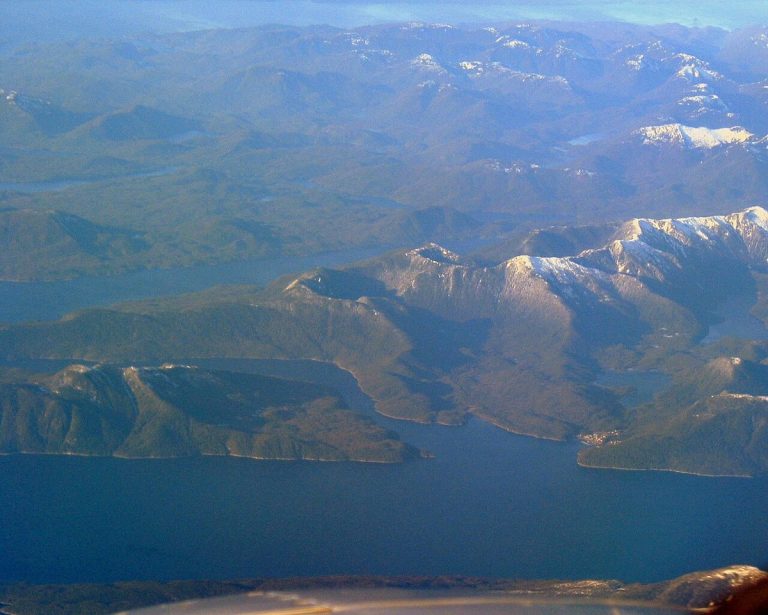
Hartley Bay, British Columbia, home of the Gitga’at First Nation, photographed in 2007.
CA-K195Indigenous peoples & reconciliation

‘Wii Niisł Puuntk (Lucille Clifton), Gitga’at matriarch

‘Wii Niisł Puuntk (Lucille Clifton, 1876–1962), a Laxsgiik (Eagle Clan) matriarch, exemplifies the centuries-old leadership role of prominent women in matrilineal Gitga’at (Tsimshian) society. A healer and midwife with deep knowledge of plants, she passed on ancestral knowledge and cultural practices as Hartley Bay faced land loss and disruptive government policies.

Factual accuracy review: No recorded challenge

Contributor: Citizen.ca

Verified against cited sourcesVerified on 2026-10-26↗
Photo: Shawn from Airdrie, Canada · Photo licence: CC BY-SA 2.0 · Credit & context
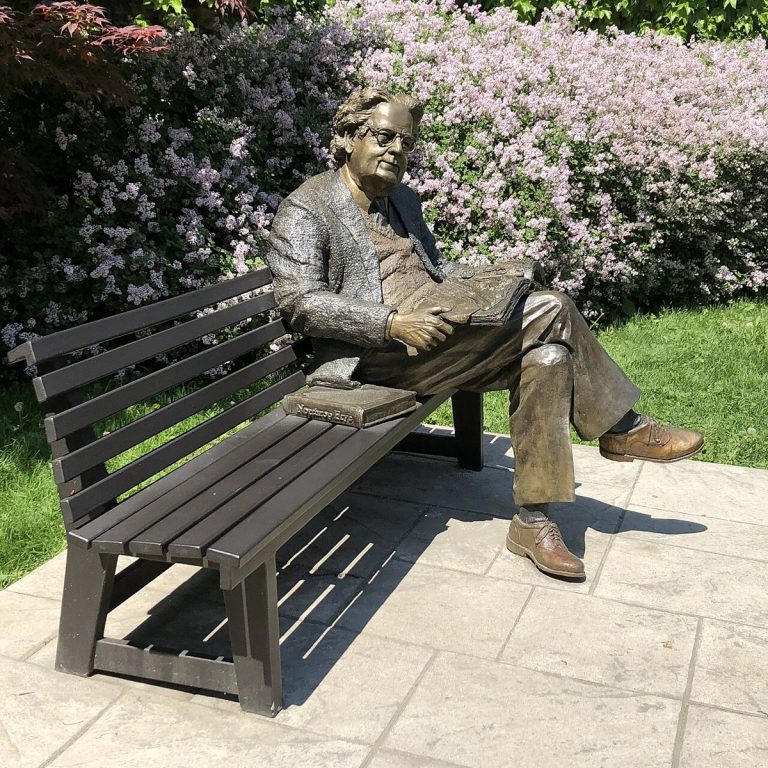
A seated statue of Northrop Frye at Victoria College, University of Toronto, photographed in 2018.
CA-K194Culture & sport

Northrop Frye, literary theorist

Northrop Frye (1912–1991), based at Victoria College, University of Toronto, from 1939 to 1991, was a pre-eminent literary theorist and critic. His systematic study of the myths and symbols underlying literature, and his work on the Bible as literature, had significant international influence, and his idea of a “garrison mentality” shaped English-Canadian literature.

Factual accuracy review: No recorded challenge

Contributor: Citizen.ca

Verified against cited sourcesVerified on 2026-10-26↗
Photo: Maksim Sokolov (maxergon.com) · Photo licence: CC BY-SA 4.0 · Credit & context
Margaret Laurence House in Neepawa, Manitoba, photographed in 2012.
CA-K193Culture & sport

Margaret Laurence and Manawaka

Margaret Laurence (1926–1987), one of Canada’s most esteemed authors, set her best-known novels in the fictional prairie town of Manawaka, with characters such as Hagar Shipley of The Stone Angel. She said Neepawa, Manitoba, where she lived from 1935 to 1944, shaped her “way of viewing,” and she helped found the Writers’ Trust of Canada and the Writers’ Union of Canada.

Factual accuracy review: No recorded challenge

Contributor: Citizen.ca

Verified against cited sourcesVerified on 2026-10-26↗
Photo: Amqui · Photo licence: CC BY-SA 3.0 · Credit & context
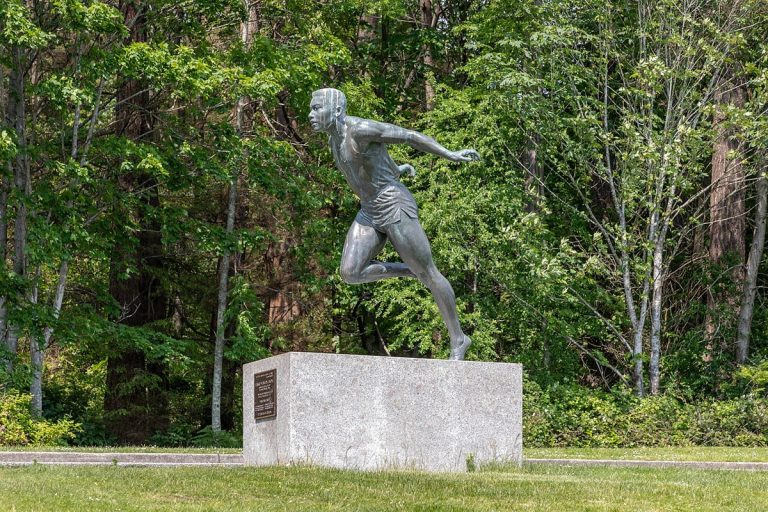
The Harry Jerome statue by Jack Harman in Stanley Park, Vancouver, photographed in 2022.
CA-K192Culture & sport

Harry Jerome, sprinter

Harry Jerome (1940–1982) was one of the fastest men in the world for much of the 1960s, holding multiple world sprint records, including the 100 metres in ten seconds flat. He later made major contributions to amateur sport and fitness in Canada, and remains a point of pride for African Canadians.

Factual accuracy review: No recorded challenge

Contributor: Citizen.ca

Verified against cited sourcesVerified on 2026-10-26↗
Photo: Dietmar Rabich · Photo licence: CC BY-SA 4.0 · Credit & context
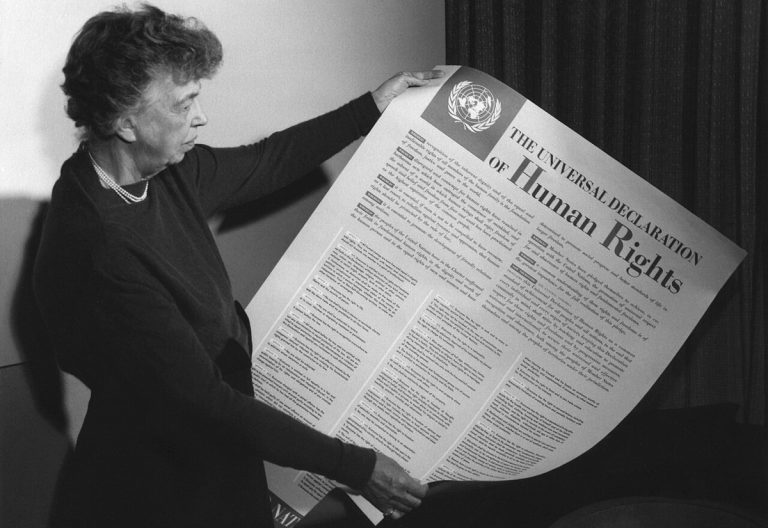
Eleanor Roosevelt holding a poster of the Universal Declaration of Human Rights, 1949; Humphrey does not appear in the photo.
CA-K189Institutions

John P. Humphrey and the Universal Declaration of Human Rights

John P. Humphrey (1905–1995), a McGill law professor, was the first director of the United Nations Human Rights Division from 1946 to 1966. The 48-article “Secretariat Outline” he prepared with his staff for the UN Human Rights Commission laid the foundations for the Universal Declaration of Human Rights of 1948.

Factual accuracy review: No recorded challenge

Contributor: Citizen.ca

Verified against cited sourcesVerified on 2026-10-26↗
Photo: FDR Presidential Library & Museum · Photo licence: CC BY 2.0 · Credit & context
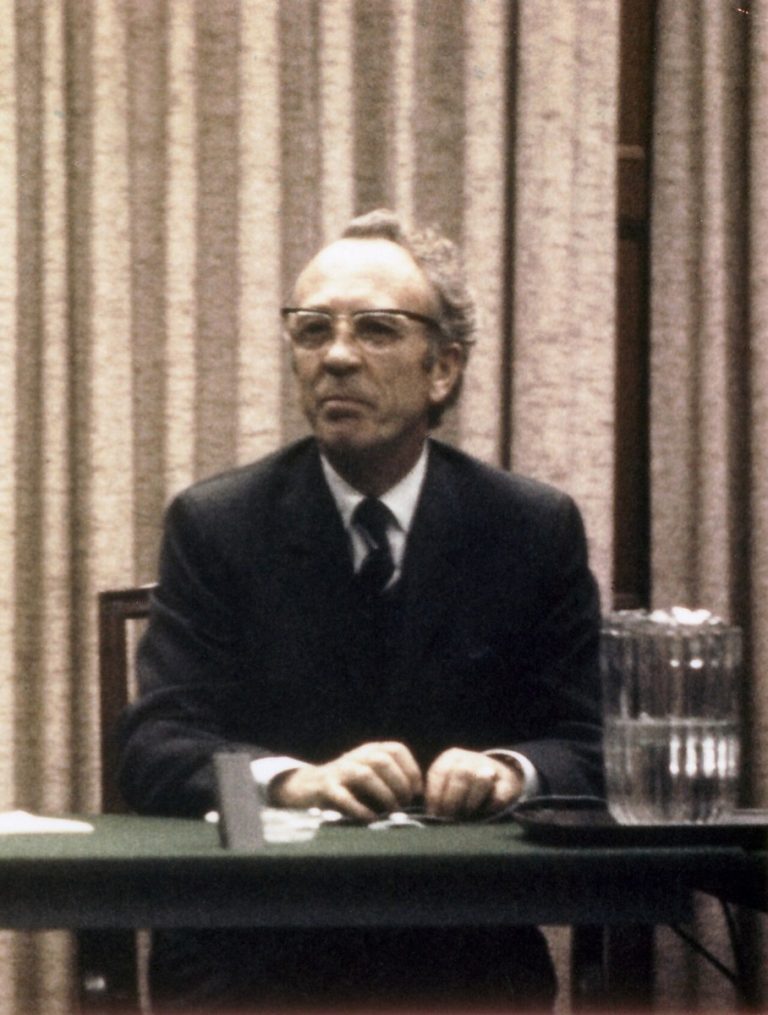
Tommy Douglas, former Premier of Saskatchewan, around 1971.
CA-K188Institutions

Tommy Douglas and the roots of medicare

Tommy Douglas (1904–1986) was Premier of Saskatchewan from 1944 to 1961, leading Canada’s only Co-operative Commonwealth Federation government. Under him the province pioneered publicly funded hospital insurance, laying the foundations for national medicare; he later became the first leader of the federal New Democratic Party.

Factual accuracy review: No recorded challenge

Contributor: Citizen.ca

Verified against cited sourcesVerified on 2026-10-26↗
Photo: Themightyquill · Photo licence: CC BY-SA 3.0 · Credit & context
A portrait of Emily Stowe, no later than 1895.
CA-K187History

Emily Stowe, Canada’s first woman doctor in private practice

Denied university entry in Canada because she was a woman, Emily Stowe (1831–1903) studied medicine in New York City and in 1867 opened the first private medical practice in Canada run by a woman doctor, in Toronto. She led the drive to found Woman’s Medical College in 1883 and, through the Dominion Women’s Enfranchisement Association, kept suffrage in the public eye.

Factual accuracy review: No recorded challenge

Contributor: Citizen.ca

Verified against cited sourcesVerified on 2026-10-26↗
Photo: Unknown authorUnknown author · Photo licence: Public domain · Credit & context

Thérèse Casgrain photographed by George Nakash (Library and Archives Canada).
CA-K185History

Thérèse Casgrain and the Quebec vote for women, 1940

Thérèse Casgrain (1896–1981), a pioneer of Quebec feminism, led the Ligue des droits de la femme from 1928 to 1942 and played a pivotal role in winning women the right to vote in Quebec provincial elections in 1940. The Fédération des femmes du Québec, founded under her guidance in 1966, launched a new wave of organized feminism.

Factual accuracy review: No recorded challenge

Contributor: Citizen.ca

Verified against cited sourcesVerified on 2026-10-26↗
Photo: George Nakash (1892-1976) · Photo licence: CC BY 2.0 · Credit & context
Uncle Tom’s Cabin Historic Site near Dresden, Ontario, now the Josiah Henson Museum of African-Canadian History, photographed in 2014.
CA-K181History

Josiah Henson and the Dawn settlement

After escaping slavery in Kentucky to Upper Canada, Reverend Josiah Henson (1789–1883) became an Underground Railroad conductor and abolitionist, founded the Black settlement of Dawn and established the British American Institute school. Harriet Beecher Stowe said his 1849 memoirs supplied ideas and incidents for Uncle Tom’s Cabin, raising awareness of Canada as a haven from slavery.

Factual accuracy review: No recorded challenge

Contributor: Citizen.ca

Verified against cited sourcesVerified on 2026-10-26↗
Photo: NearEMPTiness · Photo licence: CC BY-SA 4.0 · Credit & context
The Six Nations Sports & Cultural Memorial Centre in Ohsweken, Six Nations of the Grand River, in 2024.
CA-K179Indigenous peoples & reconciliation

Edith Anderson Monture, nurse and veteran

Charlotte Edith Anderson Monture (1890–1996), a Kanien’kehá:ka (Mohawk) woman from Six Nations of the Grand River, was among the first generation of hospital-trained professional nurses from First Nations in Canada. After nursing with the American Expeditionary Force in the First World War, she was among the female veterans granted the federal vote in 1917, and returned home in 1919 as a nurse and midwife.

Factual accuracy review: No recorded challenge

Contributor: Citizen.ca

Verified against cited sourcesVerified on 2026-10-26↗
Photo: JFVoll · Photo licence: CC BY-SA 4.0 · Credit & context
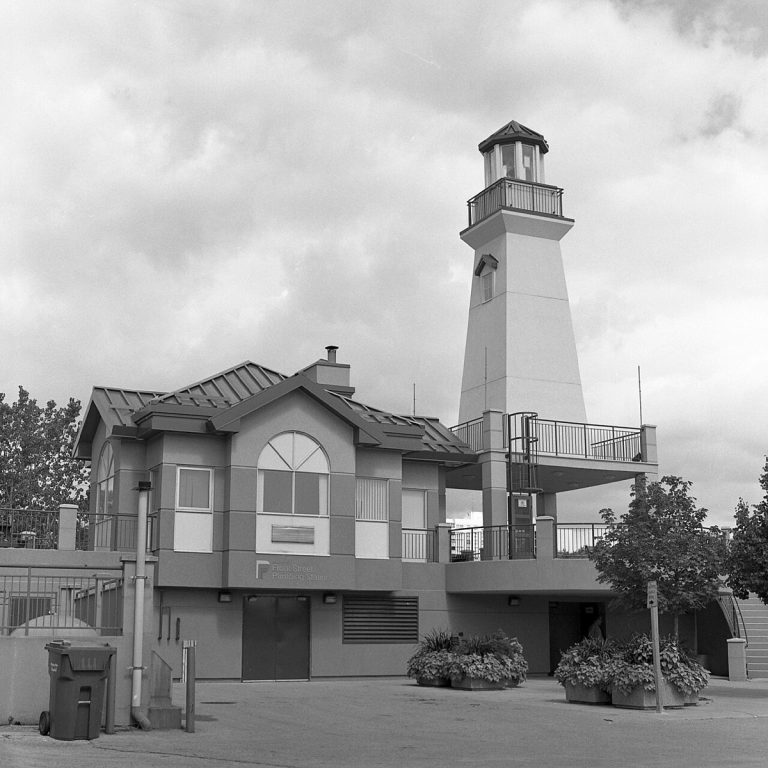
The Port Credit lighthouse in Mississauga, Ontario, near the Credit River, photographed in 2011.
CA-K178Indigenous peoples & reconciliation

Nahnebahweequay (Catharine Sutton) appealed to Queen Victoria

Nahnebahweequay (Catharine Sutton, 1824–1865), a Mississauga (Ojibwe) advocate raised at the Credit Mission, fought for Indigenous land title and against the loss of First Nations women’s status through marriage to non-Indigenous men. In defiance of colonial officials, she travelled to London and appealed directly to Queen Victoria in 1860.

Factual accuracy review: No recorded challenge

Contributor: Citizen.ca

Verified against cited sourcesVerified on 2026-10-26↗
Photo: ^ Missi ^ from Mississauga, Canada · Photo licence: CC BY 2.0 · Credit & context
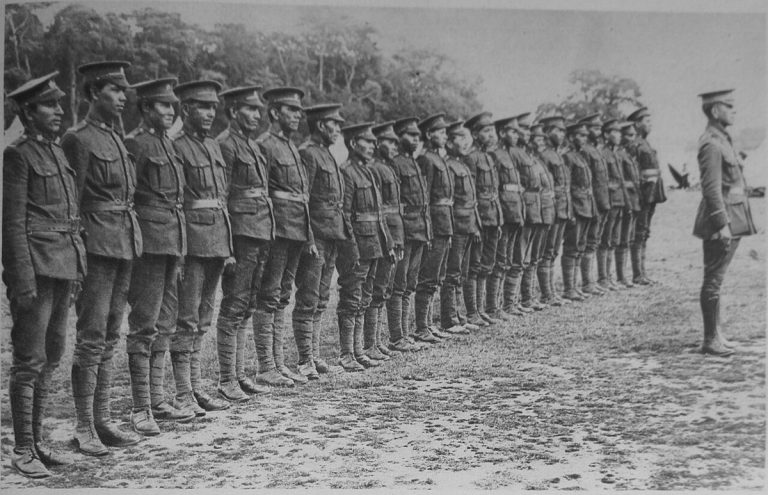
Onondeyoh (Frederick Ogilvie Loft) with soldiers, as published in the French magazine Le Miroir in August 1917.
CA-K177Indigenous peoples & reconciliation

Onondeyoh (Frederick Ogilvie Loft) and the League of Indians

Onondeyoh (Frederick Ogilvie Loft, 1861–1934) founded the League of Indians of Canada in 1919, the first pan-Indigenous political organization, advocating for land rights and better education. He lobbied for self-government and day schools in place of residential schools, and protested forced enfranchisement and the expropriation of reserve lands.

Factual accuracy review: No recorded challenge

Contributor: Citizen.ca

Verified against cited sourcesVerified on 2026-10-26↗
Photo: Unknown · Photo licence: Public domain · Credit & context
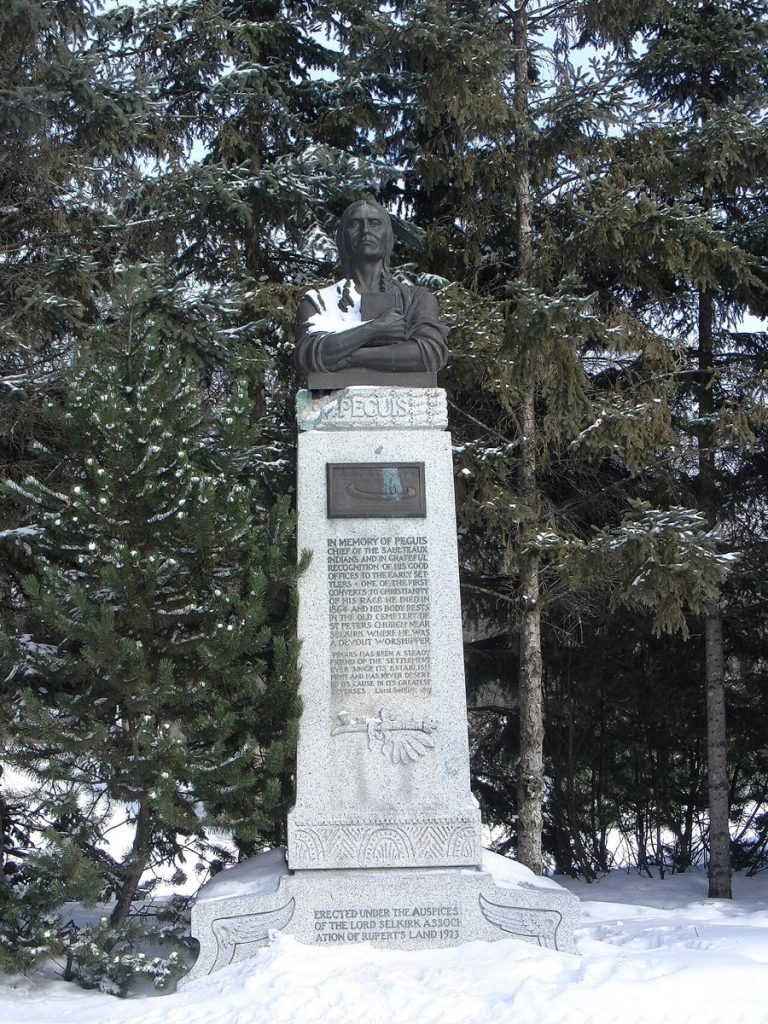
The Peguis monument in Kildonan Park, Winnipeg, erected in 1923, photographed in 2011.
CA-K176Indigenous peoples & reconciliation

Chief Peguis and the Selkirk Treaty of 1817

Chief Peguis (1774–1864), a skilled hunter and diplomat, worked to protect the rights and interests of the Anishinaabeg of Red River and stepped in to save lives when fur trade hostilities threatened the Selkirk Settlement. He was one of five First Nations negotiators of the Selkirk Treaty of 1817, the first agreement permitting limited farmland access to settlers in western Canada.

Factual accuracy review: No recorded challenge

Contributor: Citizen.ca

Verified against cited sourcesVerified on 2026-10-26↗
Photo: Wtshymanski · Photo licence: CC BY-SA 3.0 · Credit & context
Kenora, Ontario, on Lake of the Woods, from the air in 2026; the photo does not show the former school.
CA-K175Indigenous peoples & reconciliation

Chanie Wenjack (1954–1966)

Chanie Wenjack was an Anishinaabe boy from Marten Falls First Nation who lived for three years at Cecilia Jeffrey Indian Residential School near Kenora, Ontario, and died after escaping. His story represents thousands of children driven by loneliness, abuse and desperation to run away from residential schools, and was amplified at the time by official procedures and national news coverage.

Factual accuracy review: No recorded challenge

Contributor: Citizen.ca

Verified against cited sourcesVerified on 2026-10-26↗
Photo: Quintin Soloviev · Photo licence: CC BY 4.0 · Credit & context
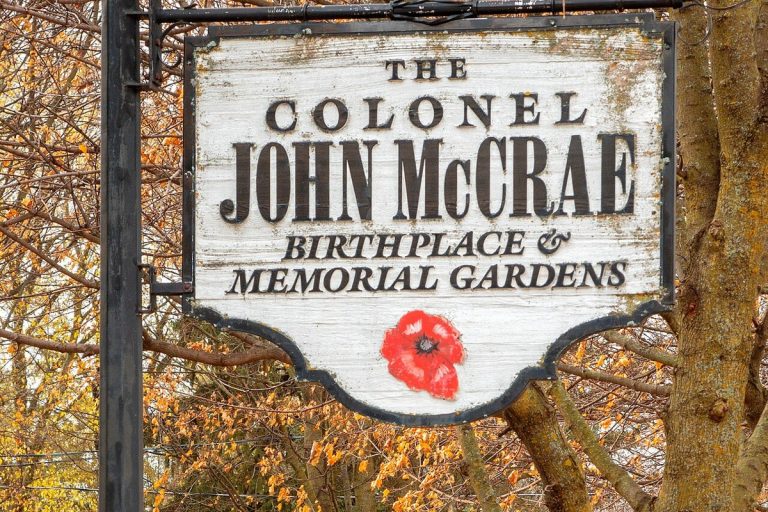
The sign at McCrae House, John McCrae’s birthplace in Guelph, Ontario, on Remembrance Day 2018.
CA-K174Culture & sport

John McCrae and “In Flanders Fields”

John McCrae (1872–1918), a physician born in Guelph, Ontario, joined the Canadian Army Medical Corps in 1914 and served overseas until his death. His poem “In Flanders Fields,” published anonymously in 1915, became one of the most celebrated poems of the First World War and made the poppy a lasting symbol of the Allied soldiers who died.

Factual accuracy review: No recorded challenge

Contributor: Citizen.ca

Verified against cited sourcesVerified on 2026-10-26↗
Photo: Peter K Burian · Photo licence: CC BY-SA 4.0 · Credit & context
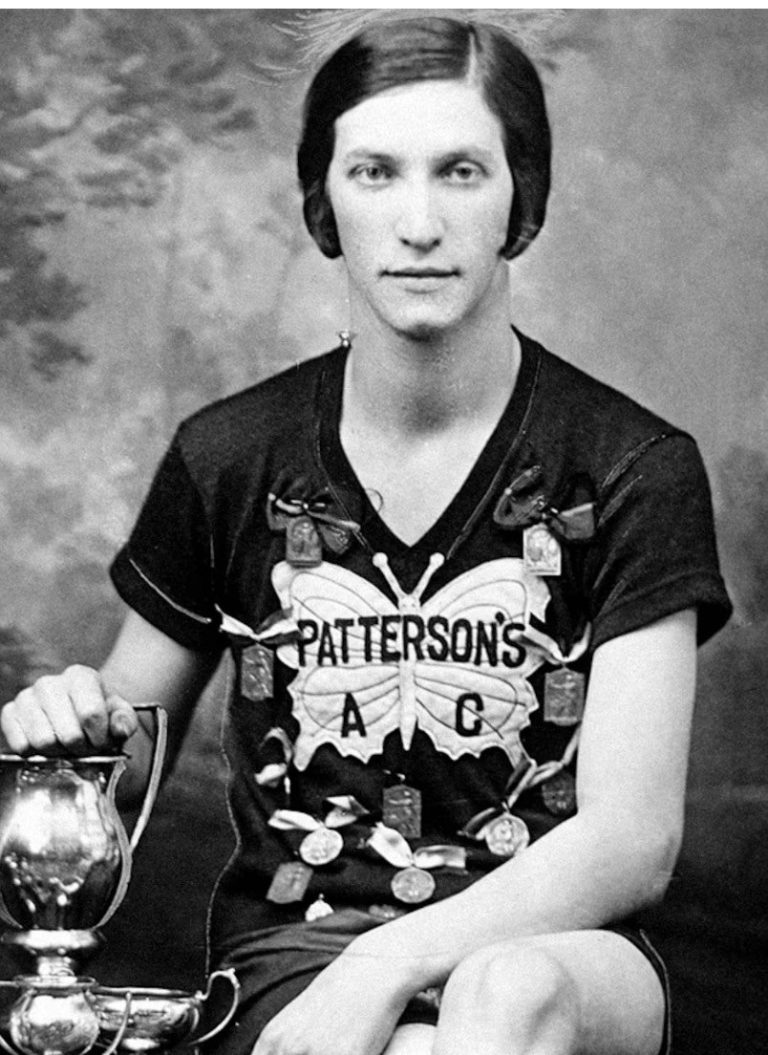
Bobbie Rosenfeld with trophies and medals, around 1928.
CA-K172Culture & sport

Bobbie Rosenfeld, athlete of the half-century

Fanny “Bobbie” Rosenfeld (1903–1969), an all-round athlete who excelled in hockey, basketball, tennis, softball and track, won gold and silver medals at the 1928 Amsterdam Olympics. In 1949 she was chosen Canada’s outstanding female athlete of the half-century, after a later career as a Toronto sports columnist.

Factual accuracy review: No recorded challenge

Contributor: Citizen.ca

Verified against cited sourcesVerified on 2026-10-26↗
Photo: Unknown authorUnknown author · Photo licence: Public domain · Credit & context
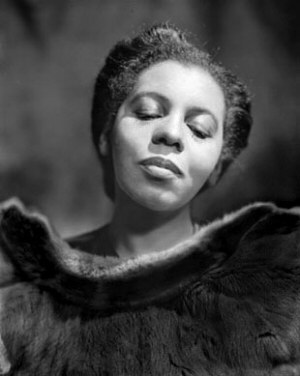
Portia White photographed by Yousuf Karsh in January 1946.
CA-K171Culture & sport

Portia White, contralto

Contralto Portia White (1911–1968), from the Black Nova Scotian community, was the first African-Canadian woman to win international acclaim as a singer. Between 1940 and 1948, her debuts in Toronto and New York and recitals across the Americas and the Caribbean became a source of pride for Canadians.

Factual accuracy review: No recorded challenge

Contributor: Citizen.ca

Verified against cited sourcesVerified on 2026-10-26↗
Photo: Yousuf Karsh · Photo licence: Public domain · Credit & context
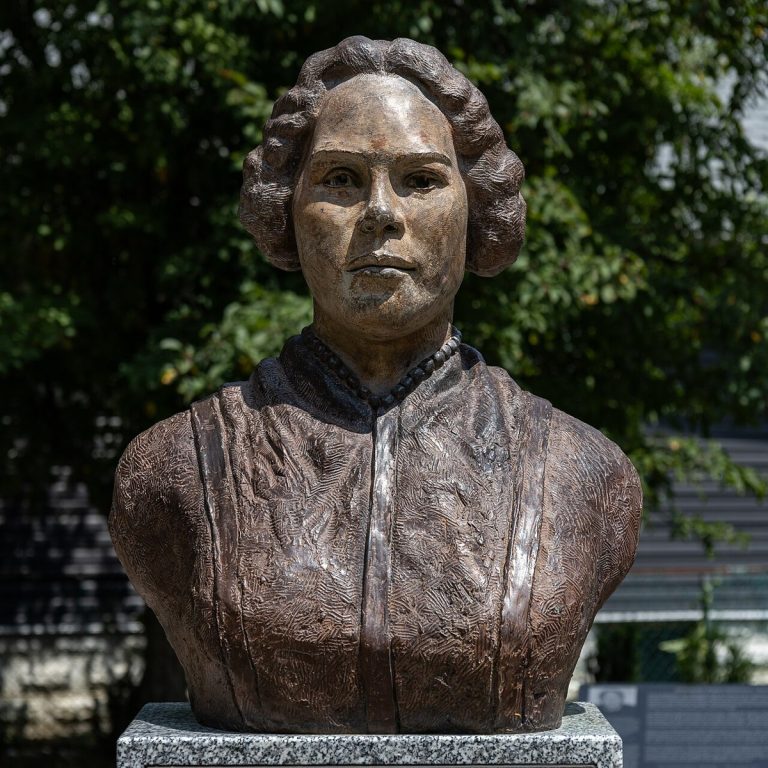
A bust of Mary Ann Shadd Cary by Artis Lane in BME Freedom Park, Chatham, Ontario, photographed in 2025.
CA-K164History

Mary Ann Shadd and the Provincial Freeman

Mary Ann Shadd (1823–1893) became a prominent activist in the Underground Railroad refugee communities of Upper Canada in the 1850s. In 1853 she established the Provincial Freeman, an influential newspaper that argued for the rights of Black people and women and became the leading voice of refugees in Canada.

Factual accuracy review: No recorded challenge

Contributor: Citizen.ca

Verified against cited sourcesVerified on 2026-10-26↗
Photo: Chris Woodrich · Photo licence: CC BY-SA 4.0 · Credit & context
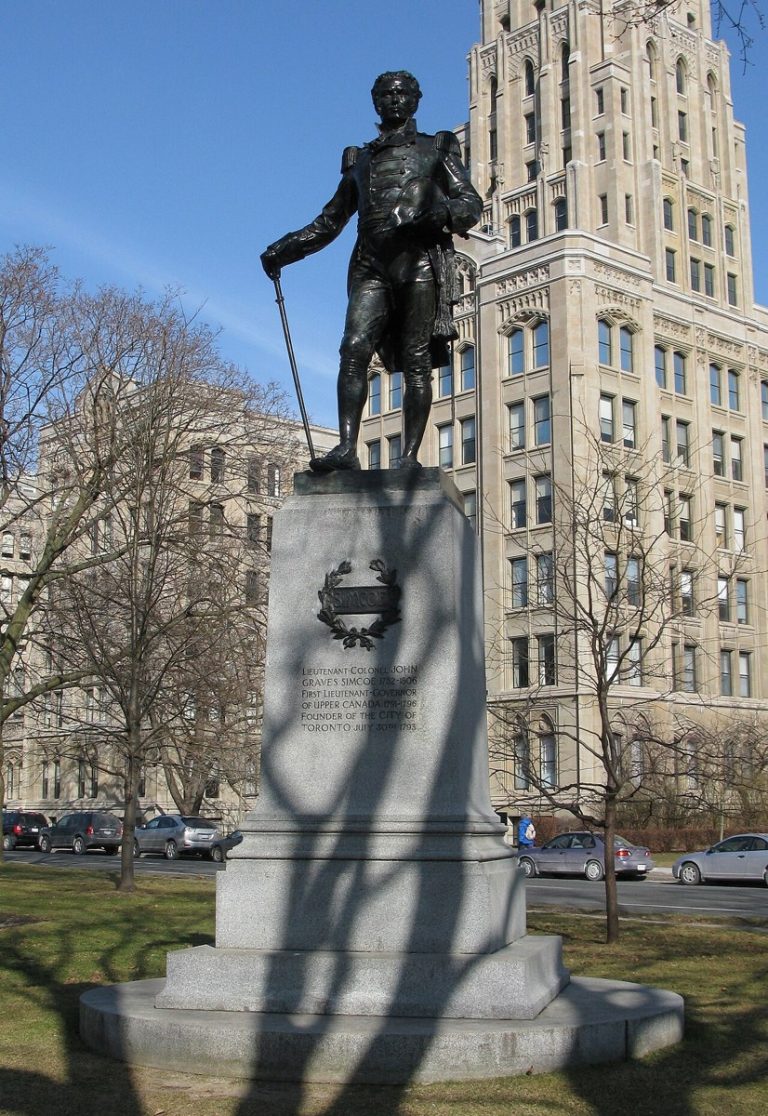
The statue of John Graves Simcoe at Queen’s Park, Toronto, photographed in 2008.
CA-K162History

Upper Canada’s 1793 Act against slavery

Upper Canada’s 1793 Act against slavery, passed under Lieutenant-Governor John Graves Simcoe, prohibited the importation of enslaved people. It did not free people already enslaved, but provided that children subsequently born to enslaved mothers would become free at age 25. Slavery in Upper Canada ended in 1834.

Factual accuracy review: No recorded challenge

Contributor: Citizen.ca

Verified against cited sourcesVerified on 2026-10-26↗
Photo: User:Saforrest · Photo licence: CC BY-SA 3.0 · Credit & context
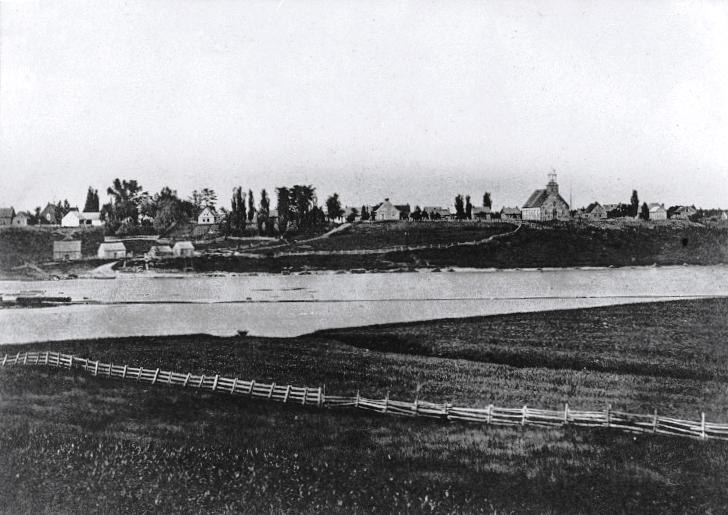
The Abenaki village at Pierreville (Odanak), Quebec, around 1910.
CA-K161Language & names

Théophile Panadis recorded the Abenaki language

Théophile Panadis of Odanak, known as “the Storyteller,” dedicated his life to safeguarding and sharing Abenaki traditional knowledge. Working with ethnologists A. Irving Hallowell and Gordon M. Day, he recorded Abenaki language and history, helping to sustain a strong Abenaki identity.

Factual accuracy review: No recorded challenge

Contributor: Citizen.ca

Verified against cited sourcesVerified on 2026-10-26↗
Photo: AnonymousUnknown author · Photo licence: Public domain · Credit & context
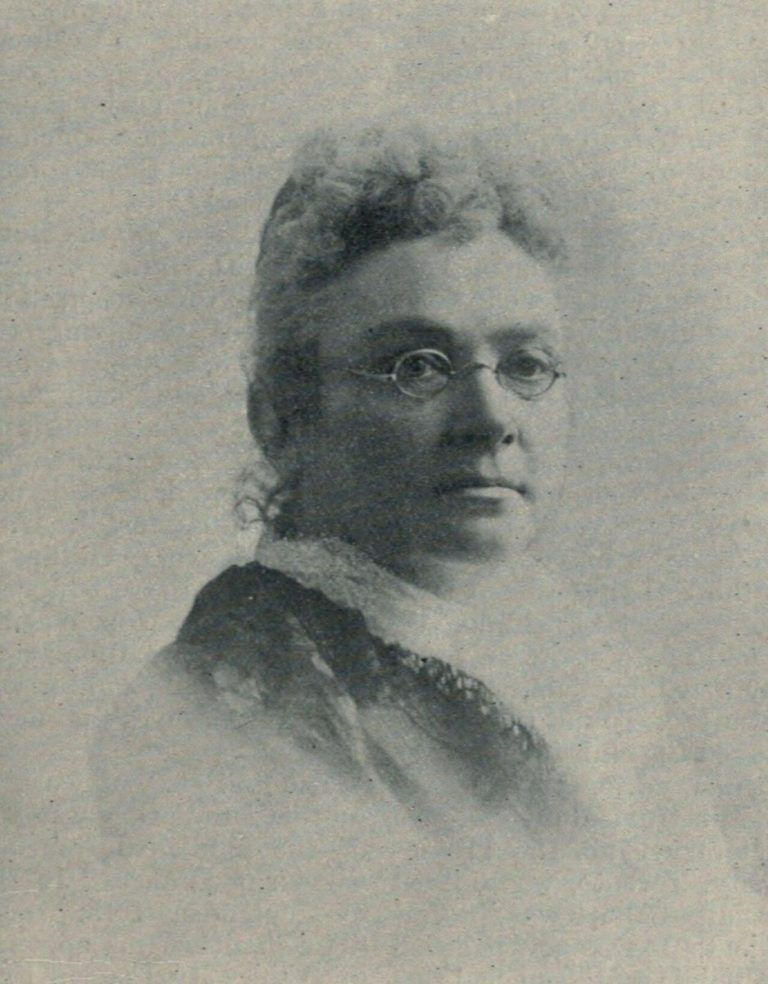
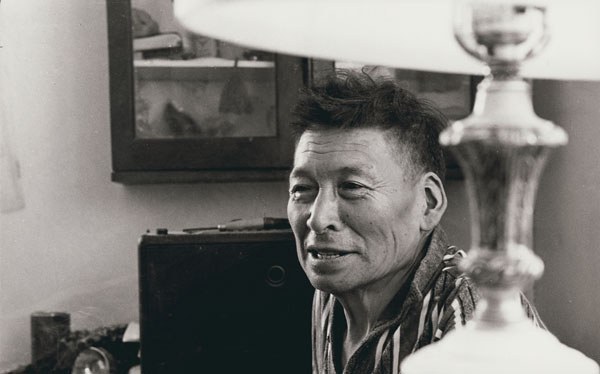
Peter Pitseolak in 1968, photographed by Charles Gimpel.
CA-K160Indigenous peoples & reconciliation

Peter Pitseolak, Inuit photographer and historian

Peter Pitseolak (1902–1973), an Inuit artist, photographer, hunter and historian, recorded both the old customs and beliefs of his people and their adjustment to a new life as Inuit culture underwent momentous change. His carvings, prints and photographs are acclaimed for their historical and artistic value, and he left an account of the history of Sikusuilaq (southern Baffin Island).

Factual accuracy review: No recorded challenge

Contributor: Citizen.ca

Verified against cited sourcesVerified on 2026-10-26↗
Photo: Charles Gimpel · Photo licence: Public domain · Credit & context
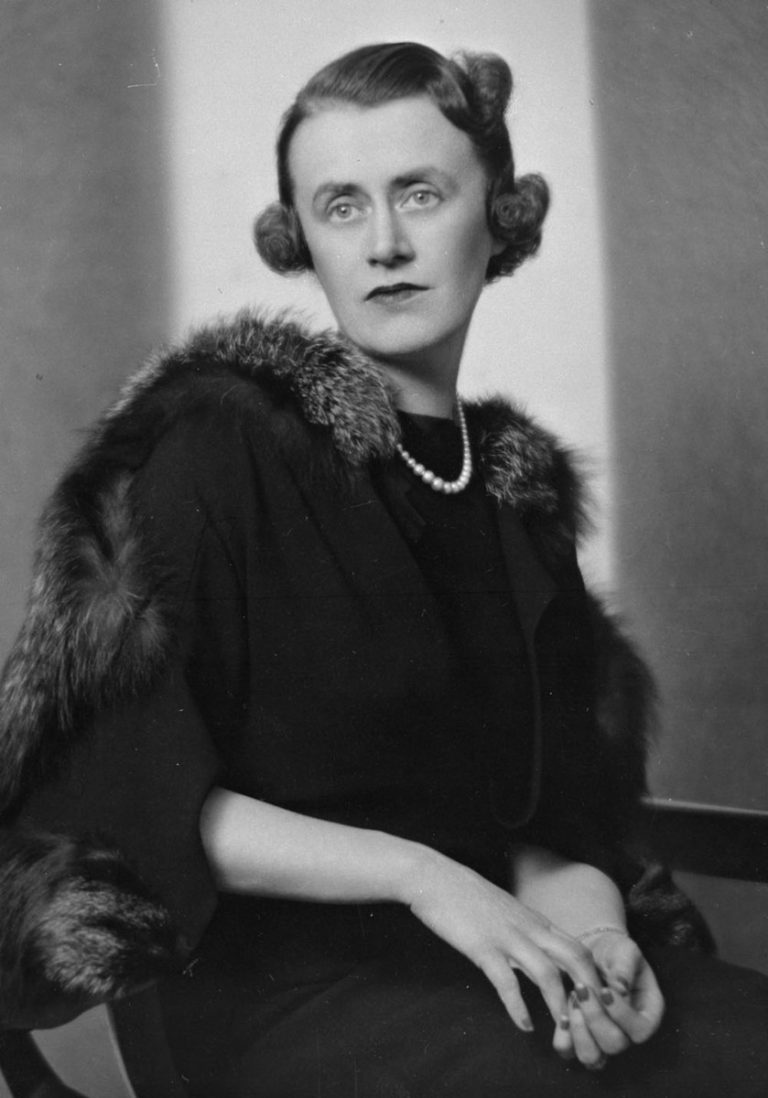
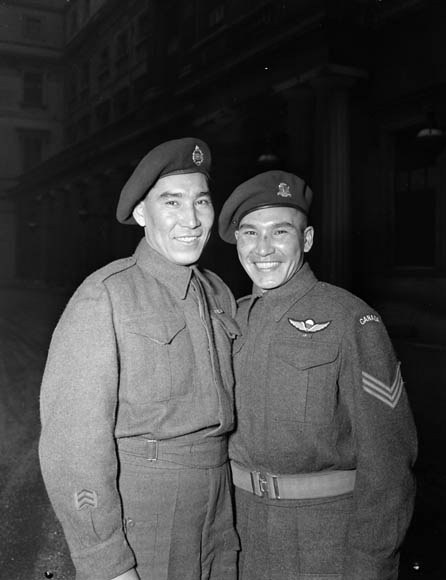
Sergeant Tommy Prince (right) with his brother, Private Morris Prince, at Buckingham Palace, 12 February 1945.
CA-K159Indigenous peoples & reconciliation

Tommy Prince, Anishinaabe veteran and activist

Tommy Prince (1915–1977), an Anishinaabe veteran, was a founding member of the 1st Canadian Parachute Battalion and the First Special Service Force (Devil’s Brigade) in the Second World War, and served in the Korean War. He represented Manitoba First Nations’ interests nationally, and his story illustrates both First Nations soldiers’ contributions and their poor treatment on returning home.

Factual accuracy review: No recorded challenge

Contributor: Citizen.ca

Verified against cited sourcesVerified on 2026-10-26↗
Photo: Christopher J. Woods - Canada. Dept. of National Defence · Photo licence: Public domain · Credit & context
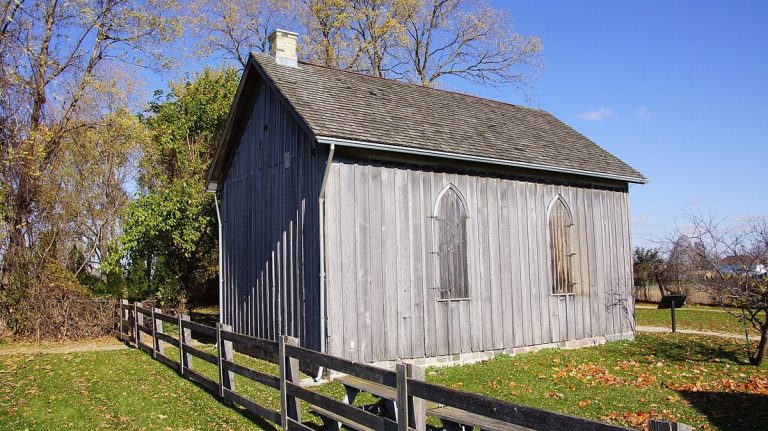
pīhtokahānapiwiyin (Poundmaker), around 1884 (Library and Archives Canada).
CA-K158Indigenous peoples & reconciliation

pīhtokahānapiwiyin (Poundmaker), nēhiyaw chief

pīhtokahānapiwiyin (Poundmaker, ca. 1842–1886), a nēhiyaw (Plains Cree) chief, sought better terms for his people and called on Canada to fulfil its obligations under Treaty 6. In 1885 he repulsed Lieutenant-Colonel Otter’s attack on his reserve at Cut Knife but restrained his followers; imprisoned as a rebel, he died after his early release.

Factual accuracy review: No recorded challenge

Contributor: Citizen.ca

Verified against cited sourcesVerified on 2026-10-26↗
Photo: Unknown authorUnknown author · Photo licence: Public domain · Credit & context