An independent Canadian knowledge project

Focused and Verified

Canadian knowledge base

Search by keyword

Choose one keyword, or combine two. Broader keywords include their descendants.

Keywords: Political and constitutional

Clear search
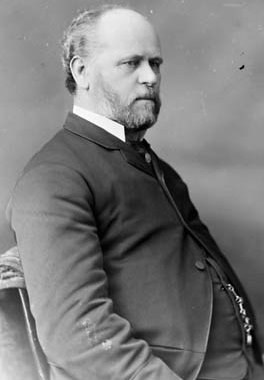
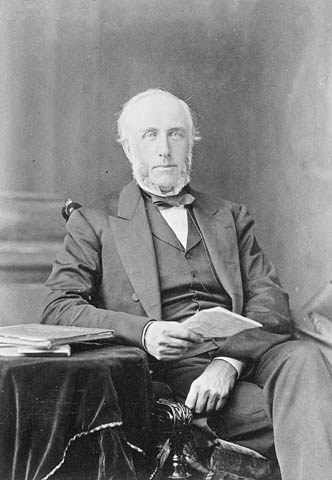
Peter Mitchell, April 1883 (Topley Studio).
CA-K587History

Peter Mitchell, New Brunswick Father of Confederation

Peter Mitchell of Newcastle, New Brunswick, attended the Charlottetown, Québec and London conferences and, as premier in 1866–1867, negotiated New Brunswick’s entry into Confederation. He was Canada’s first Minister of Marine and Fisheries from 1867 to 1873 and later owned the Montreal Herald.

Factual accuracy review: No recorded challenge

Contributor: Citizen.ca

Verified against cited sourcesVerified on 2026-10-26↗
Photo: William James Topley · Photo licence: Public domain · Credit & context
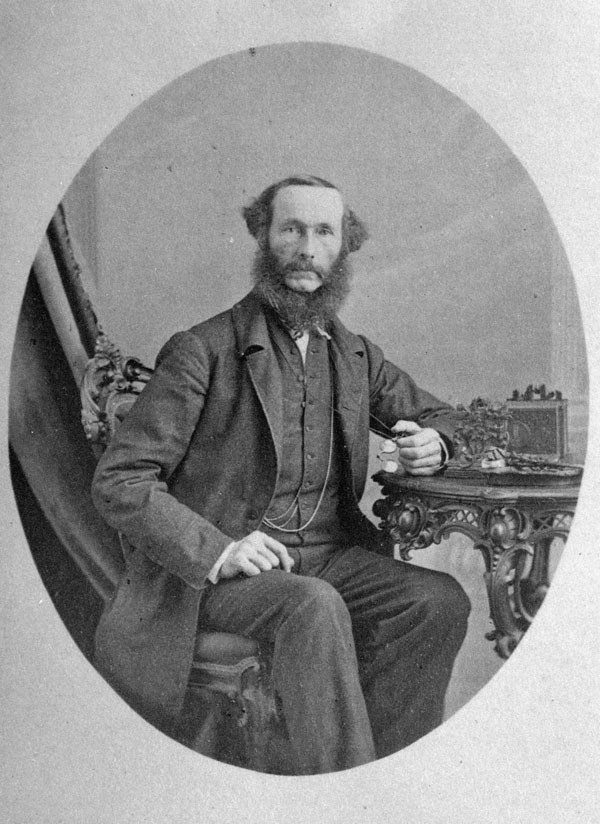
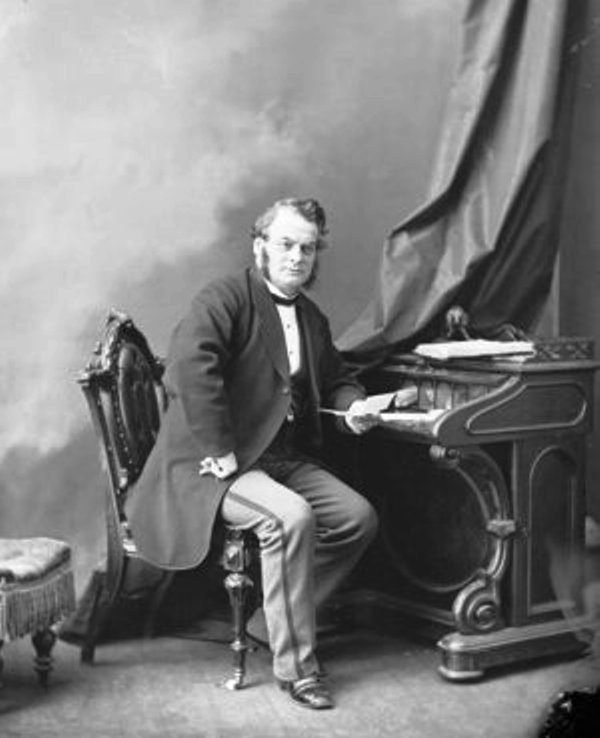
John Hamilton Gray (William Notman, Library and Archives Canada).
CA-K586History

John Hamilton Gray, who chaired the Charlottetown Conference

John Hamilton Gray of Charlottetown served in the British cavalry before becoming premier of Prince Edward Island from 1863 to 1865. An ardent supporter of Confederation, he presided over the Charlottetown Conference and attended the Québec Conference; when the Island rejected the Québec Resolutions he returned to military life.

Factual accuracy review: No recorded challenge

Contributor: Citizen.ca

Verified against cited sourcesVerified on 2026-10-26↗
Photo: William Notman · Photo licence: Public domain · Credit & context
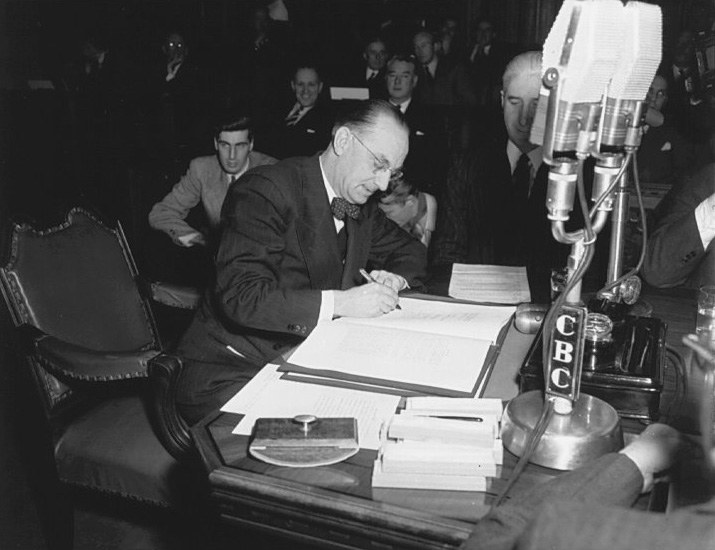
Samuel Leonard Tilley, February 1869 (Topley Studio).
CA-K568History

Sir Leonard Tilley, New Brunswick Father of Confederation

Samuel Leonard Tilley of Gagetown led New Brunswick’s government and was a delegate to the Charlottetown, Québec and London conferences, an architect of the British North America Act and leader of the province’s pro-Confederation forces. As federal Minister of Finance he drafted the National Policy, and he twice served as lieutenant-governor of New Brunswick.

Factual accuracy review: No recorded challenge

Contributor: Citizen.ca

Verified against cited sourcesVerified on 2026-10-26↗
Photo: William James Topley · Photo licence: Public domain · Credit & context
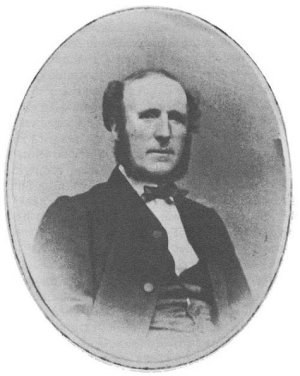
Joey Smallwood signing the agreement admitting Newfoundland into Confederation, Ottawa, December 1948 (National Film Board).
CA-K563History

Joey Smallwood, Newfoundland’s Father of Confederation

Joseph “Joey” Smallwood, born at Gambo and a journalist, labour organizer and broadcaster, played a decisive role in bringing Newfoundland into Confederation in 1949. He became a passionate advocate of union from 1946, helped negotiate the terms and dominated the referendum campaigns, then served as premier from 1949 to 1972.

Factual accuracy review: No recorded challenge

Contributor: Citizen.ca

Verified against cited sourcesVerified on 2026-10-26↗
Photo: NFB · Photo licence: Public domain · Credit & context
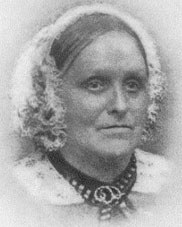
Sir Ambrose Shea (Library and Archives Canada).
CA-K521History

Sir Ambrose Shea, Newfoundland Father of Confederation

Ambrose Shea of St. John’s sat in Newfoundland’s House of Assembly almost continuously from 1848 to 1882. An advocate of union with the other British North American colonies, he was a delegate to the Québec Conference of 1864, though his pro-Confederation coalition was defeated in 1869; his career also included service as Speaker and governor of the Bahamas.

Factual accuracy review: No recorded challenge

Contributor: Citizen.ca

Verified against cited sourcesVerified on 2026-10-26↗
Photo: Unknown photographer; Library and Archives Canada · Photo licence: Public domain · Credit & context
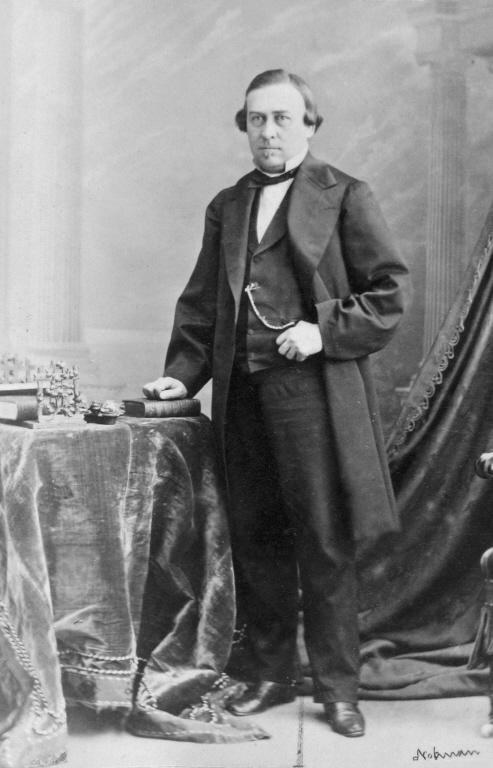
Susanna Moodie, portrait published in 1903.
CA-K441Culture & sport

Susanna Moodie, Roughing It in the Bush

Susanna Moodie, born in England, immigrated to Upper Canada with her husband in 1832, farmed near Cobourg and in the backwoods near Rice Lake, and settled in Belleville in 1840. A leading author of the pre-Confederation period, she wrote two autobiographical books, Roughing It in the Bush (1852) and Life in the Clearings (1853), that have become Canadian classics.

Factual accuracy review: No recorded challenge

Contributor: Citizen.ca

Verified against cited sourcesVerified on 2026-10-26↗
Photo: Unknown photographer; published in H. J. Morgan, Types of Canadian Women (1903) · Photo licence: Public domain · Credit & context
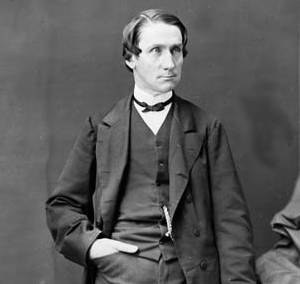
Hector-Louis Langevin in Montréal, 1865 (William Notman).
CA-K399Institutions

Sir Hector-Louis Langevin, Confederation and residential schools

Sir Hector-Louis Langevin, a Father of Confederation, attended all three conferences leading to 1867, helped draft the 72 Resolutions and led the Quebec Conservatives for nearly two decades. As Minister of Public Works, he called in 1883 for Indigenous children to be removed from their homes for assimilation and announced three industrial schools in the Northwest, part of the residential school system’s devastating expansion.

Factual accuracy review: No recorded challenge

Contributor: Citizen.ca

Verified against cited sourcesVerified on 2026-10-26↗
Photo: William Notman · Photo licence: Public domain · Credit & context
Alexander Morris in Ottawa, December 1869 (Topley Studio).
CA-K386Indigenous peoples & reconciliation

Alexander Morris and the Numbered Treaties

Alexander Morris, a supporter of Confederation and lieutenant-governor of Manitoba and the North-West Territories, negotiated Treaties 3, 4, 5 and 6 with First Nations from 1873 to 1876. First Nations sought a reciprocal relationship that safeguarded their autonomy, while Canada’s main goal was territorial expansion for settlers; Morris pressed the government to keep its spoken promises.

Factual accuracy review: No recorded challenge

Contributor: Citizen.ca

Verified against cited sourcesVerified on 2026-10-26↗
Photo: William James Topley · Photo licence: Public domain · Credit & context
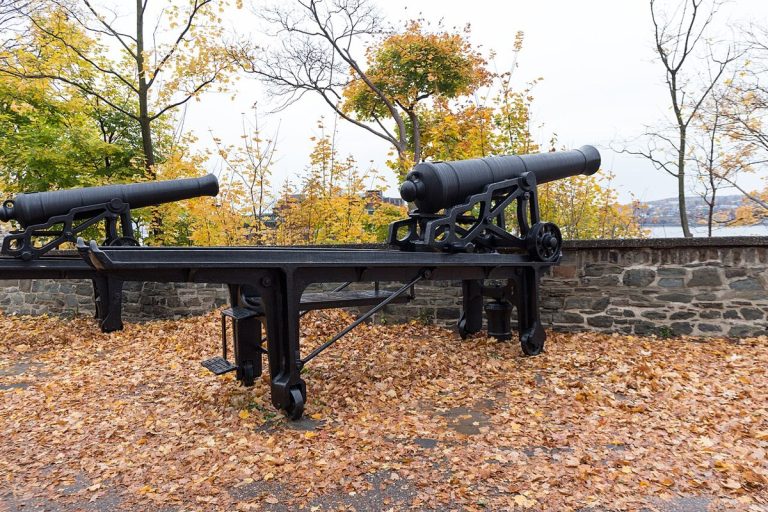
Montmorency Park in Québec City, photographed in 2024.
CA-K369Institutions

Montmorency Park, where parliaments met in Québec

For nearly a century, Montmorency Park in Québec City was where the legislators of Lower Canada, the Province of Canada and the Province of Quebec met. The Québec Conference of 1864 drafted its 72 resolutions for Confederation here. After fire destroyed the Parliament Building in 1883, the site became a public park ten years later.

Factual accuracy review: No recorded challenge

Contributor: Citizen.ca

Verified against cited sourcesVerified on 2026-10-26↗
Photo: Pymouss · Photo licence: CC BY-SA 4.0 · Credit & context
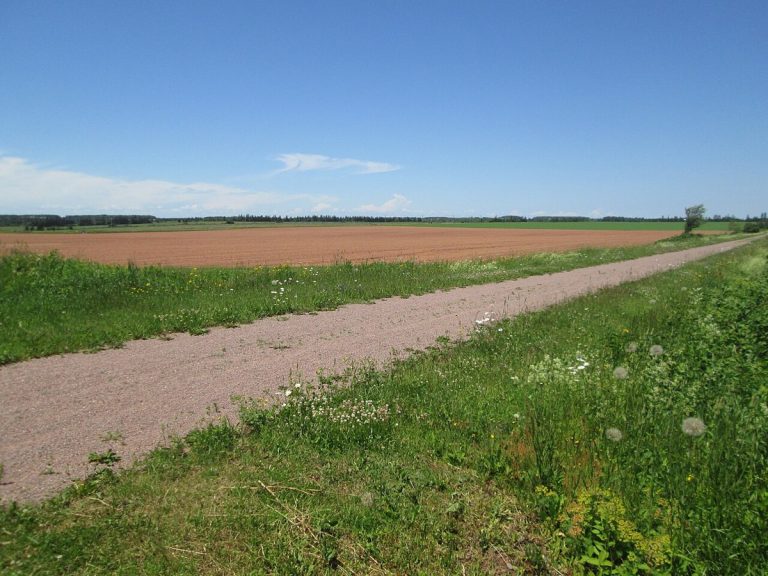
The Confederation Trail, on the former railway roadbed, at Freetown, Prince Edward Island, in 2017.
CA-K284History

The Prince Edward Island Railway and Confederation

The Prince Edward Island Railway was built between 1871 and 1875 to bring economic growth and better communications. Its costs threatened the colony with bankruptcy, and in 1873, after Ottawa agreed to pay for completing the line, Prince Edward Island joined Confederation; after service ended, its roadbed became part of the Confederation Trail.

Factual accuracy review: No recorded challenge

Contributor: Citizen.ca

Verified against cited sourcesVerified on 2026-10-26↗
Photo: Larry from Charlottetown, PEI, Canada · Photo licence: CC BY 2.0 · Credit & context
A portrait of George Brown, Father of Confederation.
CA-K277History

George Brown, The Globe and the Great Coalition

George Brown (1818–1880) founded the influential newspaper The Globe in 1844 and became a leading reformer and head of the “Clear Grit” party. In 1864 he was a key figure in the Great Coalition that made Confederation possible, and he co-founded the Anti-Slavery Society of Canada.

Factual accuracy review: No recorded challenge

Contributor: Citizen.ca

Verified against cited sourcesVerified on 2026-10-26↗
Photo: Hunter & Co. · Photo licence: Public domain · Credit & context
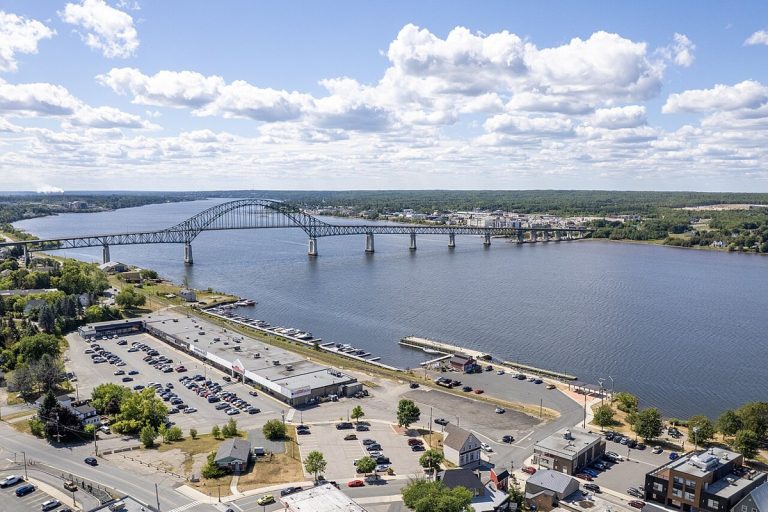
The Miramichi River and Centennial Bridge in Miramichi, New Brunswick, in 2025.
CA-K224History

The Miramichi Fire of 1825

In October 1825, the Miramichi Fire burned an estimated 15,500 km² of northeastern New Brunswick, killing hundreds of people, leaving thousands homeless and affecting both settlers and Mi’kmaq. About £50,000 was raised for relief, thought to be the largest disaster relief effort in pre-Confederation Canadian history.

Factual accuracy review: No recorded challenge

Contributor: Citizen.ca

Verified against cited sourcesVerified on 2026-10-26↗
Photo: Gabriel Picard · Photo licence: CC BY-SA 4.0 · Credit & context
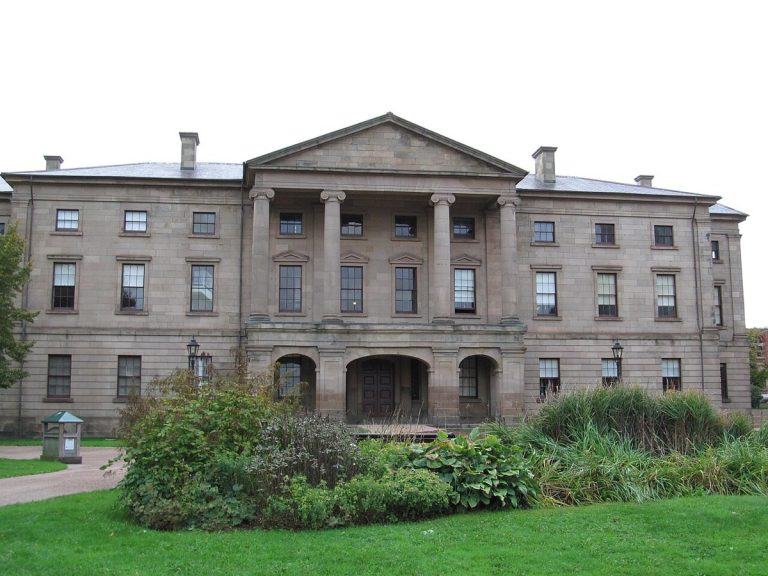
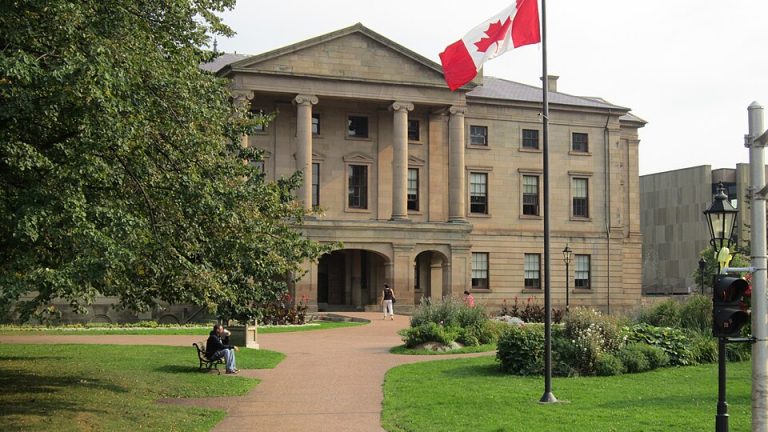
Province House in Charlottetown, Prince Edward Island, photographed in 2012.
CA-K152History

The Charlottetown and Québec Conferences of 1864

In September 1864, the Charlottetown Conference brought together leaders from Prince Edward Island, Nova Scotia, New Brunswick and the Province of Canada, who agreed in principle to a federal union. At the Québec Conference the following month, the delegates drafted the 72 Resolutions, which laid the foundation of the British North America Act.

Factual accuracy review: No recorded challenge

Contributor: Citizen.ca

Verified against cited sourcesVerified on 2026-10-26↗
Photo: Doug Kerr · Photo licence: CC BY-SA 2.0 · Credit & context