An independent Canadian knowledge project

Focused and Verified

Canadian knowledge base

Search by keyword

Choose one keyword, or combine two. Broader keywords include their descendants.

Keywords: Provinces and territories

Clear search
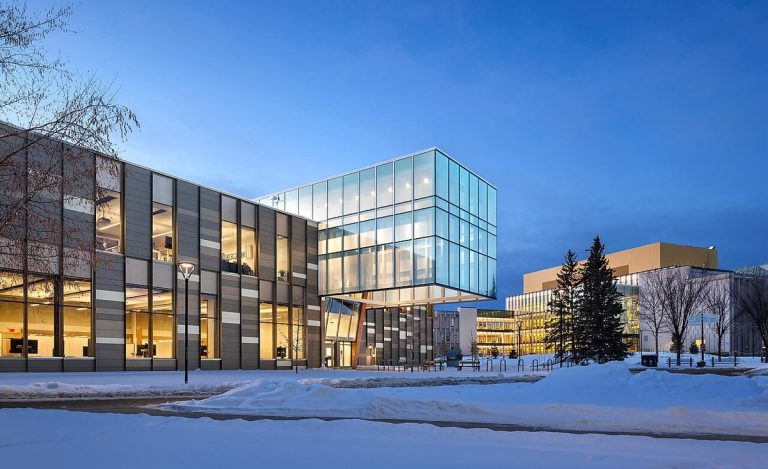
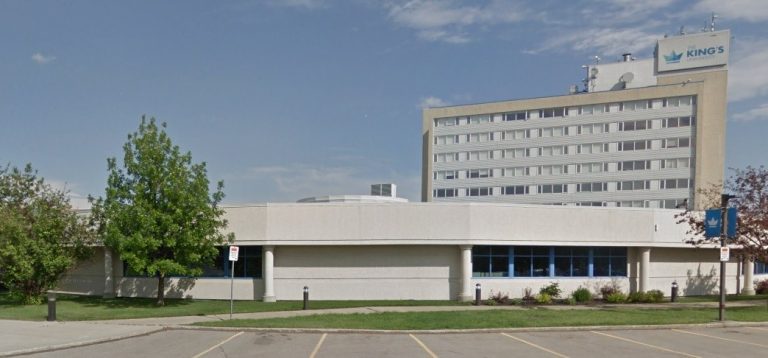
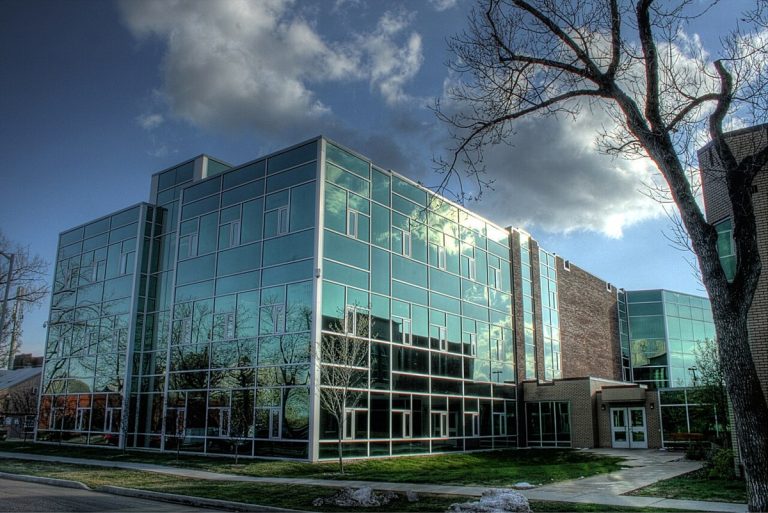
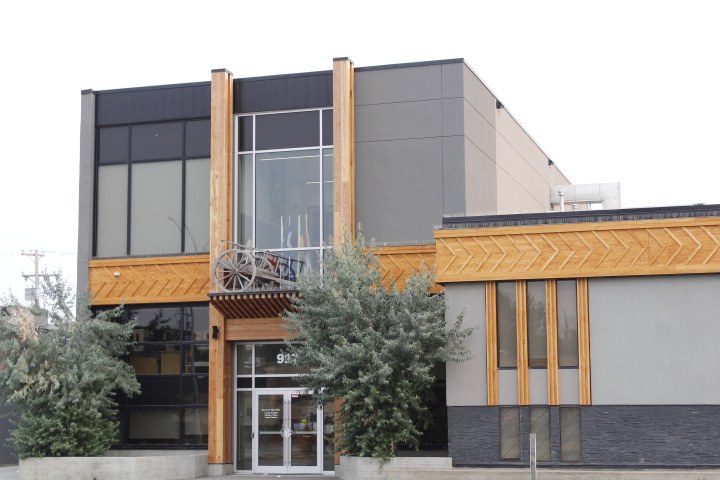
The Hole Academic Centre, Concordia University of Edmonton.
CA-K1159Institutions

Concordia University of Edmonton

Concordia University of Edmonton began in 1921 as Concordia College, founded by the Lutheran Church–Missouri Synod to prepare young men for preaching and teaching. It admitted women from 1939 and began offering university courses in affiliation with the University of Alberta in 1967.

Factual accuracy review: No recorded challenge

Contributor: Citizen.ca

Verified against cited sourcesVerified on 2026-10-27↗
Photo: WinterE229 WinterforceMedia · Photo licence: Public domain · Credit & context
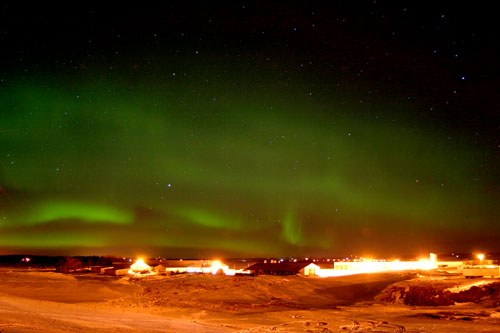
Northern lights over Canadian University College in Lacombe, winter 2005; the institution is now Burman University.
CA-K1158Institutions

Burman University, Lacombe

Burman University traces its roots to a Seventh-day Adventist school founded near Leduc, Alberta, in 1907 and moved to Lacombe in 1909. On December 15, 2014, the board of Canadian University College approved changing the institution’s name to Burman University.

Factual accuracy review: No recorded challenge

Contributor: Citizen.ca

Verified against cited sourcesVerified on 2026-10-27↗
Photo: Mz Kitty at en.wikipedia · Photo licence: Public domain · Credit & context
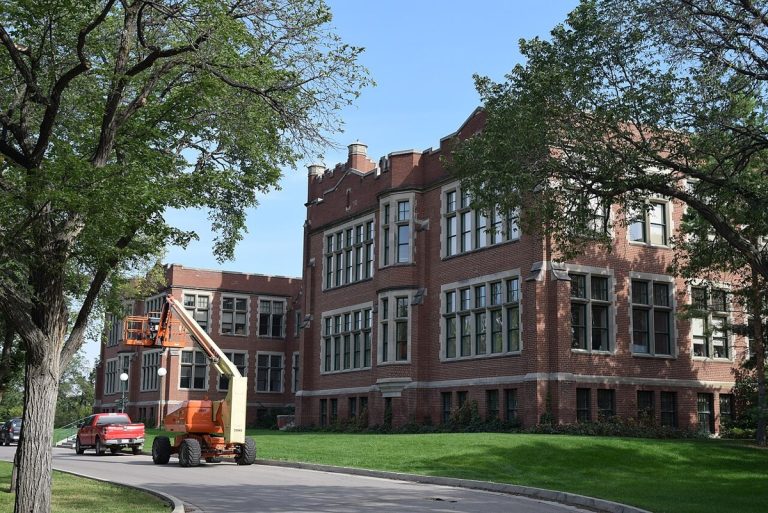
University of Regina Continuing Development Centre.
CA-K1152Institutions

University of Regina, independent since 1974

The University of Regina became an independent, degree-granting university on July 1, 1974, building on its earlier history as Regina College. Its federated colleges include Campion College, Luther College and First Nations University of Canada.

Factual accuracy review: No recorded challenge

Contributor: Citizen.ca

Verified against cited sourcesVerified on 2026-10-27↗
Photo: Haydn Blackey from Cardiff, Wales · Photo licence: CC BY-SA 2.0 · Credit & context
Gabriel Dumont Institute, Saskatoon.
CA-K1148Institutions

Gabriel Dumont Institute, the education arm of the Métis Nation – Saskatchewan

The Gabriel Dumont Institute of Native Studies and Applied Research was founded in 1980 to meet the educational and cultural needs of Saskatchewan’s Métis community. It is the official training and education arm of the Métis Nation – Saskatchewan and is owned by the Métis people of Saskatchewan; its college delivers the first two years of University of Saskatchewan arts and science degrees.

Factual accuracy review: No recorded challenge

Contributor: Citizen.ca

Verified against cited sourcesVerified on 2026-10-27↗
Photo: Tanbir M-05 · Photo licence: CC BY-SA 4.0 · Credit & context
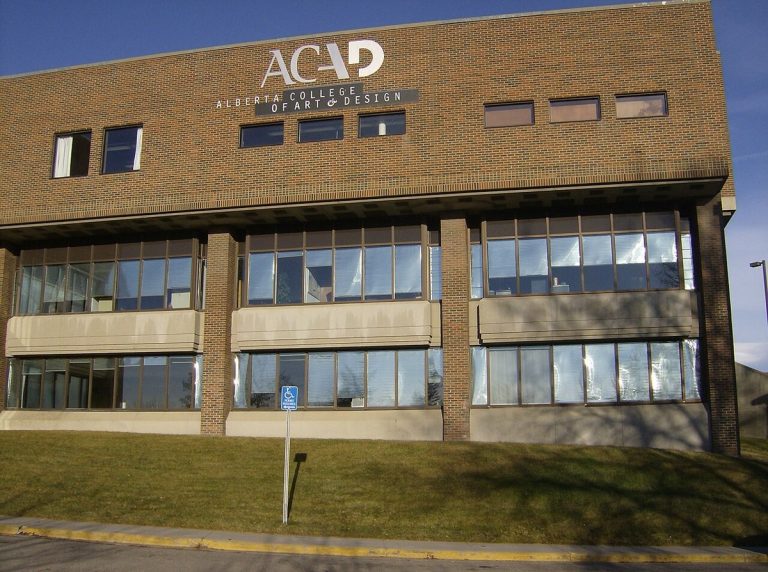
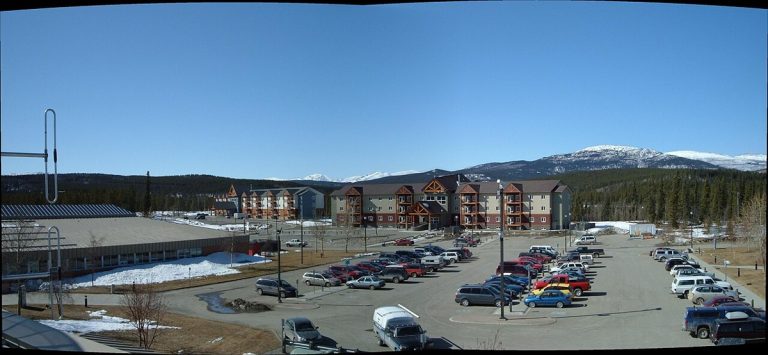
View west from the roof of Yukon College in Whitehorse, 2007; the institution later became Yukon University.
CA-K1143Institutions

Yukon University, from training centre to university

Yukon University traces its history to the Whitehorse Vocational and Technical Training Centre, founded in 1963. It became Yukon College in 1983, moved to its present Whitehorse campus in 1988 and was granted university status in 2020. Elder Angela Sidney named the campus Ayamdigut, a Tlingit name meaning “she got up and went.”

Factual accuracy review: No recorded challenge

Contributor: Citizen.ca

Verified against cited sourcesVerified on 2026-10-27↗
Photo: grampymoose · Photo licence: CC BY-SA 2.0 · Credit & context
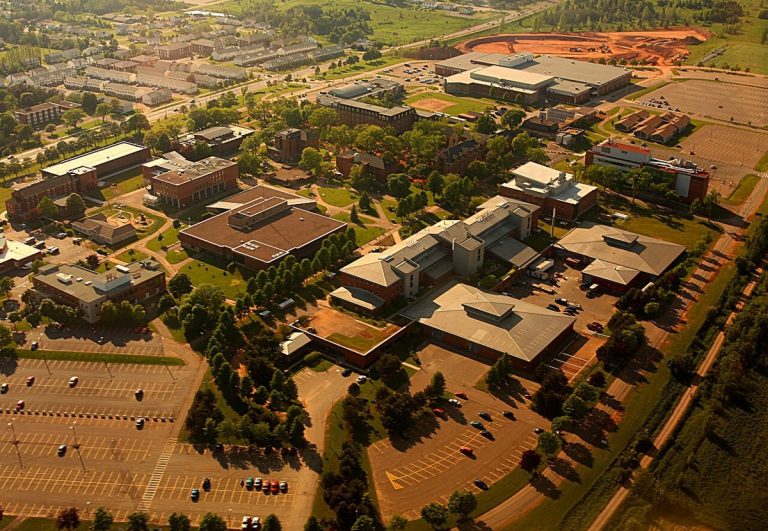
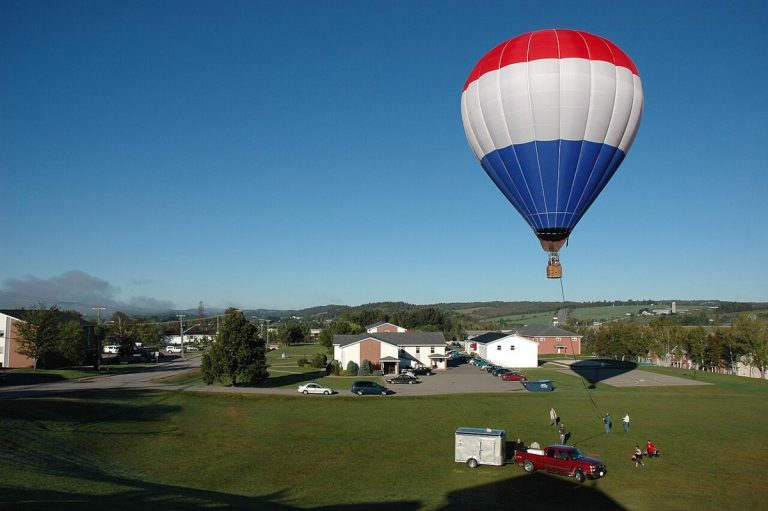
The UPEI campus in Charlottetown, photographed in 2008.
CA-K1137Institutions

University of Prince Edward Island, founded 1969

The University of Prince Edward Island welcomed its first students in September 1969, following the provincial University Act. Its founding institutions were Prince of Wales College and Saint Dunstan’s University, both represented in UPEI’s coat of arms.

Factual accuracy review: No recorded challenge

Contributor: Citizen.ca

Verified against cited sourcesVerified on 2026-10-27↗
Photo: Martin Cathrae from Charlottetown, PE, Canada · Photo licence: CC BY-SA 2.0 · Credit & context
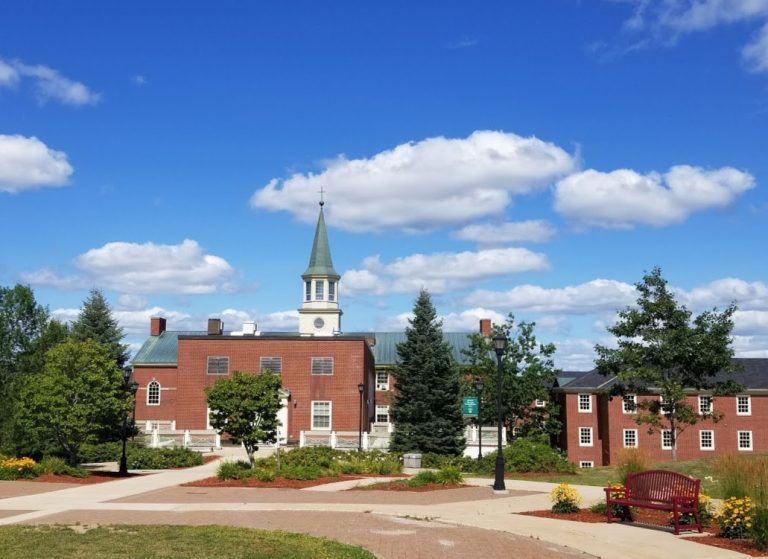
Upper campus, St. Thomas University, Fredericton.
CA-K1136Institutions

St. Thomas University in Fredericton

St. Thomas University dates back to 1910, when the Basilian Fathers took charge of St. Thomas College in Chatham, New Brunswick, a high school and junior college. It received a university charter in 1934 and was renamed St. Thomas University in 1960. Under a 1963 agreement it moved to the University of New Brunswick campus in Fredericton, while continuing to grant its own degrees in arts and education.

Factual accuracy review: No recorded challenge

Contributor: Citizen.ca

Verified against cited sourcesVerified on 2026-10-27↗
Photo: HALNSCDN · Photo licence: CC BY-SA 4.0 · Credit & context
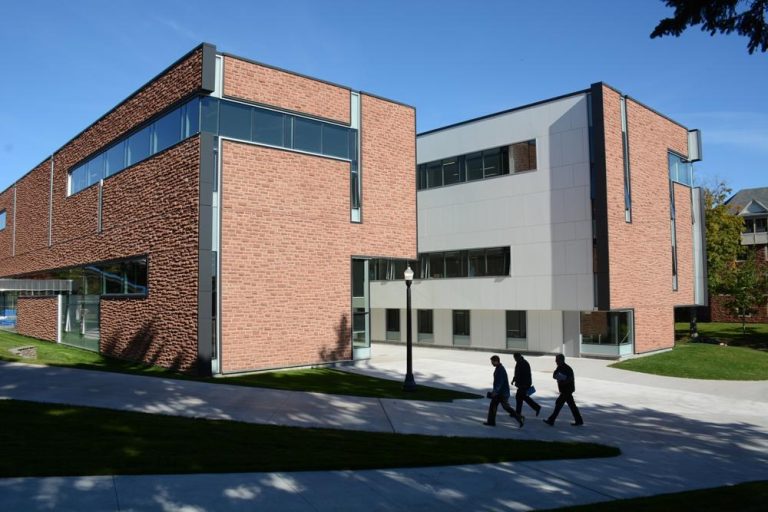
Purdy Crawford Centre for the Arts, Mount Allison University.
CA-K1135Institutions

Mount Allison University in Sackville

Mount Allison University traces its beginnings to Charles Frederick Allison’s 1839 proposal for a school offering elementary and higher education in Sackville, New Brunswick. The university provides a liberal arts and sciences education near the Tantramar marshes.

Factual accuracy review: No recorded challenge

Contributor: Citizen.ca

Verified against cited sourcesVerified on 2026-10-27↗
Photo: Jmdc-chicago · Photo licence: CC BY-SA 4.0 · Credit & context
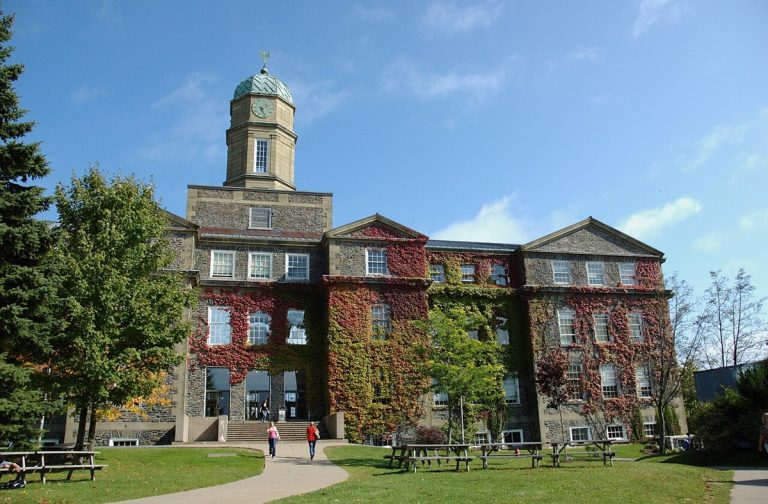
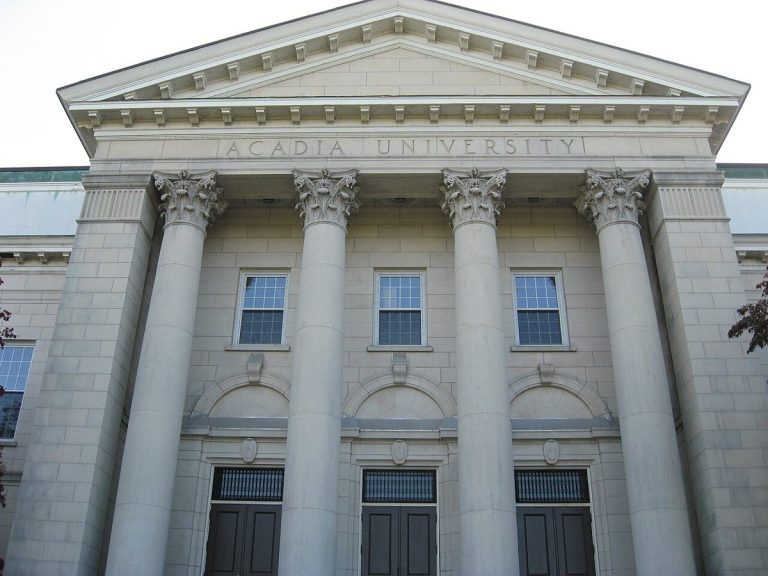
University Hall, Acadia University.
CA-K1131Institutions

Acadia University, founded 1838

Acadia University in Wolfville, Nova Scotia, was founded in 1838 by local Baptists who wanted a university for the region that would not require religious tests of its faculty or students. Clara Belle Marshall became its first woman graduate in 1884, and University Hall, completed in 1925, is a landmark of the campus.

Factual accuracy review: No recorded challenge

Contributor: Citizen.ca

Verified against cited sourcesVerified on 2026-10-27↗
Photo: Ryan Stevens · Photo licence: CC BY 2.0 · Credit & context
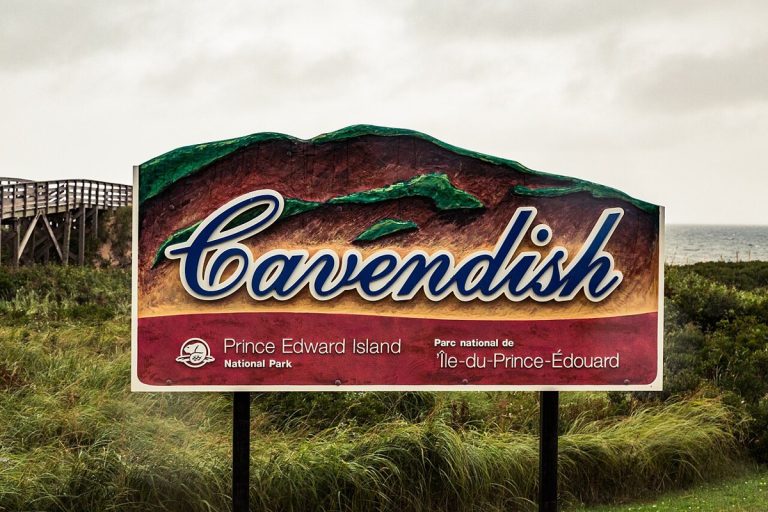
A Cavendish entrance sign at Prince Edward Island National Park.
CA-K1044Places & geography

Prince Edward Island National Park’s beaches and dunes

Prince Edward Island National Park protects a coastal landscape of sandy beaches, red cliffs and wind-sculpted dunes. Its coastal bays, woodlands and ponds provide habitat for herons, red foxes, waterfowl and warblers.

Factual accuracy review: No recorded challenge

Contributor: Citizen.ca

Verified against cited sourcesVerified on 2026-10-27↗
Photo: Tony Webster from San Francisco, California · Photo licence: CC BY-SA 2.0 · Credit & context
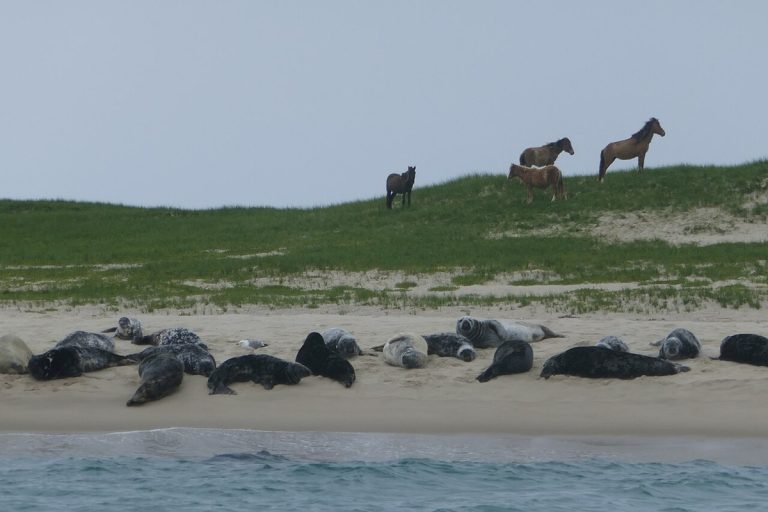
Wild horses and grey seals on the beach, Sable Island.
CA-K1043Places & geography

Sable Island, “Graveyard of the Atlantic”

Sable Island National Park Reserve is a thin crescent of shifting sand at the edge of the Continental Shelf, 290 kilometres southeast of Halifax. It is home to the famous Sable Island wild horses, grey seals and plants, birds and insects, and is known as the “Graveyard of the Atlantic” for the more than 350 shipwrecks off its shores.

Factual accuracy review: No recorded challenge

Contributor: Citizen.ca

Verified against cited sourcesVerified on 2026-10-27↗
Photo: Paul Gierszewski · Photo licence: CC BY-SA 4.0 · Credit & context
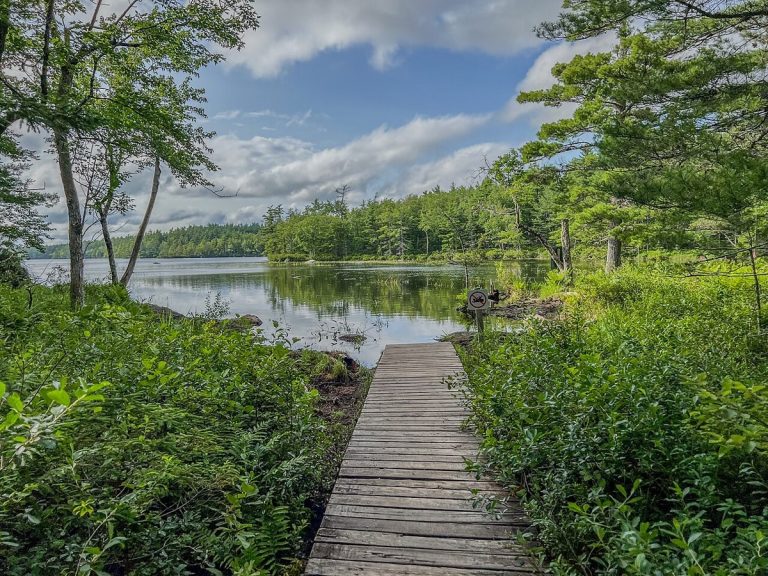
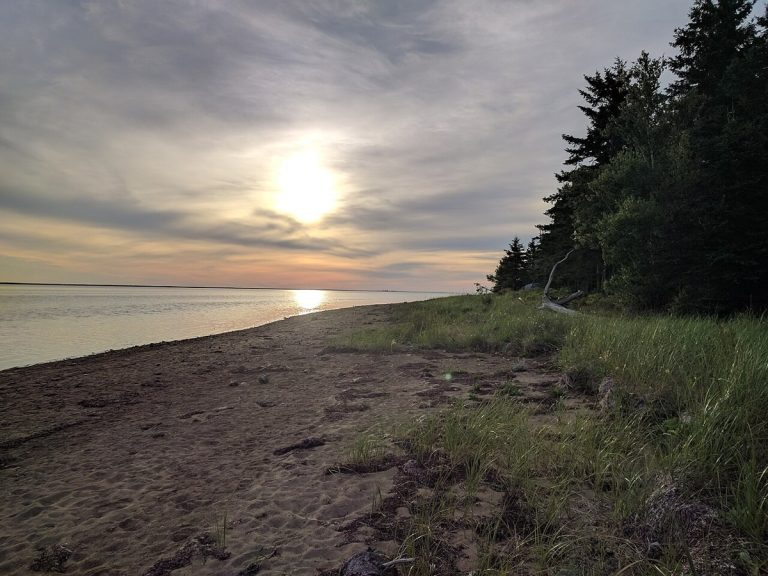
Big Dam Lake Trail, Kejimkujik National Park.
CA-K1042Places & geography

Kejimkujik, Mi’kmaq land and Nova Scotia’s dark-sky preserve

Kejimkujik National Park and National Historic Site, in southwest Nova Scotia, preserves Mi’kmaq cultural heritage, including petroglyphs and waters travelled by the Mi’kmaq for thousands of years. It is a dark-sky preserve, and its Seaside area at Port Joli protects a stretch of Atlantic coast.

Factual accuracy review: No recorded challenge

Contributor: Citizen.ca

Verified against cited sourcesVerified on 2026-10-27↗
Photo: Z3lvs · Photo licence: CC0 · Credit & context
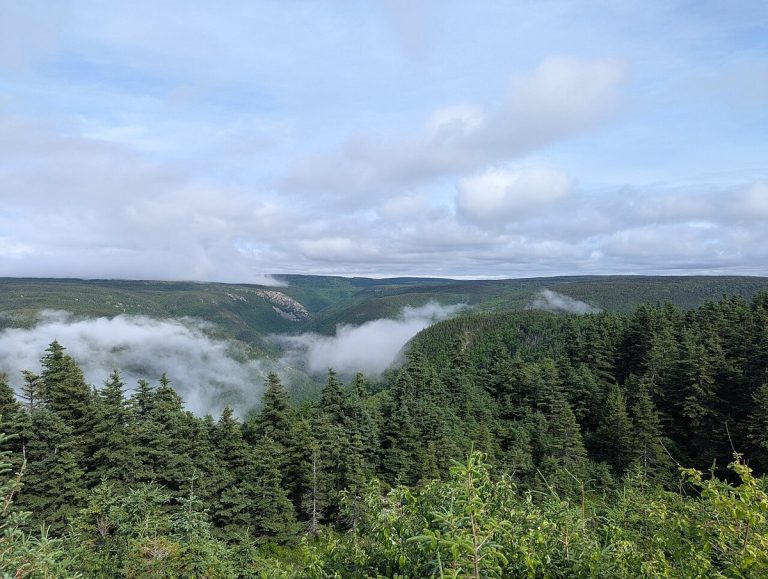
Cape Breton Highlands National Park from the Cabot Trail.
CA-K1041Places & geography

Cape Breton Highlands National Park and the Cabot Trail

Cape Breton Highlands National Park in Nova Scotia protects a forested plateau cut by steep cliffs and deep river canyons along the Atlantic coast. About one-third of the Cabot Trail runs through the park. Its cool maritime climate and rugged landscape bring together Acadian, boreal and taiga habitats.

Factual accuracy review: No recorded challenge

Contributor: Citizen.ca

Verified against cited sourcesVerified on 2026-10-27↗
Photo: ArcaneCraeda · Photo licence: CC BY-SA 4.0 · Credit & context
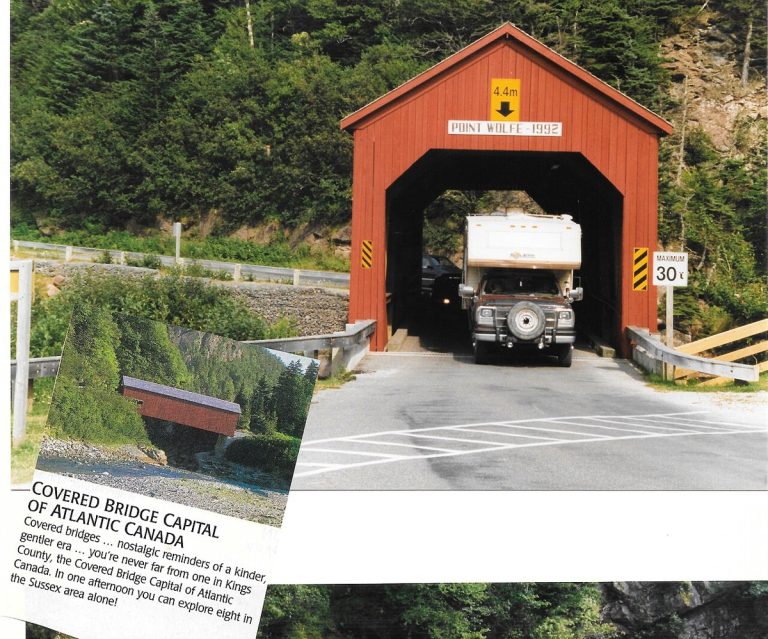
The Point Wolfe covered bridge in Fundy National Park, with an inset showing a photographed interpretive sign.
CA-K1037Places & geography

Fundy National Park, from tides to Acadian forest

Fundy National Park in New Brunswick lies on the Bay of Fundy, home of the world’s highest tides, on the unceded territory of the Mi’gmaq. Beyond the shore, where visitors can walk the sea floor at low tide, trails lead inland to waterfalls deep in Acadian forest, and the park works with partners to recover Inner Bay of Fundy Atlantic salmon.

Factual accuracy review: No recorded challenge

Contributor: Citizen.ca

Verified against cited sourcesVerified on 2026-10-27↗
Photo: Eduard47 · Photo licence: CC BY-SA 4.0 · Credit & context
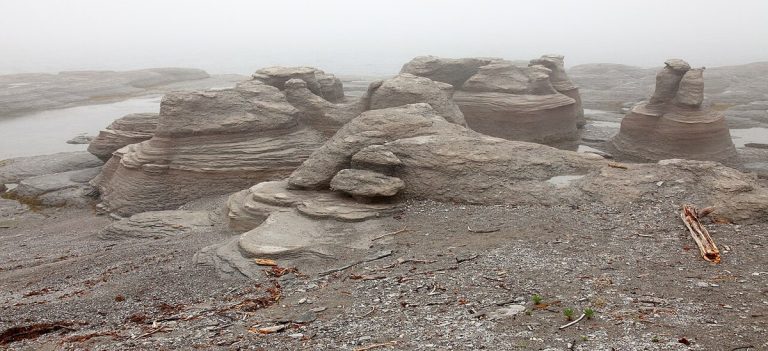
Monoliths on Île Nue, Mingan Archipelago National Park Reserve.
CA-K1036Places & geography

The monoliths of the Mingan Archipelago

The Mingan Archipelago National Park Reserve, on Quebec’s North Shore, holds the largest concentration of monoliths in Canada. Whales and seals swim offshore, and its thousands of islands and islets are known for arctic-alpine plants and bird colonies.

Factual accuracy review: No recorded challenge

Contributor: Citizen.ca

Verified against cited sourcesVerified on 2026-10-27↗
Photo: Marc-Lautenbacher · Photo licence: CC BY-SA 4.0 · Credit & context
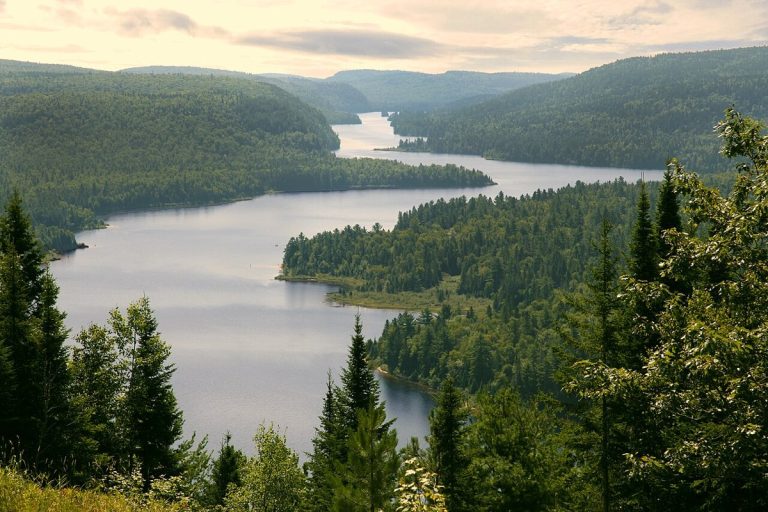
Wapizagonke Lake, La Mauricie National Park.
CA-K1035Places & geography

La Mauricie National Park

La Mauricie National Park in Quebec is both accessible and wild, open to hiking, camping, canoeing, cycling and skiing through the four seasons. It protects a territory where Indigenous knowledge, holidaymaking and logging have all left their mark, at the heart of Mauricie culture.

Factual accuracy review: No recorded challenge

Contributor: Citizen.ca

Verified against cited sourcesVerified on 2026-10-27↗
Photo: Marc-Lautenbacher · Photo licence: CC BY-SA 4.0 · Credit & context
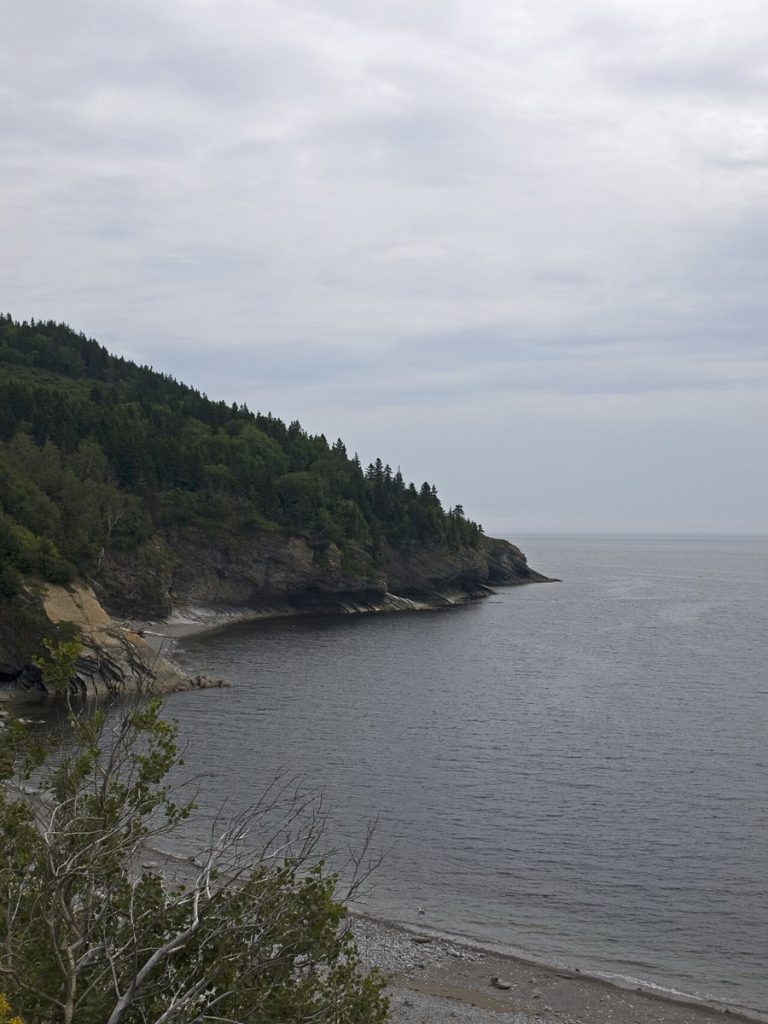
Southwest coast of Cap Gaspé, Forillon National Park.
CA-K1034Places & geography

Forillon National Park’s people of land and sea

The Mi’gmaq and their ancestors have used the rich territory of Forillon, on Quebec’s Gaspé coast, for thousands of years. From the 18th century, cod merchants arrived, and Anglo-Norman, Irish, Scottish, French-Canadian and American families settled to take part in the fishery. The park’s cultural landscape, including the fishing village of Grande-Grave and the Cape Gaspé lighthouse, reflects this long relationship between people, land and sea.

Factual accuracy review: No recorded challenge

Contributor: Citizen.ca

Verified against cited sourcesVerified on 2026-10-27↗
Photo: Ymblanter · Photo licence: CC BY-SA 4.0 · Credit & context