An independent Canadian knowledge project

Focused and Verified

Canadian knowledge base

Search by keyword

Choose one keyword, or combine two. Broader keywords include their descendants.

Keywords: Knowledge and innovation

Clear search
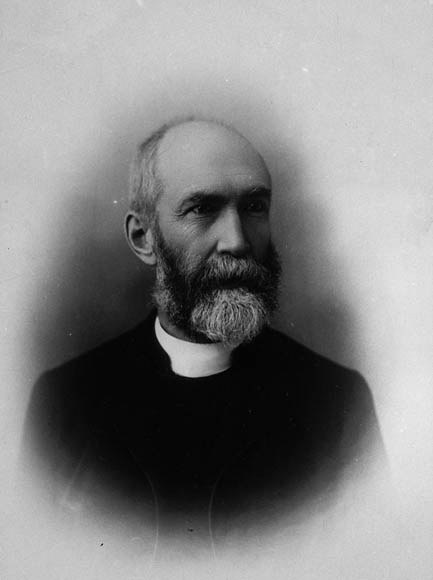
George Monro Grant, principal of Queen’s College (Library and Archives Canada).
CA-K466Institutions

George Monro Grant, principal of Queen’s

George Monro Grant, born at Albion Mines (Stellarton), Nova Scotia, was an educator and writer, author of Ocean to Ocean and minister of St. Matthew’s Church in Halifax. He was principal of Queen’s University from 1877 to 1902 and president of the Royal Society of Canada in 1901.

Factual accuracy review: No recorded challenge

Contributor: Citizen.ca

Verified against cited sourcesVerified on 2026-10-26↗
Photo: Government of Canada · Photo licence: Public domain · Credit & context
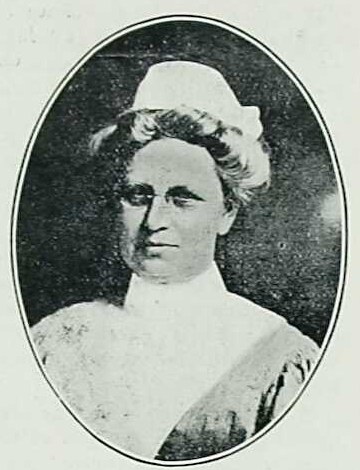
Mary Southcott, portrait published in The Distaff, 1917.
CA-K455Institutions

Mary Southcott and nursing in Newfoundland

Mary Southcott, an educator, suffragist and nursing leader, led the campaign to professionalize nursing in early 20th-century Newfoundland. Trained in London, she founded the St. John’s General Hospital School of Nursing in 1903, the only one in Newfoundland until 1929, and helped raise standards, train midwives and found a professional association of nurses.

Factual accuracy review: No recorded challenge

Contributor: Citizen.ca

Verified against cited sourcesVerified on 2026-10-26↗
Photo: The Distaff, 1917 · Photo licence: Public domain · Credit & context
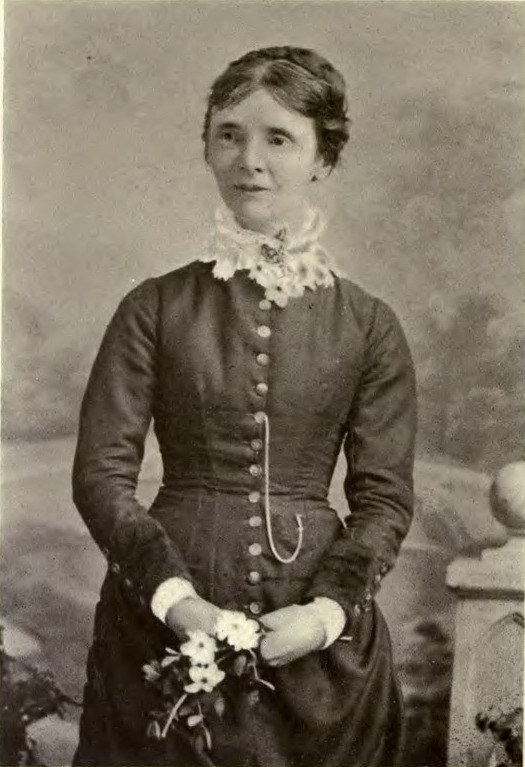
Agnes Maule Machar, portrait published in 1903.
CA-K452Culture & sport

Agnes Maule Machar, Victorian social commentator

Agnes Maule Machar was an influential social commentator in Victorian Canada and a proponent of Christian social reform and Canadian nationalism with imperial sentiment. In leading periodicals she debated intellectual leaders, arguing for temperance, labour reform and women’s rights, including access to higher education.

Factual accuracy review: No recorded challenge

Contributor: Citizen.ca

Verified against cited sourcesVerified on 2026-10-26↗
Photo: Unknown photographer; published in H. J. Morgan, Types of Canadian Women (1903) · Photo licence: Public domain · Credit & context
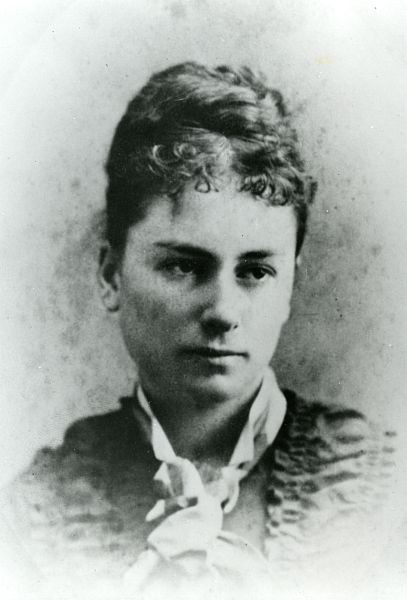
Portrait of Grace Annie Lockhart.
CA-K450Institutions

Grace Annie Lockhart, first woman graduate in the British Empire

Grace Annie Lockhart was the first woman to earn a university degree in the British Empire. A student at the Mount Allison Ladies’ Academy in Sackville, New Brunswick, she took courses at Mount Allison College, which had become co-educational in 1872, enrolled formally in 1874 and graduated on 25 May 1875 with a Bachelor of Science and English Literature.

Factual accuracy review: No recorded challenge

Contributor: Citizen.ca

Verified against cited sourcesVerified on 2026-10-26↗
Photo: Unknown author · Photo licence: Public domain · Credit & context
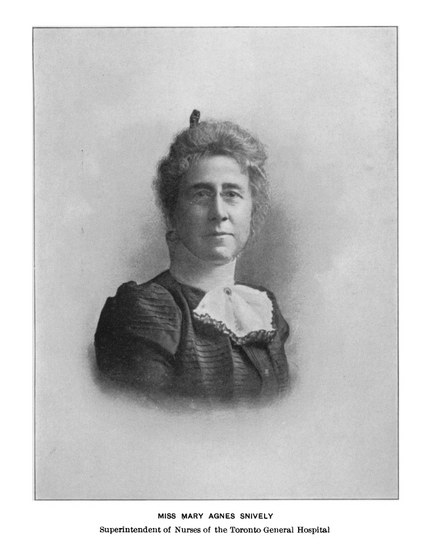
Mary Agnes Snively, portrait published in 1901.
CA-K449Institutions

Mary Agnes Snively and the nursing profession

Mary Agnes Snively led the struggle to have nursing recognized as a science-based profession rather than a domestic pursuit. In 1908 she founded the Canadian National Association of Trained Nurses, which became the Canadian Nurses Association in 1924, and she made the Toronto General Hospital School of Nursing a model of nursing education.

Factual accuracy review: No recorded challenge

Contributor: Citizen.ca

Verified against cited sourcesVerified on 2026-10-26↗
Photo: The American Journal of Nursing · Photo licence: Public domain · Credit & context
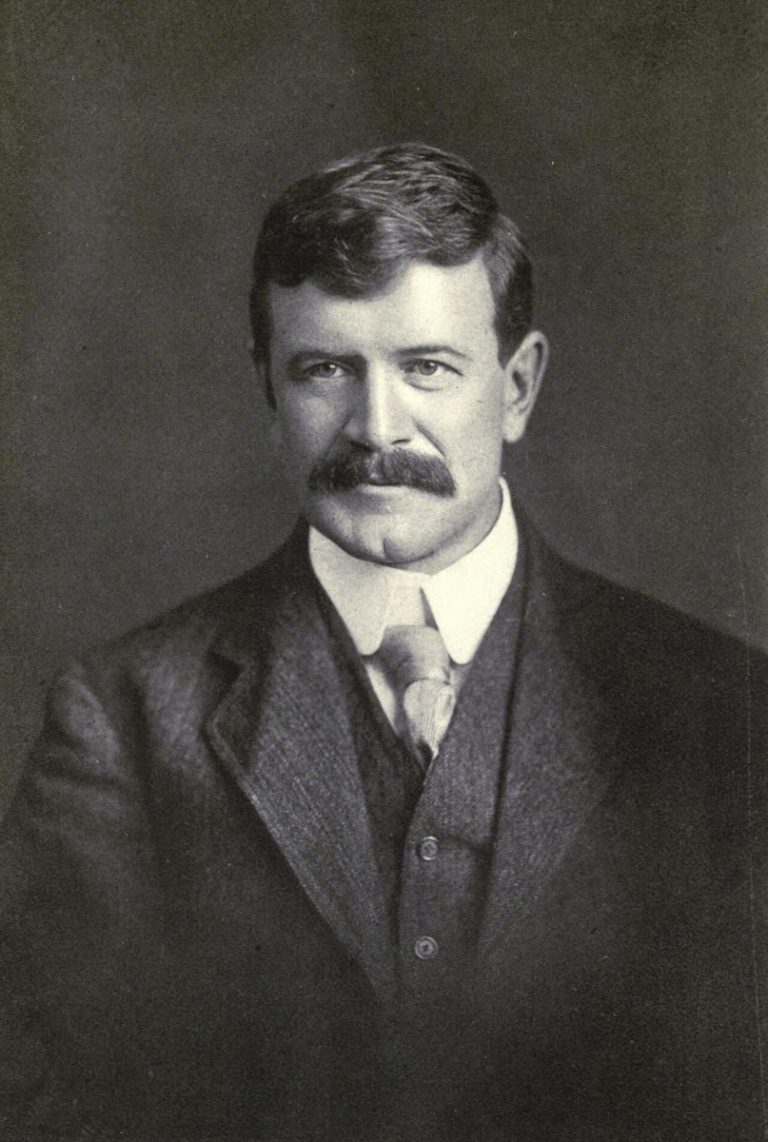
Stephen Leacock, portrait published in 1913.
CA-K440Culture & sport

Stephen Leacock, humorist

Stephen Leacock spent most of his career at McGill University teaching history and political science, but he is chiefly known as a humorist. Sunshine Sketches of a Little Town (1912) made his reputation across the English-speaking world, and his work finds humour in ordinary people in everyday situations through exaggeration and incongruity.

Factual accuracy review: No recorded challenge

Contributor: Citizen.ca

Verified against cited sourcesVerified on 2026-10-26↗
Photo: The Arts & Letters Club of Toronto · Photo licence: Public domain · Credit & context
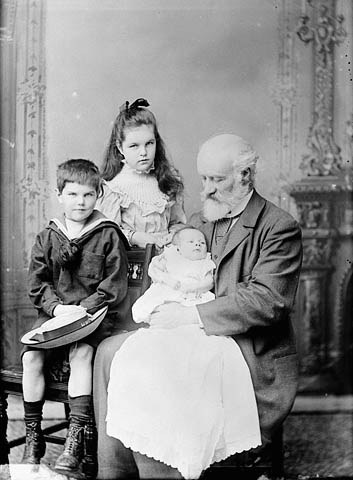
Sir Sandford Fleming with his grandchildren, July 1893 (Topley Studio).
CA-K436History

Sir Sandford Fleming, engineer and champion of standard time

Sir Sandford Fleming, born in Scotland, came to Canada in 1845 and became survey and construction engineer for the Intercolonial Railway and the Canadian Pacific. A man of wide interests and an ardent imperialist, he advocated the Pacific telegraph cable, designed the first Canadian postage stamp in 1851, and was an early champion of standard time.

Factual accuracy review: No recorded challenge

Contributor: Citizen.ca

Verified against cited sourcesVerified on 2026-10-26↗
Photo: William James Topley · Photo licence: Public domain · Credit & context
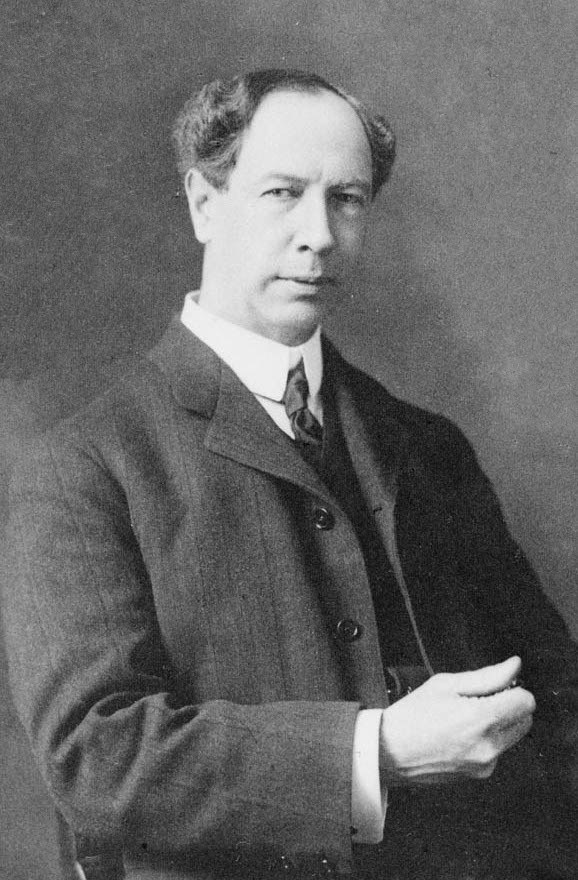
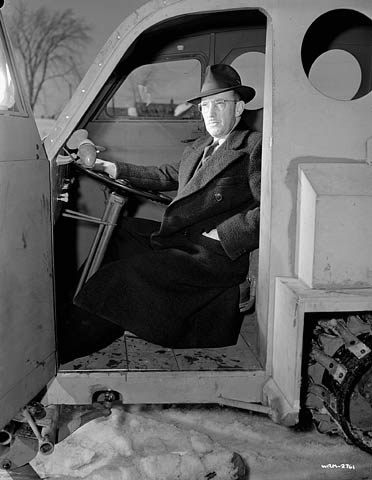
Joseph-Armand Bombardier at the wheel of a Bombardier military snowmobile, March 1943.
CA-K435Economy & trade

Joseph-Armand Bombardier and the snowmobile

Joseph-Armand Bombardier of Valcourt, Quebec, developed snow vehicles that helped reduce winter isolation in rural areas of Canada and elsewhere. He patented the snowmobile in 1937 and the smaller Ski-Doo in 1960, both designed and built in Valcourt, and after his death the company he founded became a world leader in transportation.

Factual accuracy review: No recorded challenge

Contributor: Citizen.ca

Verified against cited sourcesVerified on 2026-10-26↗
Photo: Unknown author · Photo licence: Public domain · Credit & context
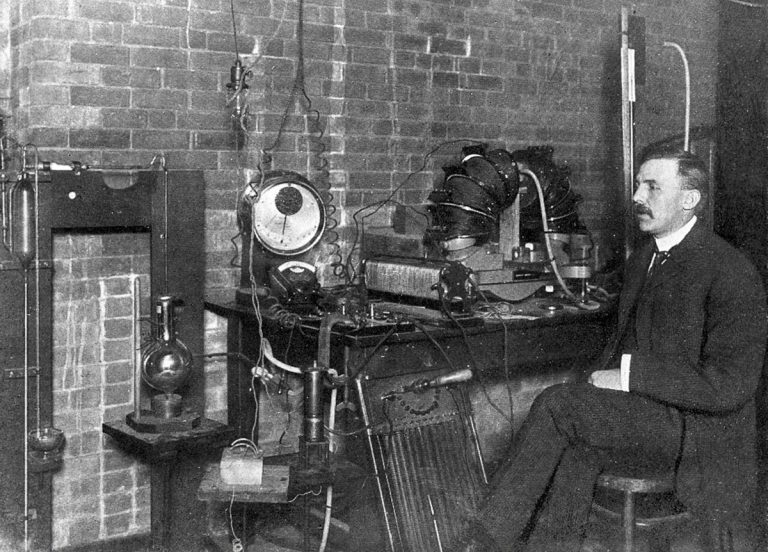
Thomas “Carbide” Willson in Ottawa, around 1914 (Library and Archives Canada).
CA-K432Economy & trade

Thomas “Carbide” Willson and acetylene

Thomas “Carbide” Willson, a largely self-educated inventor from Oxford County, Upper Canada, discovered in 1892 a method of mass-producing calcium carbide. Acetylene gas made from it was used for lighting and as a source of other industrial chemicals, and his discovery helped lay the foundation of the electrochemical industry in the early 20th century.

Factual accuracy review: No recorded challenge

Contributor: Citizen.ca

Verified against cited sourcesVerified on 2026-10-26↗
Photo: Unknown author · Photo licence: Public domain · Credit & context
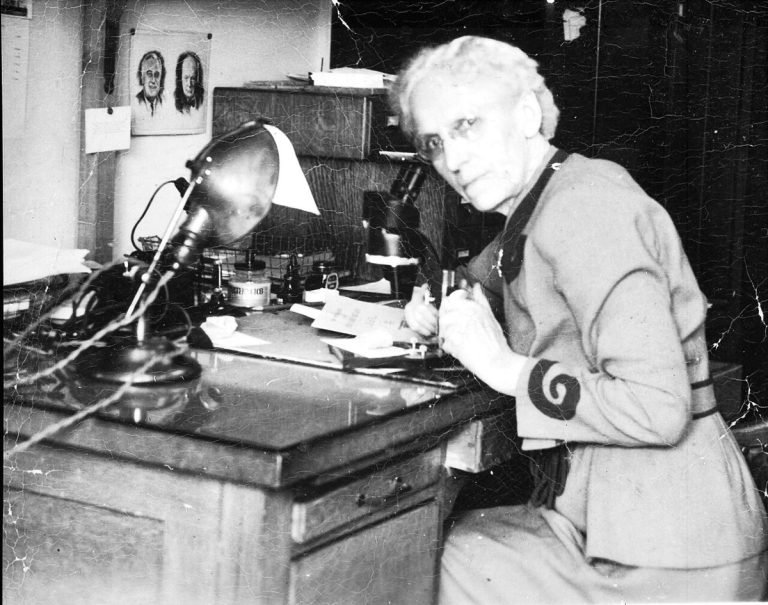
Ernest Rutherford at McGill University, 1905.
CA-K426History

Ernest Rutherford’s radioactivity research at McGill

As Macdonald Professor of Physics at McGill University from 1898 to 1907, Ernest Rutherford, working with Frederick Soddy, made fundamental discoveries about radioactivity that made McGill an important centre of atomic physics research. He later led laboratories at Manchester and Cambridge and received the Nobel Prize in Chemistry in 1908.

Factual accuracy review: No recorded challenge

Contributor: Citizen.ca

Verified against cited sourcesVerified on 2026-10-26↗
Photo: Unknown, published in 1939 in Rutherford : being the life and letters of the Rt. Hon. Lord Rutherford, O. M · Photo licence: Public domain · Credit & context
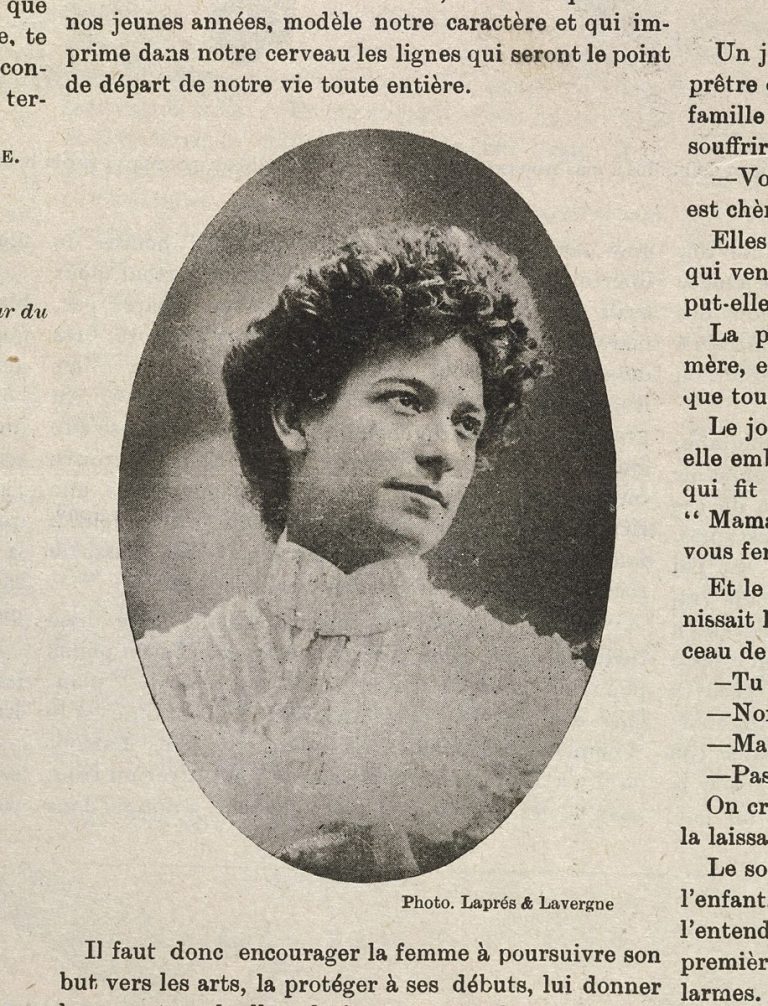
Alice Wilson at her desk with a microscope, Geological Survey of Canada, before 1946.
CA-K424History

Alice Wilson, the first woman geologist at the Geological Survey

Alice Wilson, a paleontologist and geologist who studied the Ottawa–St. Lawrence Lowlands, was the first woman employed as a geologist at the Geological Survey of Canada. She earned a doctorate in 1929 with support from the Canadian Federation of University Women, became the first female Fellow of the Royal Society of Canada, and helped open science and the federal public service to women.

Factual accuracy review: No recorded challenge

Contributor: Citizen.ca

Verified against cited sourcesVerified on 2026-10-26↗
Photo: Unknown author · Photo licence: Public domain · Credit & context
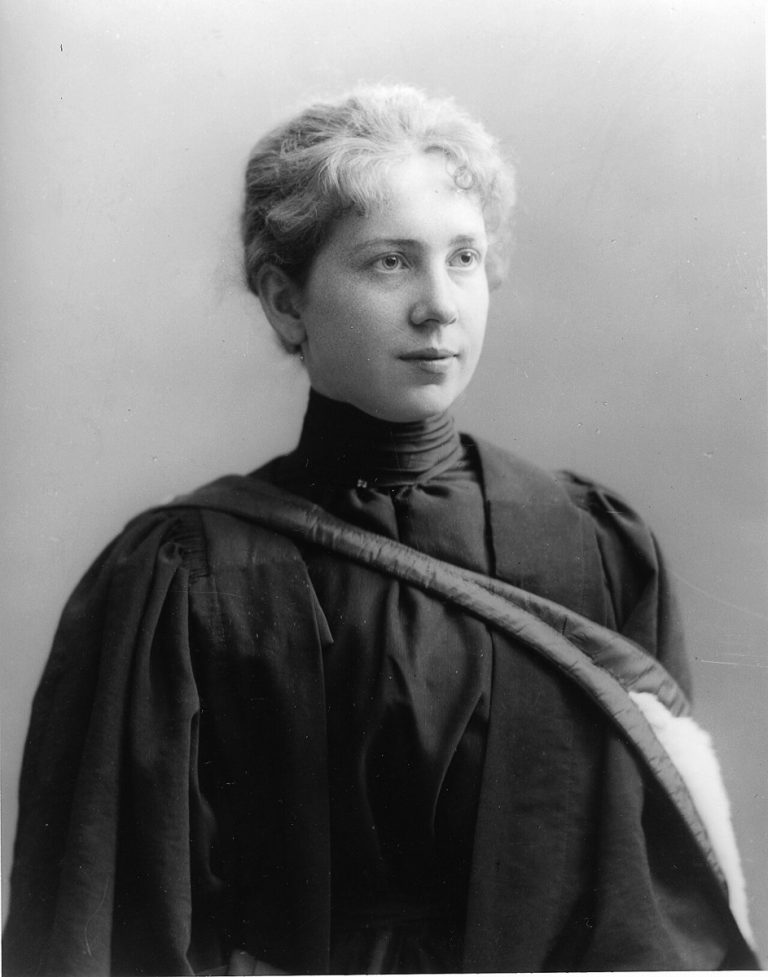
Idola Saint-Jean, portrait published in Le Monde illustré in 1901.
CA-K415Institutions

Idola Saint-Jean and women’s suffrage in Quebec

Between the world wars, Idola Saint-Jean was a dominant figure in the fight for women’s right to vote and for reform of the Civil Code in Quebec. Despite strong opposition from the government, the clergy and many suffragists, she practised a “shock feminism” demanding equal rights for women, and as an educator and journalist she also championed social justice and women workers.

Factual accuracy review: No recorded challenge

Contributor: Citizen.ca

Verified against cited sourcesVerified on 2026-10-26↗
Photo: A.J. Rice, Laprés & Lavergne · Photo licence: Public domain · Credit & context
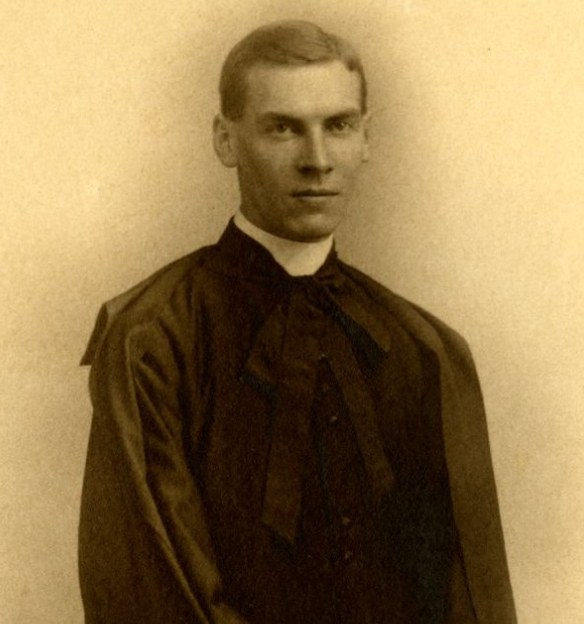
Alexandre Vachon as a young priest, around 1910.
CA-K397Language & names

Monsignor Alexandre Vachon, science in French

Monsignor Alexandre Vachon (1885–1953) was a strong advocate of scientific education and the promotion of science for French-speaking Canadians. He founded scientific institutions, served as faculty dean and president of Université Laval, and as Archbishop of Ottawa defended the rights of Franco-Ontarians.

Factual accuracy review: No recorded challenge

Contributor: Citizen.ca

Verified against cited sourcesVerified on 2026-10-26↗
Photo: Montminy & Cie · Photo licence: Public domain · Credit & context
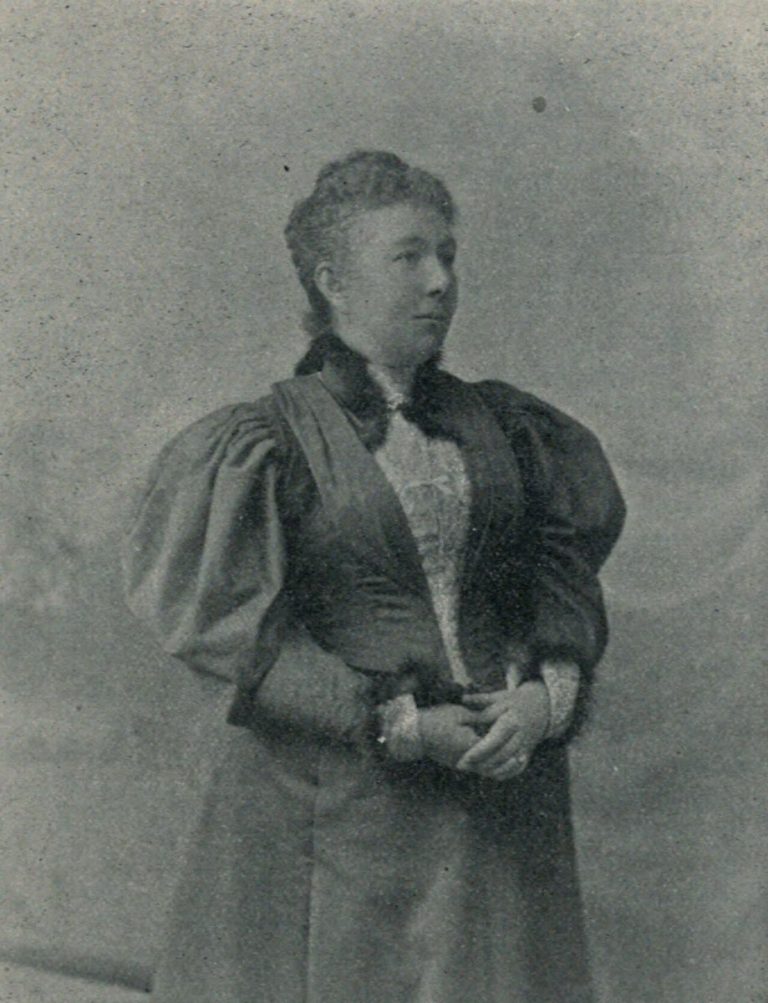
Portrait of Edith Archibald, no later than 1895.
CA-K396Institutions

Edith Archibald and women’s suffrage in Nova Scotia

For more than 30 years, Edith Jessie Archibald (1854–1936) championed women’s right to vote in Nova Scotia, achieved on 26 April 1918. As president of the Maritime Woman’s Christian Temperance Union and the Halifax Local Council of Women, she also worked to improve health and education services.

Factual accuracy review: No recorded challenge

Contributor: Citizen.ca

Verified against cited sourcesVerified on 2026-10-26↗
Photo: Unknown author · Photo licence: Public domain · Credit & context
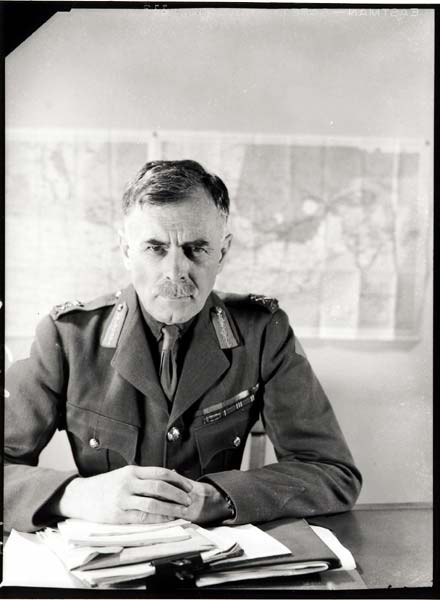
Lieutenant-General A. G. L. McNaughton in March 1942 (Department of National Defence).
CA-K387History

A. G. L. McNaughton, soldier and scientist

A. G. L. McNaughton (1887–1966), born in Moosomin in today’s Saskatchewan, played a notable role in Canadian life as a scientist, soldier, politician and diplomat. He served as an artillery officer in the First World War, co-invented the forerunner of radar, led the National Research Council, and represented Canada in senior diplomatic roles after the Second World War.

Factual accuracy review: No recorded challenge

Contributor: Citizen.ca

Verified against cited sourcesVerified on 2026-10-26↗
Photo: Unknown author · Photo licence: Public domain · Credit & context
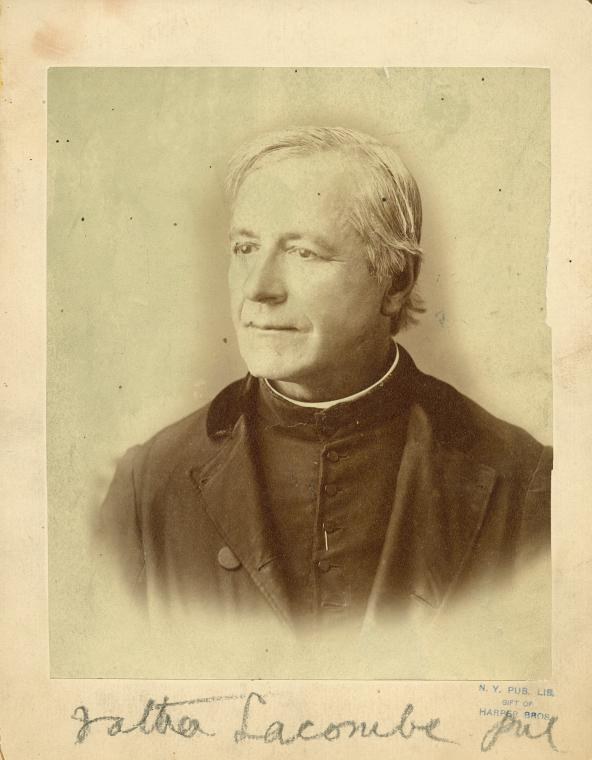
Father Albert Lacombe, photographed before 1916.
CA-K385Indigenous peoples & reconciliation

Father Albert Lacombe, missionary in the West

From 1852, Oblate priest Albert Lacombe spent over 60 years seeking to convert Indigenous Peoples in western Canada to Christianity, founding missions such as St. Albert with Métis and Cree help and acting as a go-between during Treaty 8 talks. He was the first principal of the High River Industrial School in 1884–1885 and advocated separating children from their families and suppressing Indigenous languages.

Factual accuracy review: No recorded challenge

Contributor: Citizen.ca

Verified against cited sourcesVerified on 2026-10-26↗
Photo: Unknown author · Photo licence: Public domain · Credit & context
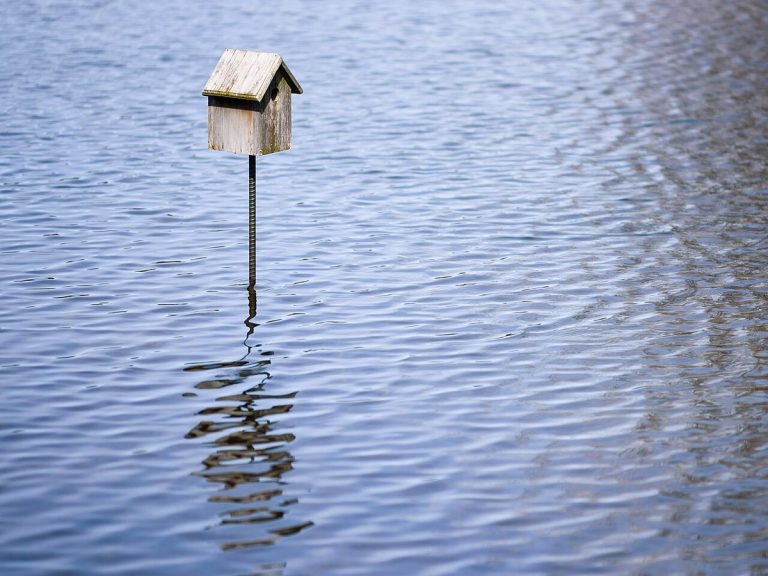
A pond in the Flowery Brook area of the Montréal Botanical Garden, photographed in 2017.
CA-K379Places & geography

The Montréal Botanical Garden of Brother Marie-Victorin

The Montréal Botanical Garden, founded in 1931, was developed through botanist Brother Marie-Victorin’s leadership and landscape architect Henry Teuscher’s design. It includes exhibition greenhouses, thematic gardens and an arboretum, combining botanical study with public horticultural education.

Factual accuracy review: No recorded challenge

Contributor: Citizen.ca

Verified against cited sourcesVerified on 2026-10-26↗
Photo: King of Hearts · Photo licence: CC BY-SA 4.0 · Credit & context
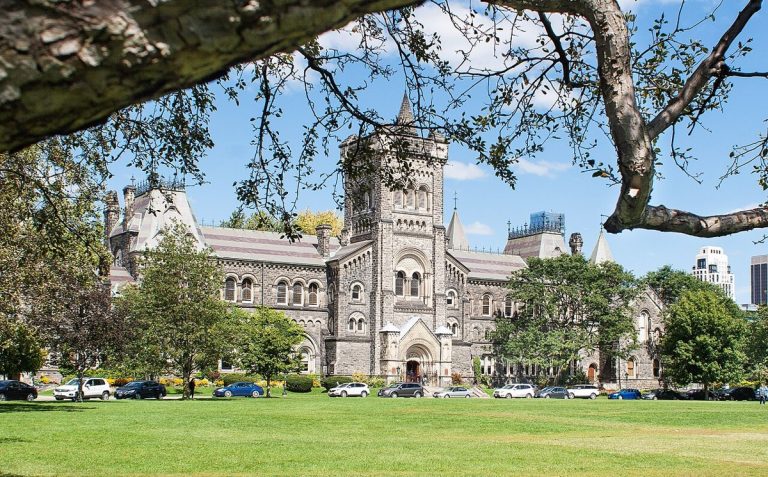
University College on the St. George campus of the University of Toronto, photographed in 2017.
CA-K370Institutions

University College and non-denominational higher education

University College in Toronto, built in 1856–1859 to designs by F. W. Cumberland, largely assured the future of the University of Toronto and drew it into a federal pattern widely followed in Canada and the Commonwealth. It realized a major 19th-century goal: a non-denominational, government-supported institution of higher learning.

Factual accuracy review: No recorded challenge

Contributor: Citizen.ca

Verified against cited sourcesVerified on 2026-10-26↗
Photo: BeautifulWaters · Photo licence: CC BY-SA 4.0 · Credit & context
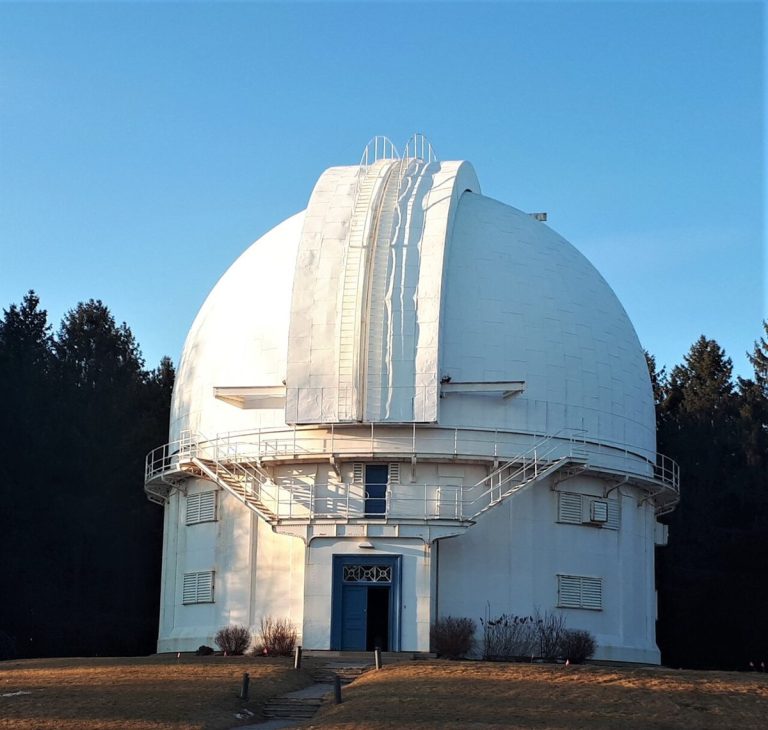
The David Dunlap Observatory in Richmond Hill, Ontario, photographed in 2019.
CA-K353History

The David Dunlap Observatory and black holes

The David Dunlap Observatory in Richmond Hill, Ontario, opened in 1935 for the University of Toronto and helped establish academic astronomy in Canada; its dome housed what was once the world’s second-largest telescope. There Thomas Bolton published evidence for a black hole in 1972, and Helen Sawyer Hogg catalogued star clusters.

Factual accuracy review: No recorded challenge

Contributor: Citizen.ca

Verified against cited sourcesVerified on 2026-10-26↗
Photo: Mhsheikholeslami · Photo licence: CC BY-SA 4.0 · Credit & context
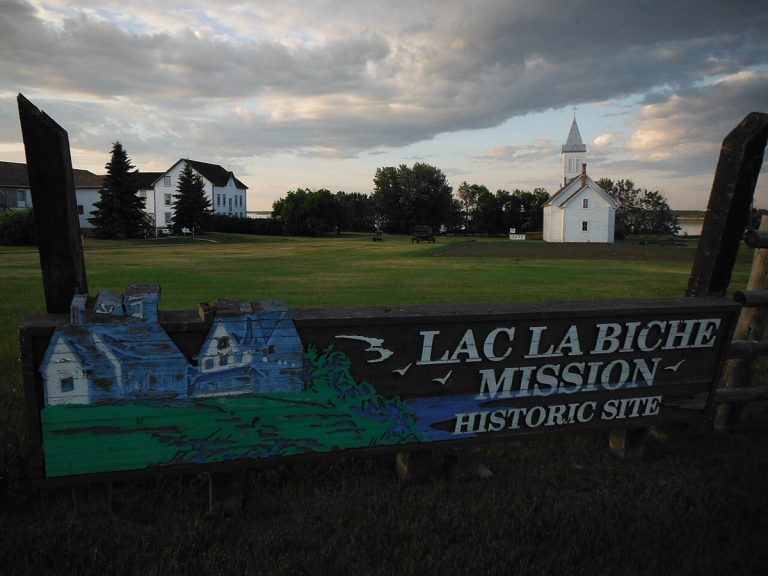
Lac La Biche Mission National Historic Site on the shore of Lac La Biche, Alberta, photographed in 2012.
CA-K345Indigenous peoples & reconciliation

Lac La Biche Mission

Notre Dame des Victoires / Lac La Biche Mission in Alberta, established by the Oblates in 1853 in the lands of the nêhiyawak (Cree) and other First Nations and the Métis homeland, was created to convert First Nations and Métis peoples to Christianity and became a supply hub for northern missions. From the 1860s its school, run by the Grey Nuns, was among the Catholic Church’s earliest experiments in residential education in the northwest.

Factual accuracy review: No recorded challenge

Contributor: Citizen.ca

Verified against cited sourcesVerified on 2026-10-26↗
Photo: Grapher78 · Photo licence: CC BY-SA 3.0 · Credit & context
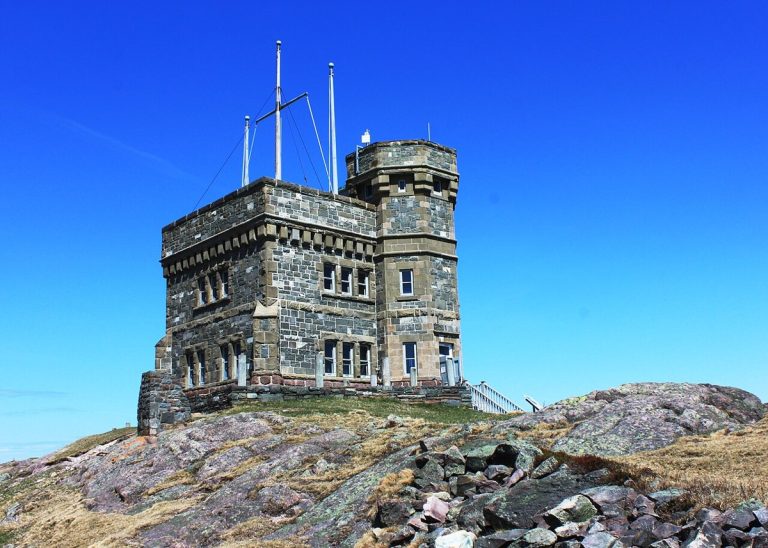
Cabot Tower on Signal Hill, St. John’s, Newfoundland and Labrador, photographed in 2013.
CA-K333History

Signal Hill and Marconi’s 1901 transmission

Signal Hill, overlooking the Narrows into St. John’s Harbour, was important for defence and communications for three centuries, with fortifications built as France and Britain battled for the continent. In 1901, Guglielmo Marconi received the first transatlantic wireless transmission atop the hill, a landmark in global communications history.

Factual accuracy review: No recorded challenge

Contributor: Citizen.ca

Verified against cited sourcesVerified on 2026-10-26↗
Photo: KristaKals · Photo licence: CC BY-SA 3.0 · Credit & context
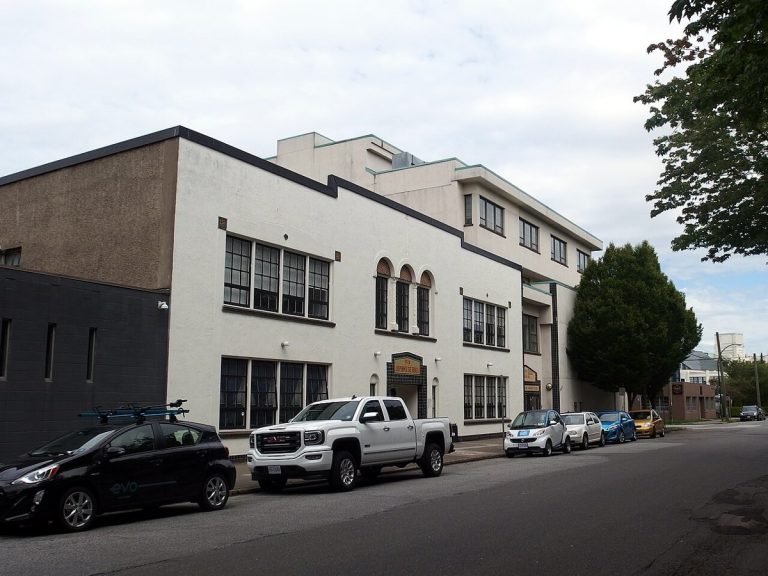
The Vancouver Japanese Language School and Hall on Alexander Street, Vancouver, photographed in 2016.
CA-K313Language & names

The Vancouver Japanese Language School

The Vancouver Japanese Language School, in the city’s Japantown, was the first and largest Japanese language school in Canada, and its 1928 Art Deco building is a rare surviving interwar language school. Of the thousands of properties the federal government confiscated from Japanese Canadians during the Second World War, it is one of very few known buildings returned to its owners after internment.

Factual accuracy review: No recorded challenge

Contributor: Citizen.ca

Verified against cited sourcesVerified on 2026-10-26↗
Photo: Cordovanorth · Photo licence: CC BY-SA 4.0 · Credit & context
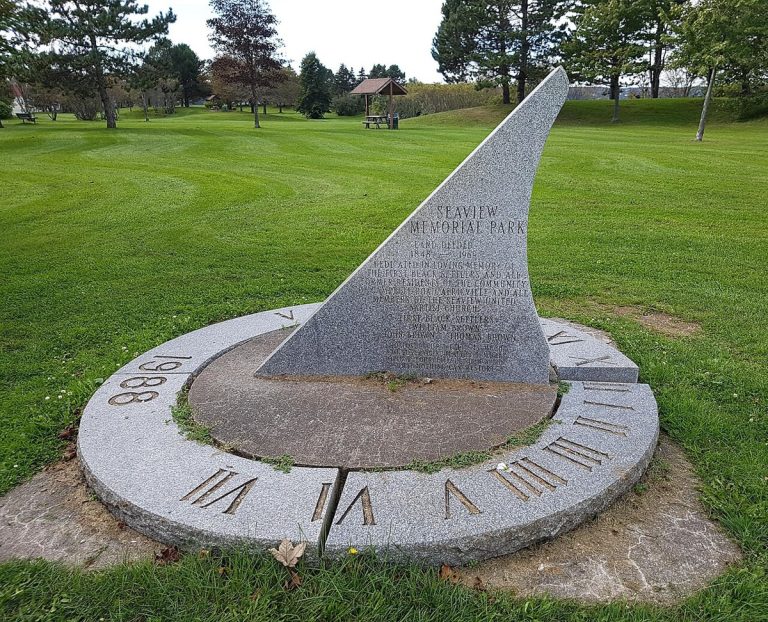
The Africville Monument at Seaview Memorial Park, Halifax, listing the community’s founding families, photographed in 2017.
CA-K311History

Africville, a site of remembrance

Africville, on Bedford Basin in Halifax, was a Black community settled in the 1830s and 1840s, with its own school and church. Its houses were demolished in the 1960s in the name of urban renewal and the land became Seaview Park; the clearance became an enduring symbol to Black Canadians of the need to defend their institutions, and the site is now a place of remembrance and pilgrimage.

Factual accuracy review: No recorded challenge

Contributor: Citizen.ca

Verified against cited sourcesVerified on 2026-10-26↗
Photo: Coastal Elite from Halifax, Canada · Photo licence: CC BY-SA 2.0 · Credit & context