An independent Canadian knowledge project

Focused and Verified

Canadian knowledge base

Search by keyword

Choose one keyword, or combine two. Broader keywords include their descendants.

Keywords: Knowledge and innovation

Clear search
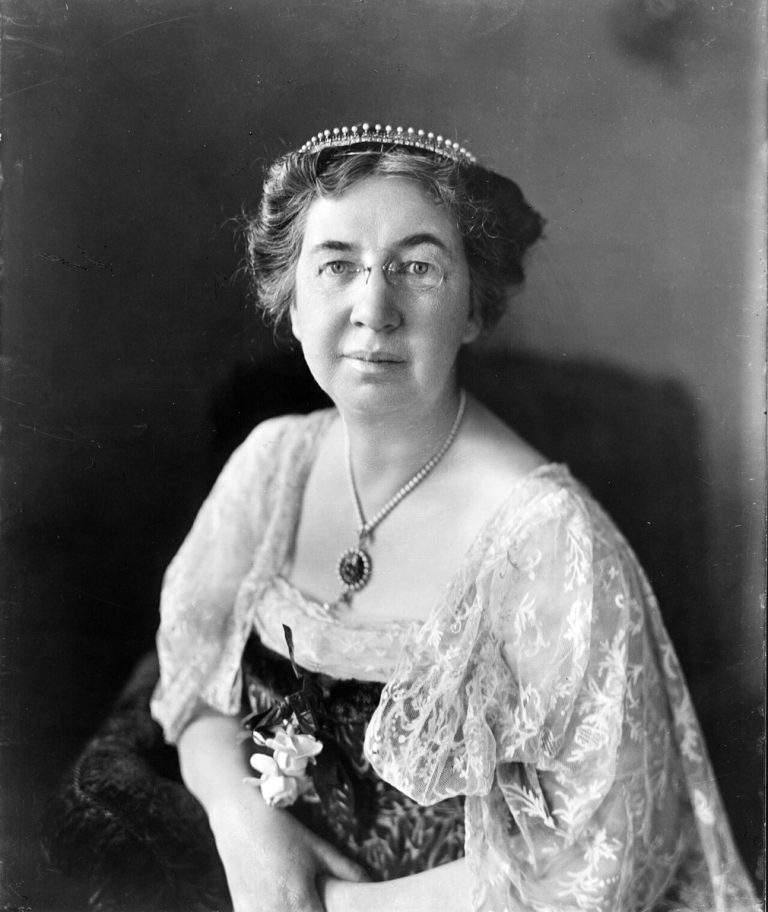
Mabel Hubbard Bell, about 1917 (Harris & Ewing, Library of Congress).
CA-K289History

Mabel Hubbard Bell, organizer and philanthropist

Mabel Hubbard Bell (1857–1923), deaf since childhood, married Alexander Graham Bell in 1877 and gave crucial support to his research, including at their Beinn Bhreagh estate in Cape Breton. In Baddeck she helped establish the Young Ladies’ Club in 1891, the first Montessori classes and the earliest home and school association in Canada.

Factual accuracy review: No recorded challenge

Contributor: Citizen.ca

Verified against cited sourcesVerified on 2026-10-26↗
Photo: Harris & Ewing · Photo licence: Public domain · Credit & context
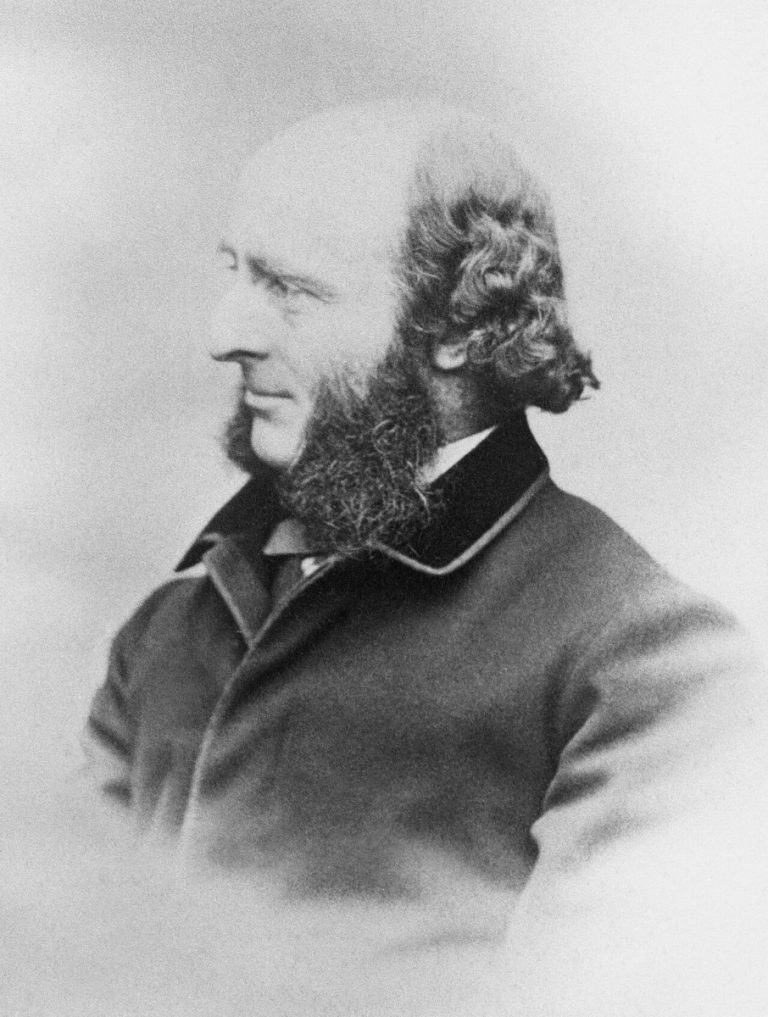
A portrait of Henry Youle Hind, about 1865.
CA-K288Places & geography

Henry Youle Hind’s surveys of the North-West

Henry Youle Hind (1823–1908), a scientist and explorer, led surveys of the North-West between 1857 and 1860 that produced scientific reports, photographs and maps. His reports on arable land helped shape Canada’s decision to pursue the acquisition of Rupert’s Land, a decision taken, as Parks Canada notes, without regard for Indigenous peoples.

Factual accuracy review: No recorded challenge

Contributor: Citizen.ca

Verified against cited sourcesVerified on 2026-10-26↗
Photo: Cox, A. W. · Photo licence: CC BY-SA 4.0 · Credit & context
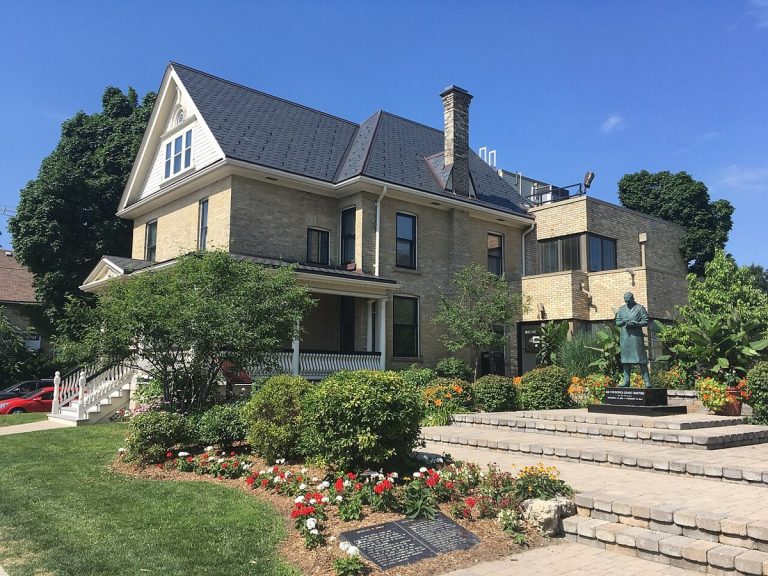
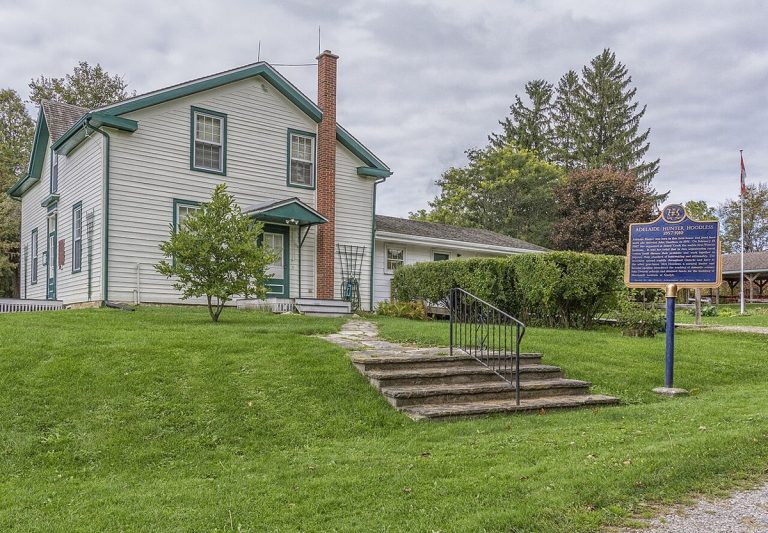
The Adelaide Hunter Hoodless Homestead in St. George, Ontario, photographed in 2014.
CA-K273History

Adelaide Hunter Hoodless, educator and reformer

Adelaide Hunter Hoodless (1857–1910), an educator and social reformer, promoted domestic economy as a school subject and helped establish household science institutes at Guelph, Sainte-Anne-de-Bellevue and Toronto. She supported women’s organizations including the National Council of Women and the Federated Women’s Institutes, and helped establish the Victorian Order of Nurses.

Factual accuracy review: No recorded challenge

Contributor: Citizen.ca

Verified against cited sourcesVerified on 2026-10-26↗
Photo: Paranoidpurist · Photo licence: CC BY-SA 3.0 · Credit & context
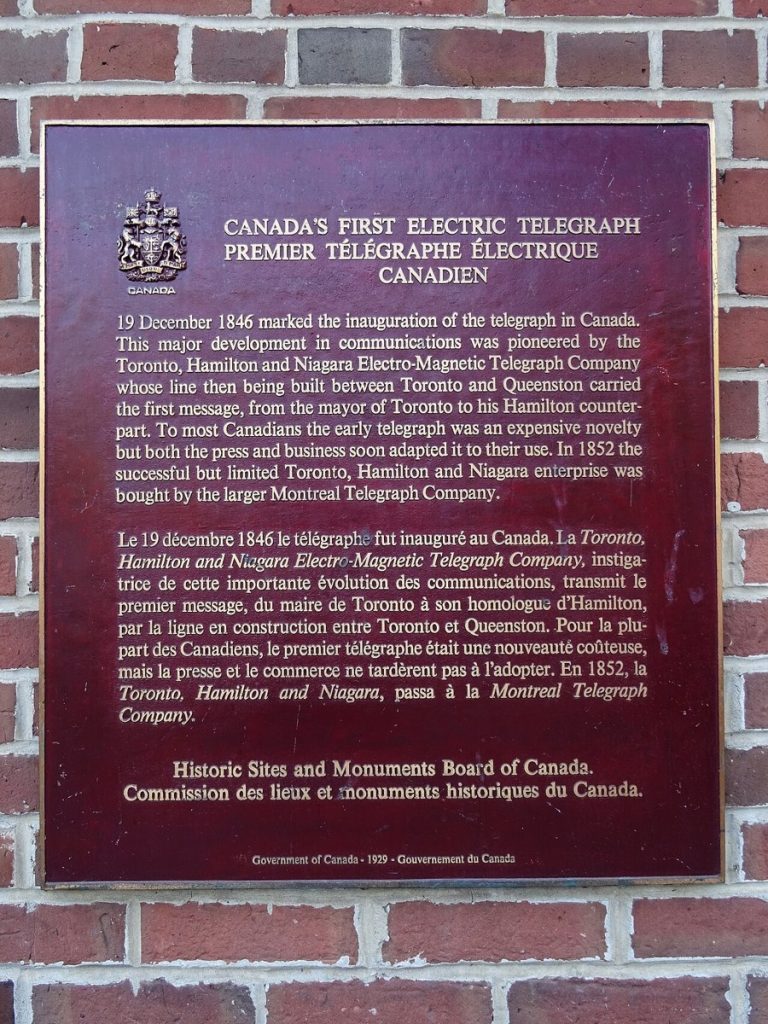
The Historic Sites and Monuments Board plaque for Canada’s First Electric Telegraph in Toronto, photographed in 2018.
CA-K270Economy & trade

Canada’s first electric telegraph, 1846

The telegraph was inaugurated in Canada on 19 December 1846, when the Toronto, Hamilton and Niagara Electro-Magnetic Telegraph Company’s line carried the first message, from the mayor of Toronto to the mayor of Hamilton. At first an expensive novelty, the telegraph was soon adopted by the press and business.

Factual accuracy review: No recorded challenge

Contributor: Citizen.ca

Verified against cited sourcesVerified on 2026-10-26↗
Photo: Spudgun67 · Photo licence: CC BY-SA 4.0 · Credit & context
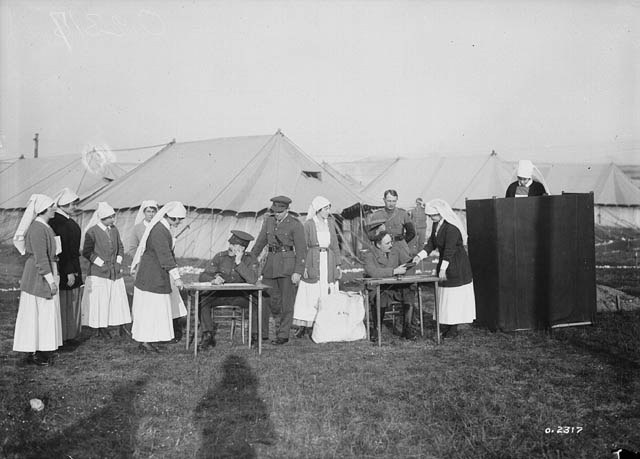
Nursing Sisters at a Canadian hospital in France voting in the 1917 federal election (photograph by William Rider-Rider).
CA-K246History

Nursing Sisters, the first women with military rank

Canadian military nurses have cared for the sick and wounded in battle since 1885. In 1904, professional nurses joined the Canadian Army Medical Corps as Nursing Sisters, the first women in the British Empire to receive military rank; in the two world wars hundreds were decorated and dozens died from enemy action.

Factual accuracy review: No recorded challenge

Contributor: Citizen.ca

Verified against cited sourcesVerified on 2026-10-26↗
Photo: William Rider-Rider · Photo licence: Public domain · Credit & context
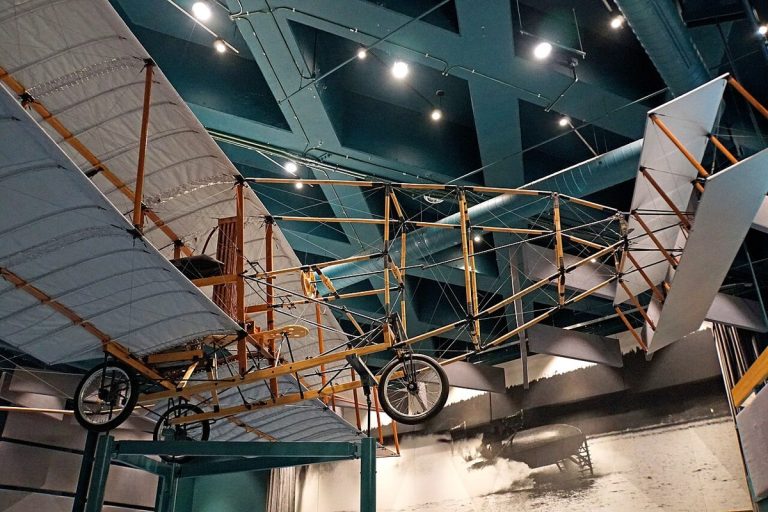
A Silver Dart display photographed in 2017; not the original 1909 aircraft.
CA-K242History

The Silver Dart made Canada’s first powered flight, 1909

On 23 February 1909, more than 100 people watched the Silver Dart lift off the ice of Baddeck Bay, Nova Scotia, and fly 800 metres: the first successful powered flight in Canada. Piloted by J. A. D. McCurdy, the biplane was built by the Aerial Experiment Association, founded by Mabel and Alexander Graham Bell (see CA-K154).

Factual accuracy review: No recorded challenge

Contributor: Citizen.ca

Verified against cited sourcesVerified on 2026-10-26↗
Photo: Dennis G. Jarvis · Photo licence: CC BY-SA 2.0 · Credit & context
General Currie, commander of the Canadian troops in France, in June 1917.
CA-K232History

Sir Arthur Currie, commander of the Canadian Corps

Sir Arthur Currie (1875–1933), who trained with the militia at Fort Rodd Hill in Victoria, commanded one of Canada’s first overseas infantry brigades in the First World War. Promoted to lieutenant-general after Vimy Ridge, he became commander of the entire Canadian Corps, the first and only Canadian to hold that position, and after the war served as principal of McGill University.

Factual accuracy review: No recorded challenge

Contributor: Citizen.ca

Verified against cited sourcesVerified on 2026-10-26↗
Photo: Unknown photographer · Photo licence: Public domain · Credit & context
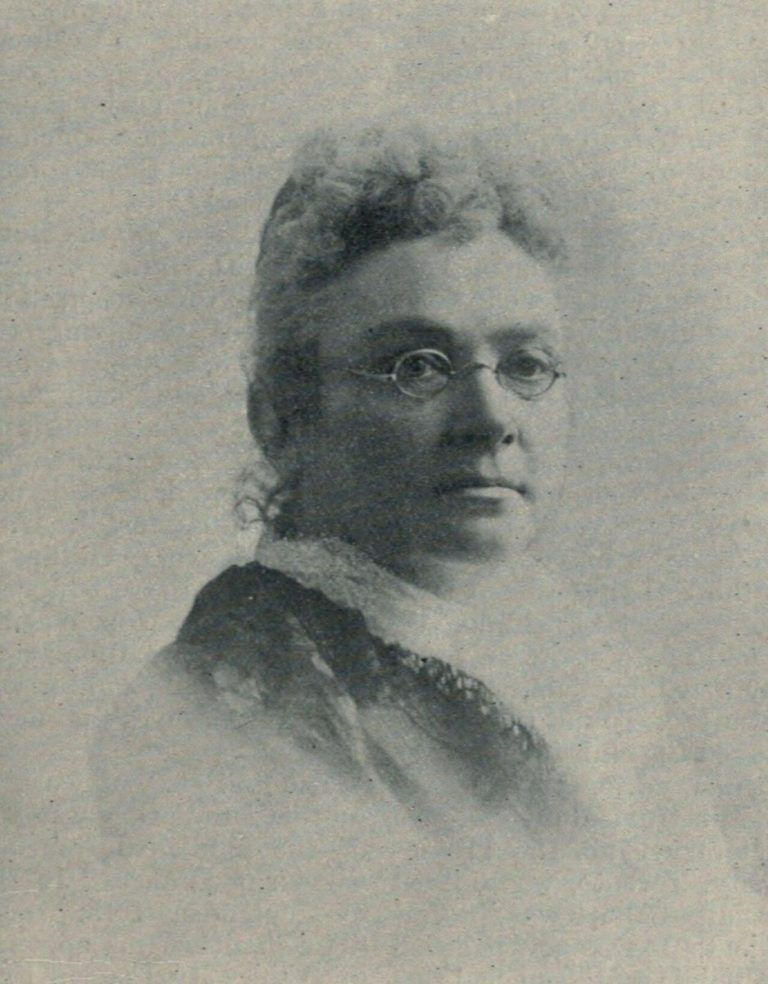
A portrait of Carrie Derick.
CA-K231History

Carrie Derick, one of Canada’s first women professors

Botanist and geneticist Carrie Derick (1862–1941) overcame strong opposition to become one of the first women appointed to a full professorship in Canada, at McGill University from 1912 to 1929. A suffragist and reformer, she promoted political and educational equality for women; Parks Canada’s 2024 review also notes that she held eugenic views widely shared in her academic circles.

Factual accuracy review: No recorded challenge

Contributor: Citizen.ca

Verified against cited sourcesVerified on 2026-10-26↗
Photo: · Photo licence: Public domain · Credit & context
Irma LeVasseur around 1900 (Bibliothèque et Archives nationales du Québec).
CA-K211History

Dr. Irma LeVasseur, pioneer of paediatrics

Because francophone universities were closed to women, Irma LeVasseur (1877–1964) studied medicine in the United States and in 1903 became the first female physician licensed to practise in Quebec. A pioneer of paediatrics in Canada, she initiated Sainte-Justine Hospital in Montréal and the Hôpital de l’Enfant-Jésus and Centre Cardinal-Villeneuve in Québec City.

Factual accuracy review: No recorded challenge

Contributor: Citizen.ca

Verified against cited sourcesVerified on 2026-10-26↗
Photo: Bibliothèque et Archives nationales du Québec P655,S2,SS6,D8 · Photo licence: Public domain · Credit & context
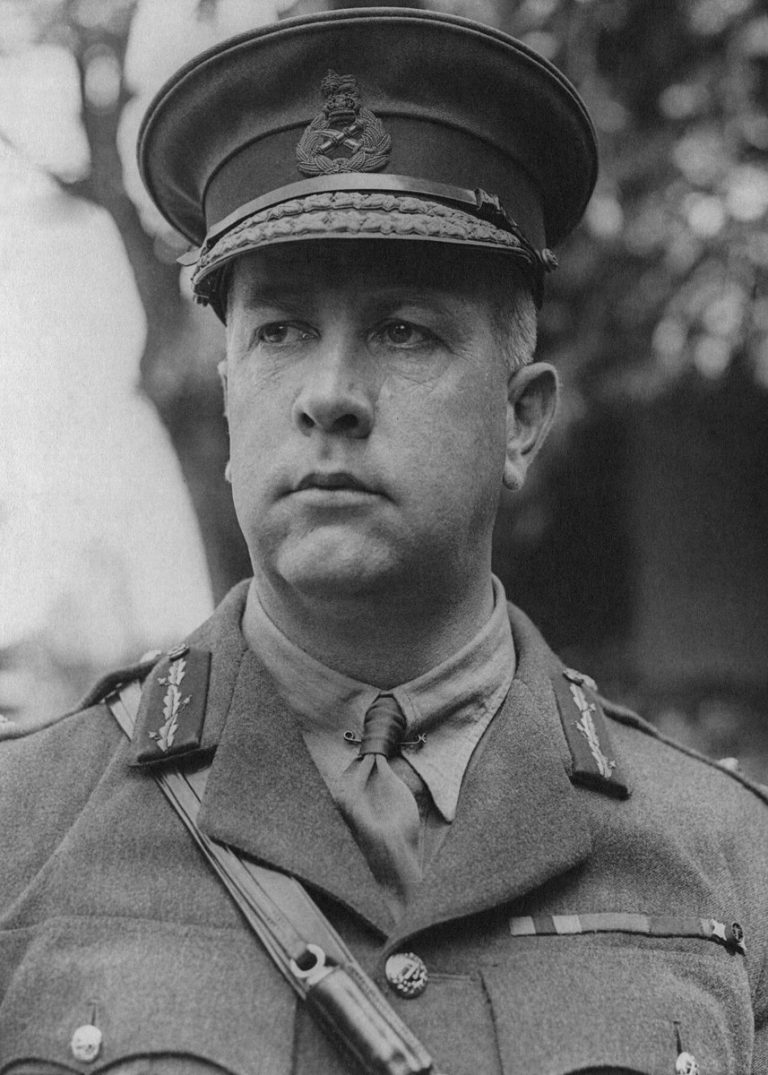
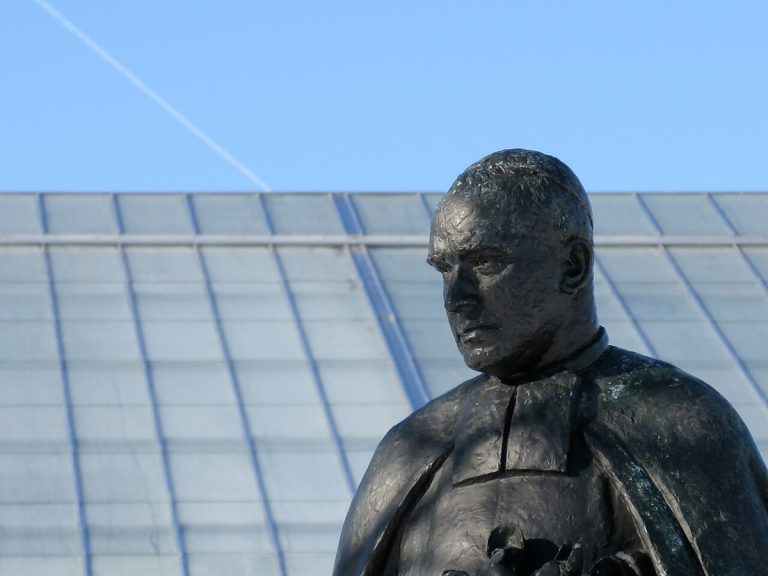
A statue of Brother Marie-Victorin at the Montréal Botanical Garden, photographed in 2009.
CA-K210Culture & sport

Brother Marie-Victorin and Flore laurentienne

Brother Marie-Victorin (1885–1944), a botanist, author and educator, wrote Flore laurentienne (1935) and founded the Institut botanique de l’Université de Montréal and the Montréal Botanical Garden. His discoveries and new approach to botany were of international importance, and he helped improve science teaching at every level.

Factual accuracy review: No recorded challenge

Contributor: Citizen.ca

Verified against cited sourcesVerified on 2026-10-26↗
Photo: Jean-Philippe Boulet · Photo licence: CC BY 3.0 · Credit & context
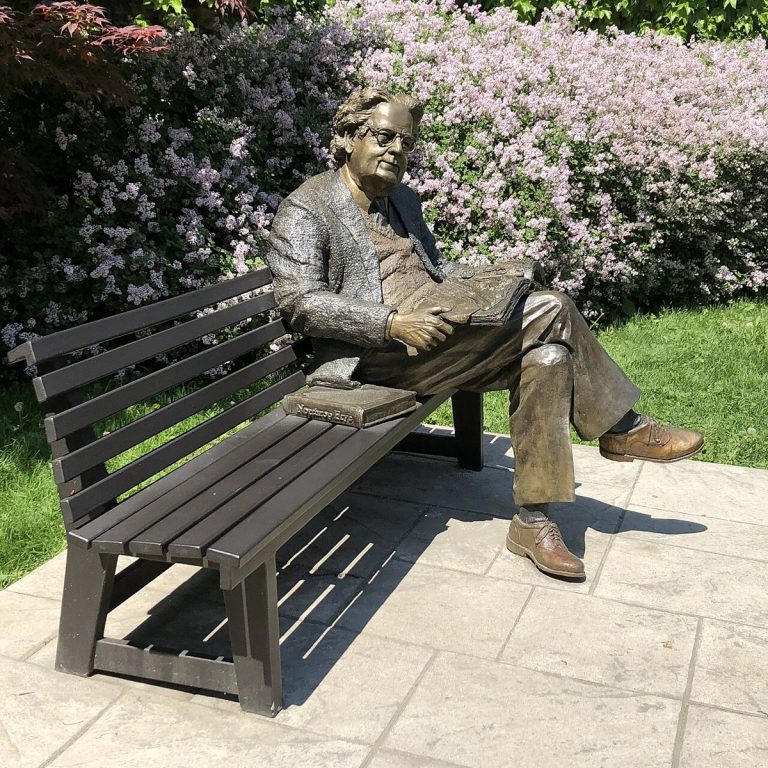
A seated statue of Northrop Frye at Victoria College, University of Toronto, photographed in 2018.
CA-K194Culture & sport

Northrop Frye, literary theorist

Northrop Frye (1912–1991), based at Victoria College, University of Toronto, from 1939 to 1991, was a pre-eminent literary theorist and critic. His systematic study of the myths and symbols underlying literature, and his work on the Bible as literature, had significant international influence, and his idea of a “garrison mentality” shaped English-Canadian literature.

Factual accuracy review: No recorded challenge

Contributor: Citizen.ca

Verified against cited sourcesVerified on 2026-10-26↗
Photo: Maksim Sokolov (maxergon.com) · Photo licence: CC BY-SA 4.0 · Credit & context
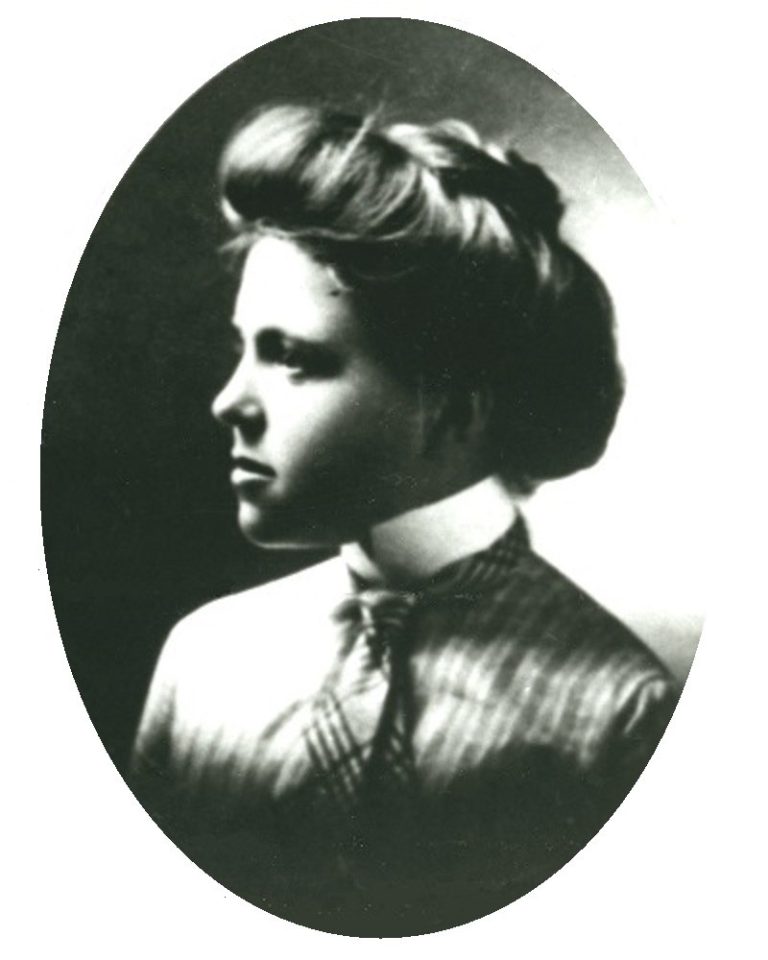
A portrait of Emily Stowe, no later than 1895.
CA-K187History

Emily Stowe, Canada’s first woman doctor in private practice

Denied university entry in Canada because she was a woman, Emily Stowe (1831–1903) studied medicine in New York City and in 1867 opened the first private medical practice in Canada run by a woman doctor, in Toronto. She led the drive to found Woman’s Medical College in 1883 and, through the Dominion Women’s Enfranchisement Association, kept suffrage in the public eye.

Factual accuracy review: No recorded challenge

Contributor: Citizen.ca

Verified against cited sourcesVerified on 2026-10-26↗
Photo: Unknown authorUnknown author · Photo licence: Public domain · Credit & context
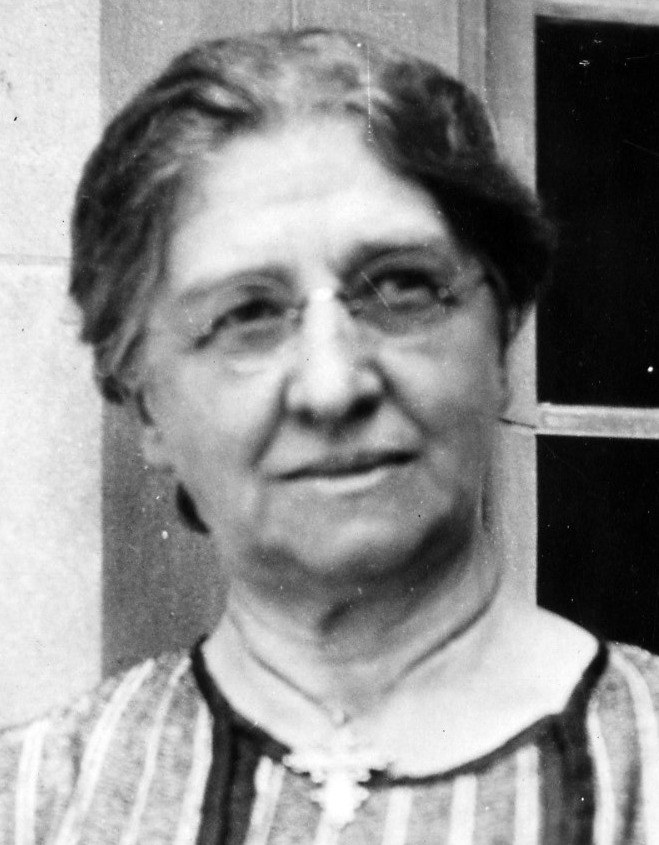
Uncle Tom’s Cabin Historic Site near Dresden, Ontario, now the Josiah Henson Museum of African-Canadian History, photographed in 2014.
CA-K181History

Josiah Henson and the Dawn settlement

After escaping slavery in Kentucky to Upper Canada, Reverend Josiah Henson (1789–1883) became an Underground Railroad conductor and abolitionist, founded the Black settlement of Dawn and established the British American Institute school. Harriet Beecher Stowe said his 1849 memoirs supplied ideas and incidents for Uncle Tom’s Cabin, raising awareness of Canada as a haven from slavery.

Factual accuracy review: No recorded challenge

Contributor: Citizen.ca

Verified against cited sourcesVerified on 2026-10-26↗
Photo: NearEMPTiness · Photo licence: CC BY-SA 4.0 · Credit & context
The Six Nations Sports & Cultural Memorial Centre in Ohsweken, Six Nations of the Grand River, in 2024.
CA-K179Indigenous peoples & reconciliation

Edith Anderson Monture, nurse and veteran

Charlotte Edith Anderson Monture (1890–1996), a Kanien’kehá:ka (Mohawk) woman from Six Nations of the Grand River, was among the first generation of hospital-trained professional nurses from First Nations in Canada. After nursing with the American Expeditionary Force in the First World War, she was among the female veterans granted the federal vote in 1917, and returned home in 1919 as a nurse and midwife.

Factual accuracy review: No recorded challenge

Contributor: Citizen.ca

Verified against cited sourcesVerified on 2026-10-26↗
Photo: JFVoll · Photo licence: CC BY-SA 4.0 · Credit & context
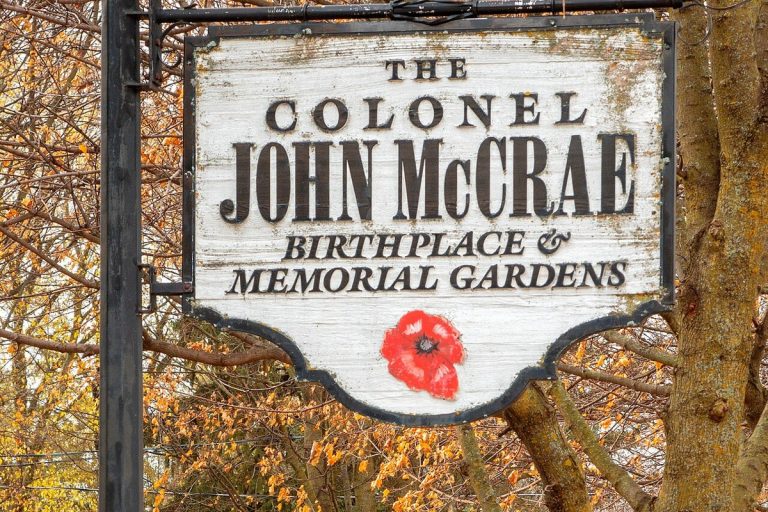
The sign at McCrae House, John McCrae’s birthplace in Guelph, Ontario, on Remembrance Day 2018.
CA-K174Culture & sport

John McCrae and “In Flanders Fields”

John McCrae (1872–1918), a physician born in Guelph, Ontario, joined the Canadian Army Medical Corps in 1914 and served overseas until his death. His poem “In Flanders Fields,” published anonymously in 1915, became one of the most celebrated poems of the First World War and made the poppy a lasting symbol of the Allied soldiers who died.

Factual accuracy review: No recorded challenge

Contributor: Citizen.ca

Verified against cited sourcesVerified on 2026-10-26↗
Photo: Peter K Burian · Photo licence: CC BY-SA 4.0 · Credit & context
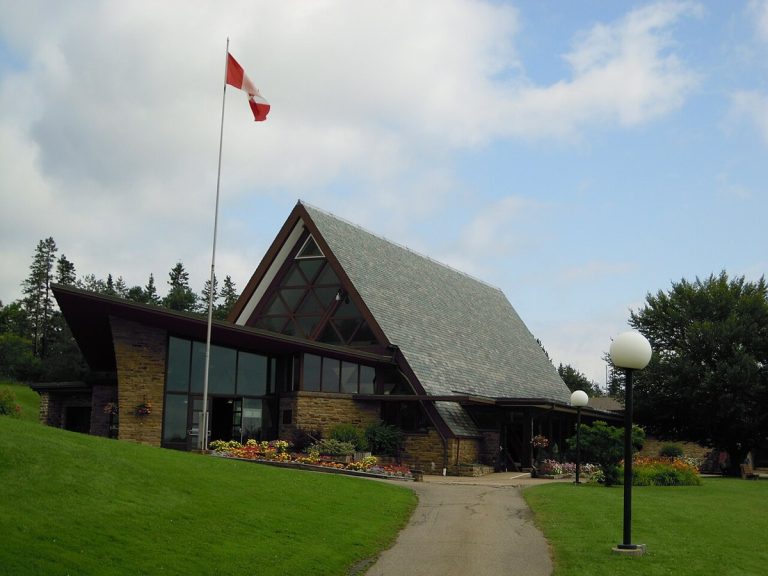
The visitor centre and museum at the Alexander Graham Bell National Historic Site in Baddeck, Nova Scotia, in 2010.
CA-K154History

Alexander Graham Bell in Baddeck

Alexander Graham Bell (1847–1922), best known as the inventor of the telephone, was born in Scotland, became a citizen of the United States and was a longtime resident of Canada. In 1907 he and his wife Mabel co-founded the Aerial Experiment Association, which led to the flight of the Silver Dart; he died at his summer home, Beinn Bhreagh, near Baddeck, Nova Scotia.

Factual accuracy review: No recorded challenge

Contributor: Citizen.ca

Verified against cited sourcesVerified on 2026-10-26↗
Photo: Skeezix1000 · Photo licence: CC BY-SA 3.0 · Credit & context