An independent Canadian knowledge project

Focused and Verified

Canadian knowledge base

Search by keyword

Choose one keyword, or combine two. Broader keywords include their descendants.

Keywords: Peacekeeping and diplomacy

Clear search
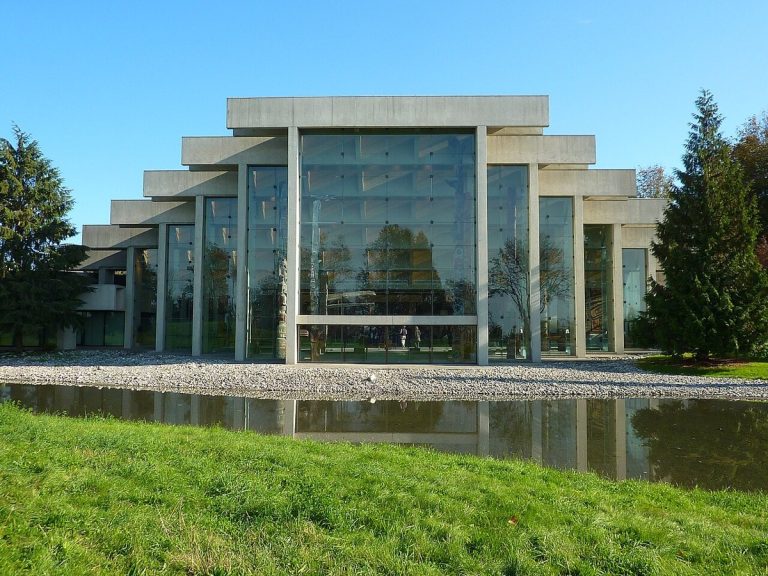
The museum from the north, with its reflecting pool.
CA-K1642Culture & sport

Museum of Anthropology at UBC, Vancouver

The Museum of Anthropology at the University of British Columbia supports the principles of the United Nations Declaration on the Rights of Indigenous Peoples by building close working relationships with Indigenous peoples who have a claim to, or interest in, the material in its care.

Factual accuracy review: No recorded challenge

Contributor: Citizen.ca

Verified against cited sourcesVerified on 2026-10-28↗
Photo: Rr parker · Photo licence: CC BY-SA 3.0 · Credit & context
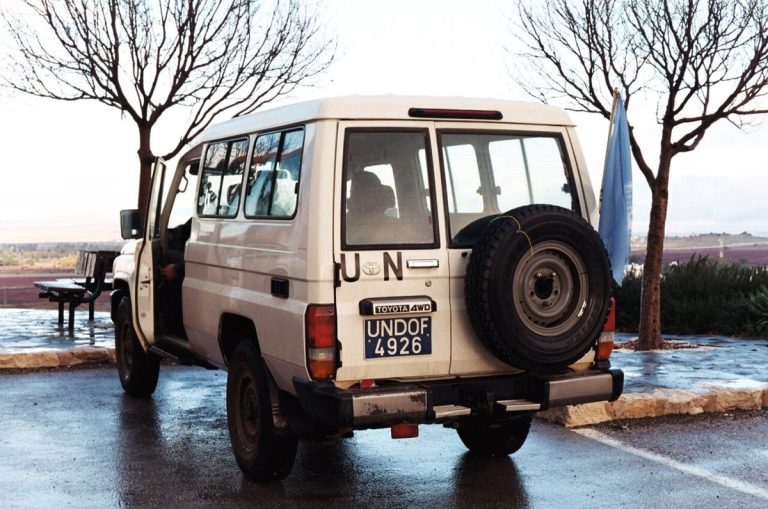
A vehicle of the United Nations Disengagement Observer Force in the Golan Heights.
CA-K1378History

Canadian peacekeepers in the Golan Heights, since 1974

Canada has kept a peacekeeping presence in the Golan Heights of Syria since 1974, when it joined the United Nations Disengagement Observer Force after the Yom Kippur War. It is one of Canada’s longest-running international commitments, and more than 12,000 Canadians have served there.

Factual accuracy review: No recorded challenge

Contributor: Citizen.ca

Verified against cited sourcesVerified on 2026-10-27↗
Photo: Spaceboyjosh · Photo licence: CC BY-SA 4.0 · Credit & context
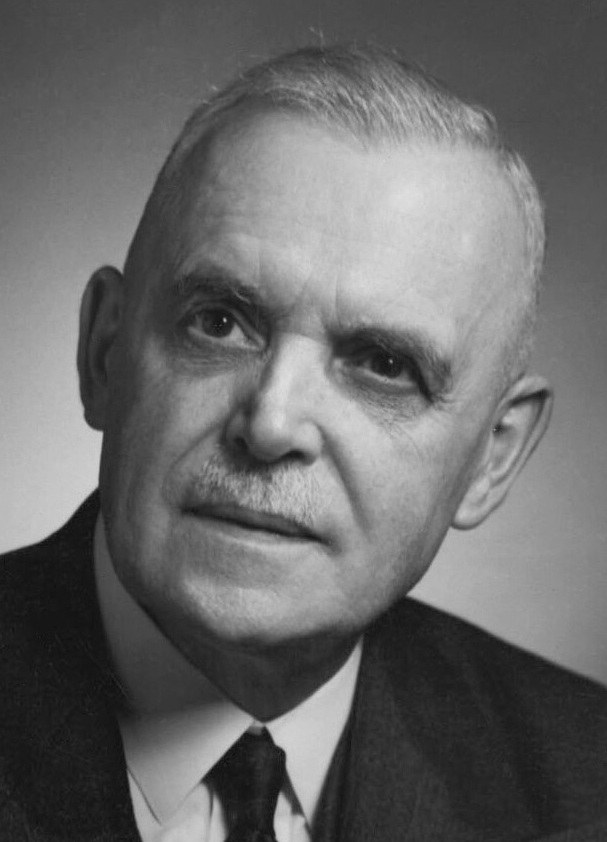
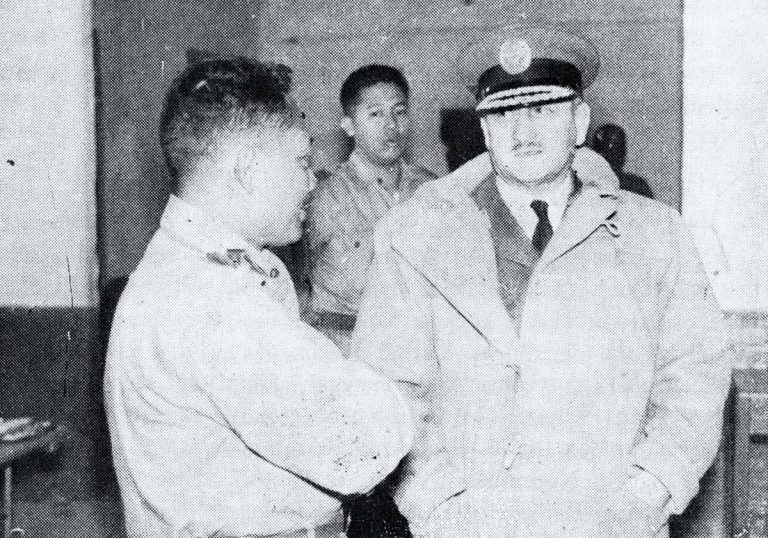
Major-General E.L.M. Burns, commander of the UN Emergency Force, 1957.
CA-K1375History

Canadian peacekeepers in Egypt and the Suez Crisis

During the Suez Crisis of 1956, Canadian diplomat Lester B. Pearson proposed a peacekeeping force, and the United Nations launched its first large-scale peacekeeping mission, the United Nations Emergency Force, commanded by Canada’s Major-General E.L.M. “Tommy” Burns. Canadians served with UN troops in Egypt from 1956 to 1967 and again from 1973 to 1979; Pearson received the 1957 Nobel Peace Prize.

Factual accuracy review: No recorded challenge

Contributor: Citizen.ca

Verified against cited sourcesVerified on 2026-10-27↗
Photo: Indonesian Ministry of Information and the Information Department of the Indonesian Army · Photo licence: Public domain · Credit & context
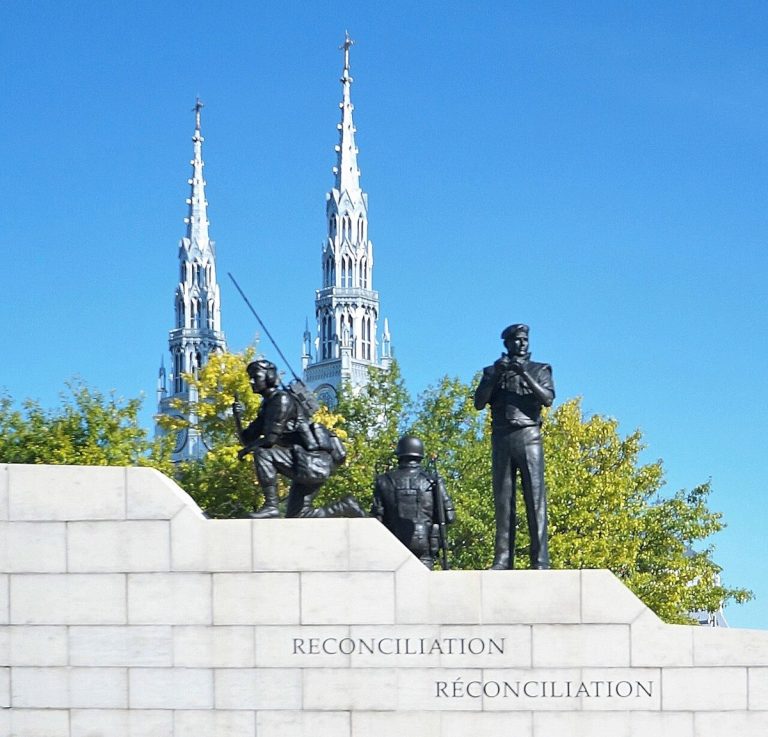
Reconciliation: The Peacekeeping Monument, Ottawa.
CA-K1374History

Canada and international peacekeeping

Members of the Canadian Armed Forces have served in dozens of peacekeeping efforts with the United Nations, NATO and other multinational operations. Peacekeepers are neutral international troops sent to countries in turmoil to reduce tensions and restore peace, monitoring ceasefires, patrolling buffer zones, clearing landmines and providing humanitarian aid.

Factual accuracy review: No recorded challenge

Contributor: Citizen.ca

Verified against cited sourcesVerified on 2026-10-27↗
Photo: Pierre André Leclercq · Photo licence: CC BY 4.0 · Credit & context
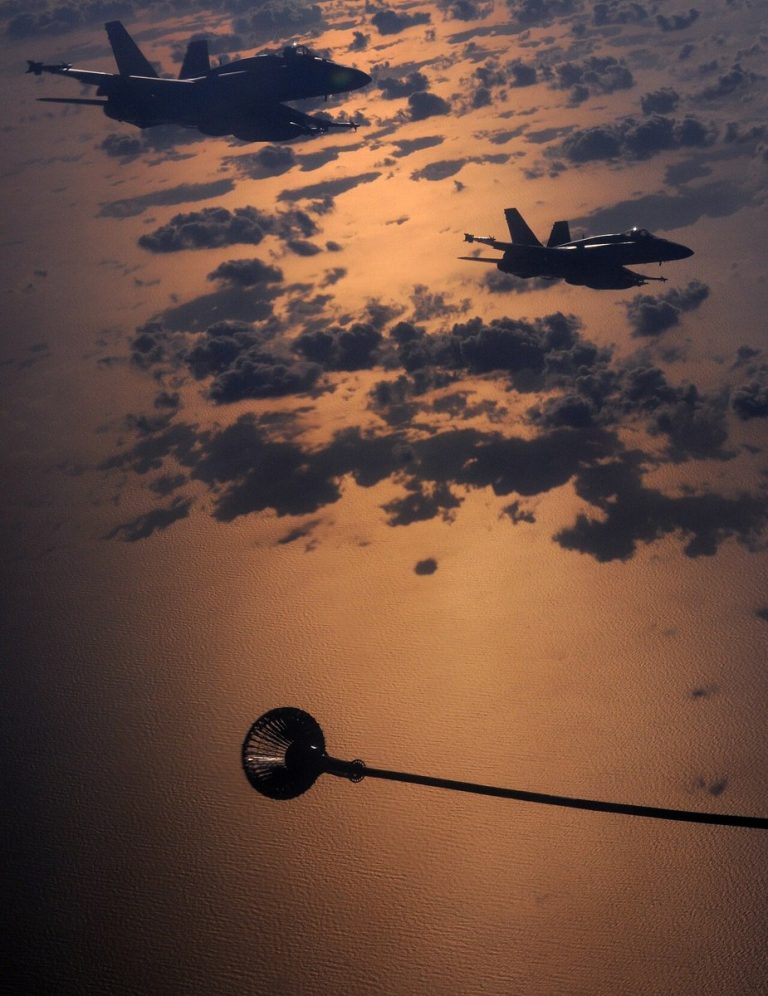
Canadian CF-18s waiting to refuel from a Royal Air Force tanker over Libya, July 2011.
CA-K1369History

Canada in Libya, 2011

In 2011 Canada took part in the NATO-led Operation Unified Protector in Libya through Operation Mobile. It began in February with the evacuation of Canadians and other foreign nationals, then, after the UN Security Council imposed a no-fly zone on 17 March, became a combat operation involving naval ships and fighter, transport, patrol, helicopter and refuelling aircraft. It ended on October 31, 2011, after Gadhafi’s death.

Factual accuracy review: No recorded challenge

Contributor: Citizen.ca

Verified against cited sourcesVerified on 2026-10-27↗
Photo: SAC Sally Raimondo / MOD · Photo licence: OGL v1.0 · Credit & context
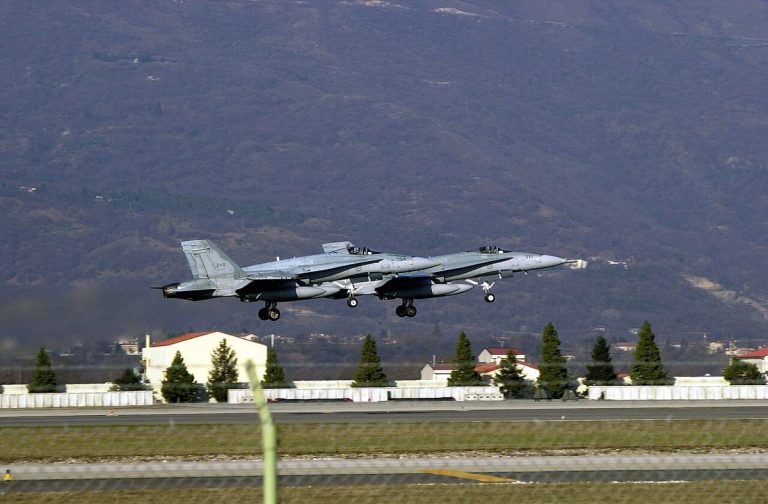
Canadian CF-18 aircraft departing Aviano Air Base, Italy, after supporting Operations Allied Force and Echo; photographed in December 2000.
CA-K1367History

Canada in the Kosovo air campaign, 1999

In 1999 Canadian CF-18 pilots flew combat missions in NATO’s 79-day air campaign over Kosovo, Operation ALLIED FORCE, which ran from March to June 1999 to end violence and repression in Kosovo. Canada’s part, Operation Echo, had begun in June 1998 when CF-18 Hornets deployed to Aviano, Italy.

Factual accuracy review: No recorded challenge

Contributor: Citizen.ca

Verified against cited sourcesVerified on 2026-10-27↗
Photo: Staff Sgt. Jennifer C. Wallis, U.S. Air Force · Photo licence: Public domain · Credit & context
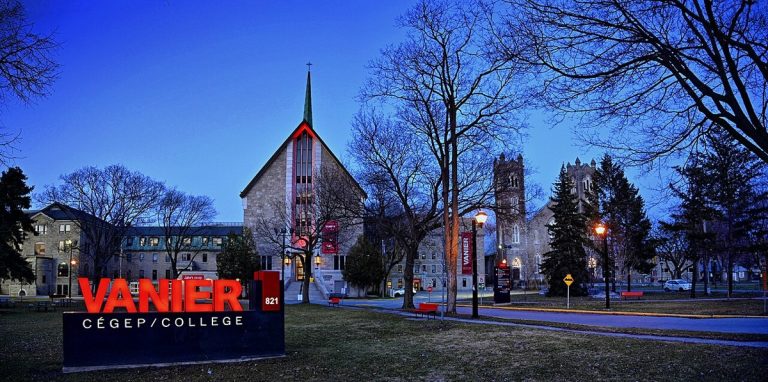
Vanier College, Montréal.
CA-K1244Institutions

Vanier College, Montréal

Vanier College, a publicly funded English-language CEGEP in Montréal, opened on September 8, 1970, welcoming close to 1,400 students in its first cohort. It is named for General Georges P. Vanier, soldier, diplomat and Governor General of Canada.

Factual accuracy review: No recorded challenge

Contributor: Citizen.ca

Verified against cited sourcesVerified on 2026-10-27↗
Photo: Pierre5018 · Photo licence: CC BY-SA 4.0 · Credit & context
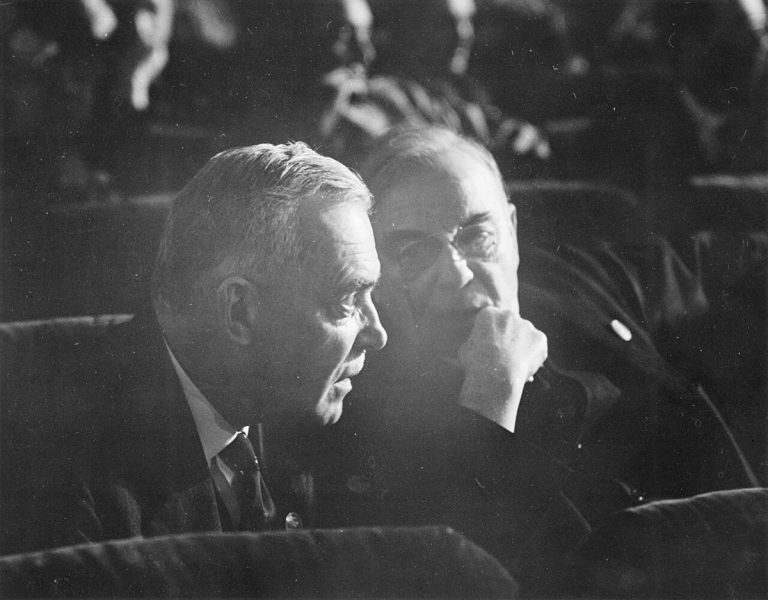
Louis St. Laurent and Mackenzie King at the United Nations Conference, San Francisco, May 1945 (Nicholas Morant).
CA-K1054History

Mackenzie King leads Canada’s delegation to San Francisco, 1945

In 1945, Prime Minister Mackenzie King led the Canadian delegation to the United Nations Conference in San Francisco, which ran from April 25 to June 26.

Factual accuracy review: No recorded challenge

Contributor: Citizen.ca

Verified against cited sourcesVerified on 2026-10-27↗
Photo: Nicholas Morant / National Film Board of Canada. Phototheque / Library and Archives Canada / C-022717 · Photo licence: Public domain · Credit & context
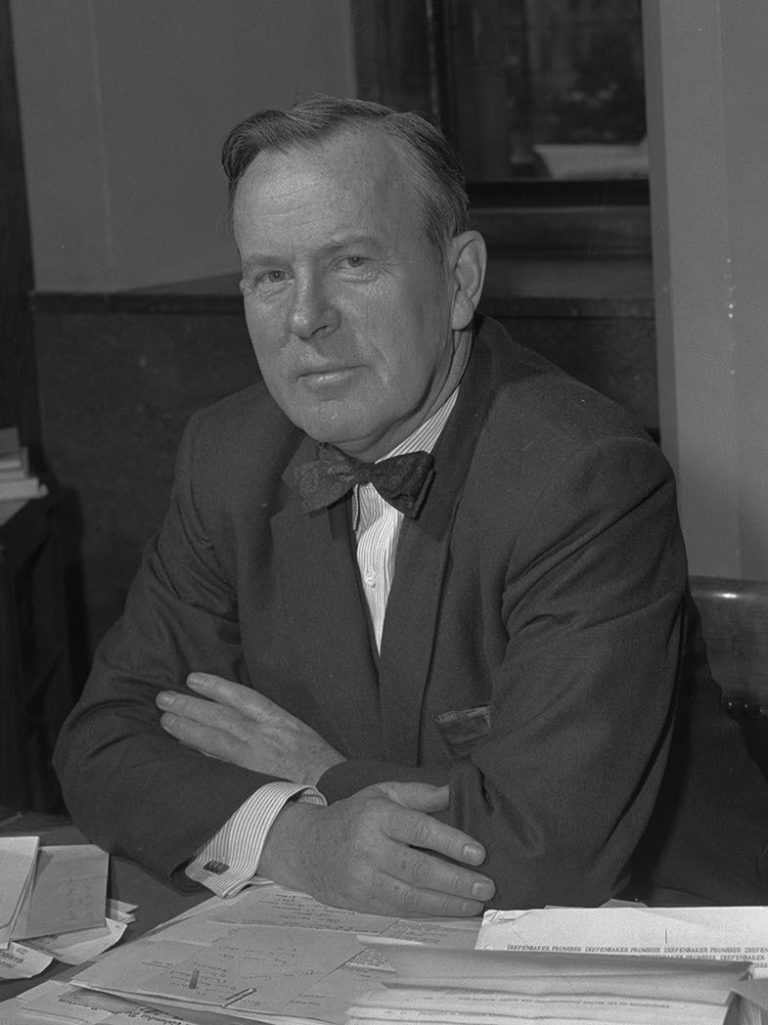
Lester B. Pearson in a photograph published in a 1957 National Film Board photostory about his Nobel Peace Prize.
CA-K951History

Lester B. Pearson, diplomat and prime minister

Lester B. “Mike” Pearson, Canada’s fourteenth prime minister, was an influential diplomat who became Secretary of State for External Affairs in 1948, helped form NATO and won the 1957 Nobel Peace Prize for his leadership at the United Nations during the Suez crisis. Liberal leader from 1958 and prime minister from 1963 to 1968, he promoted bilingualism, championed the new flag, and brought in universal medicare and the Canada Pension Plan.

Factual accuracy review: No recorded challenge

Contributor: Citizen.ca

Verified against cited sourcesVerified on 2026-10-27↗
Photo: Capital Press · Photo licence: Public domain · Credit & context
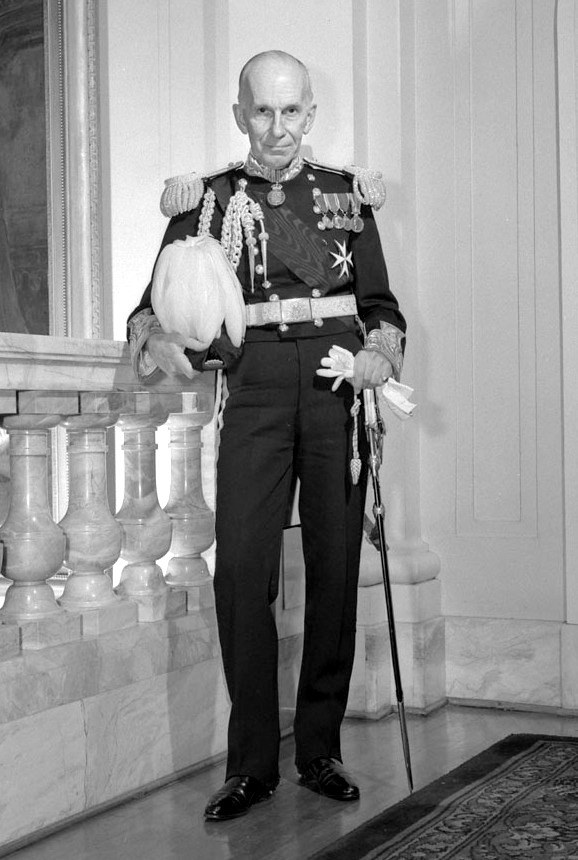
Governor General Vincent Massey, 1956 (Gar Lunney).
CA-K934History

Vincent Massey, first Canadian-born Governor General

Vincent Massey, diplomat, philanthropist and patron of the arts, was Canada’s first diplomatic minister to Washington (1926–30) and High Commissioner in London (1935–46). He chaired the Royal Commission on National Development in the Arts, Letters and Sciences, whose 1951 report was a landmark in Canada’s cultural history. In 1952 he became the first Canadian-born Governor General, serving until 1959.

Factual accuracy review: No recorded challenge

Contributor: Citizen.ca

Verified against cited sourcesVerified on 2026-10-27↗
Photo: Gar Lunney · Photo licence: Public domain · Credit & context
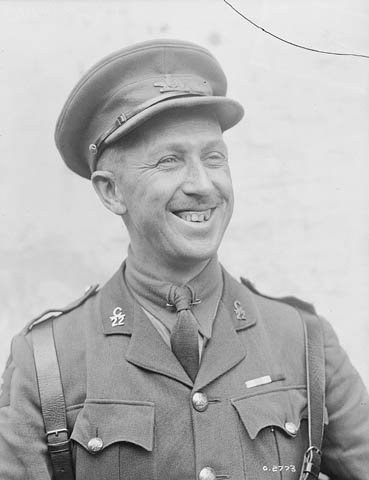
Major Georges P. Vanier, 22nd Battalion, 1918.
CA-K913History

Georges Vanier, soldier, diplomat and Governor General

Georges Vanier helped found the Royal 22e Régiment, served with it in the First World War and commanded it from 1925 to 1928. He represented Canada at the League of Nations, in London and in Paris, becoming Canada’s first ambassador to France in 1944. As Governor General from 1959 to 1967, the first French Canadian in that role since Confederation, he devoted himself to national unity.

Factual accuracy review: No recorded challenge

Contributor: Citizen.ca

Verified against cited sourcesVerified on 2026-10-27↗
Photo: Canada. Dept. of National Defence. Unknown photographer. · Photo licence: Public domain · Credit & context
Louis St. Laurent, 1948 (George Nakash).
CA-K820History

Louis St. Laurent, prime minister

Louis St. Laurent, born in Compton, Quebec, was a leading corporate lawyer before entering politics as Minister of Justice in 1941. He served as Secretary of State for External Affairs and then as Prime Minister from 1948 to 1957. A strong advocate of national unity, he helped shape the new Commonwealth, signed the United Nations Charter and promoted NATO.

Factual accuracy review: No recorded challenge

Contributor: Citizen.ca

Verified against cited sourcesVerified on 2026-10-26↗
Photo: George Nakash · Photo licence: Public domain · Credit & context
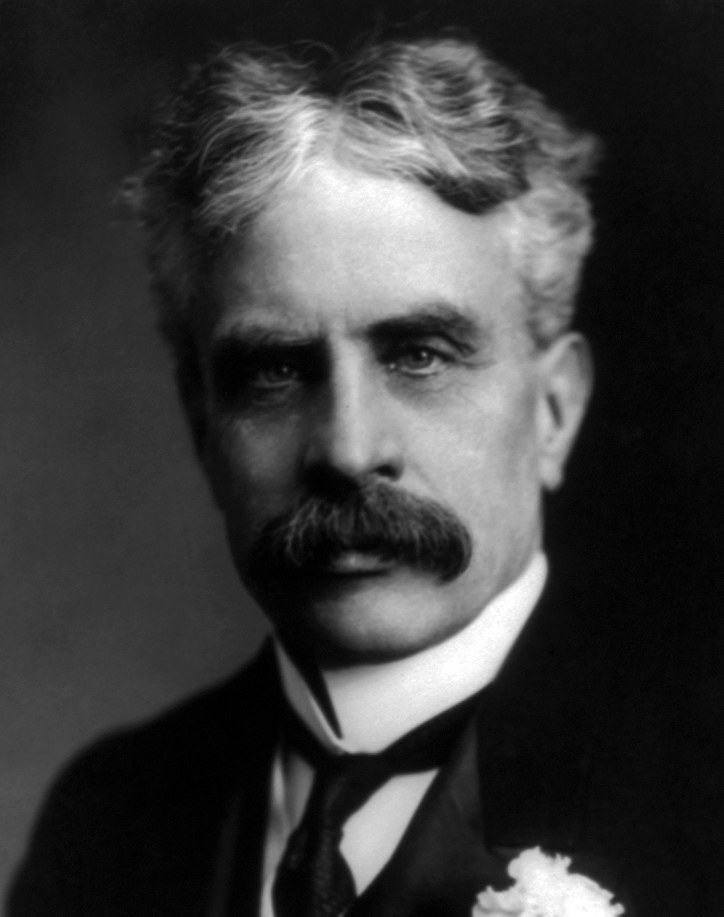
Sir Robert Borden, 1911 (Notman studio).
CA-K784History

Sir Robert Borden, wartime prime minister

Sir Robert Borden, born at Grand-Pré, Nova Scotia, led the Conservative Party from 1901 and was Prime Minister from 1911 to 1920. He guided Canada through the First World War, imposed conscription for overseas service in 1917 and formed a Union government of Liberals and Conservatives. He is remembered above all for insisting that Canada act as an autonomous nation in international diplomacy.

Factual accuracy review: No recorded challenge

Contributor: Citizen.ca

Verified against cited sourcesVerified on 2026-10-26↗
Photo: Notman, Boston · Photo licence: Public domain · Credit & context
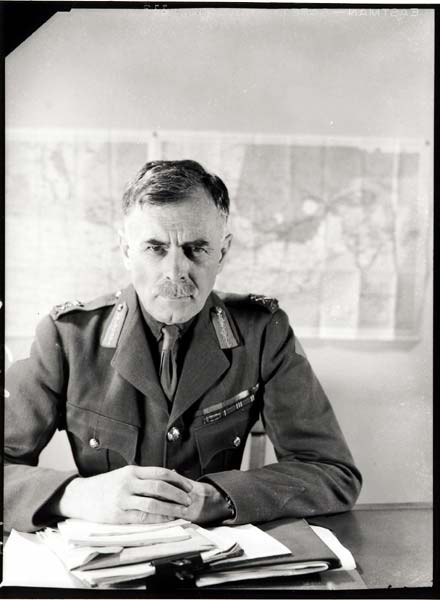
Lieutenant-General A. G. L. McNaughton in March 1942 (Department of National Defence).
CA-K387History

A. G. L. McNaughton, soldier and scientist

A. G. L. McNaughton (1887–1966), born in Moosomin in today’s Saskatchewan, played a notable role in Canadian life as a scientist, soldier, politician and diplomat. He served as an artillery officer in the First World War, co-invented the forerunner of radar, led the National Research Council, and represented Canada in senior diplomatic roles after the Second World War.

Factual accuracy review: No recorded challenge

Contributor: Citizen.ca

Verified against cited sourcesVerified on 2026-10-26↗
Photo: Unknown author · Photo licence: Public domain · Credit & context
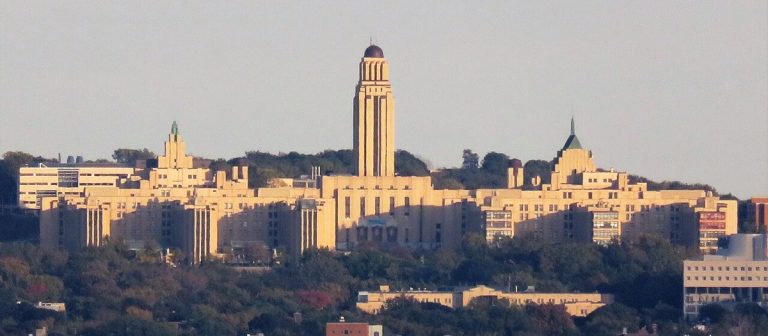
The Roger-Gaudry pavilion of the Université de Montréal, designed by Ernest Cormier, photographed in 2015.
CA-K267Culture & sport

Ernest Cormier, architect and engineer

Ernest Cormier (1885–1980), born in Montréal and trained at the École des Beaux-Arts de Paris, was an engineer and one of the most renowned Canadian architects of the 20th century, known for innovative design, new materials and attention to every detail. The federal government chose him to represent Canada in designing the United Nations Headquarters in New York (1949–1952).

Factual accuracy review: No recorded challenge

Contributor: Citizen.ca

Verified against cited sourcesVerified on 2026-10-26↗
Photo: Laurent Bélanger · Photo licence: CC BY-SA 4.0 · Credit & context