
An independent Canadian knowledge projectPilot collection · EN / FR
CA-K032Indigenous peoples & reconciliation

The NCTR preserves the TRC’s records
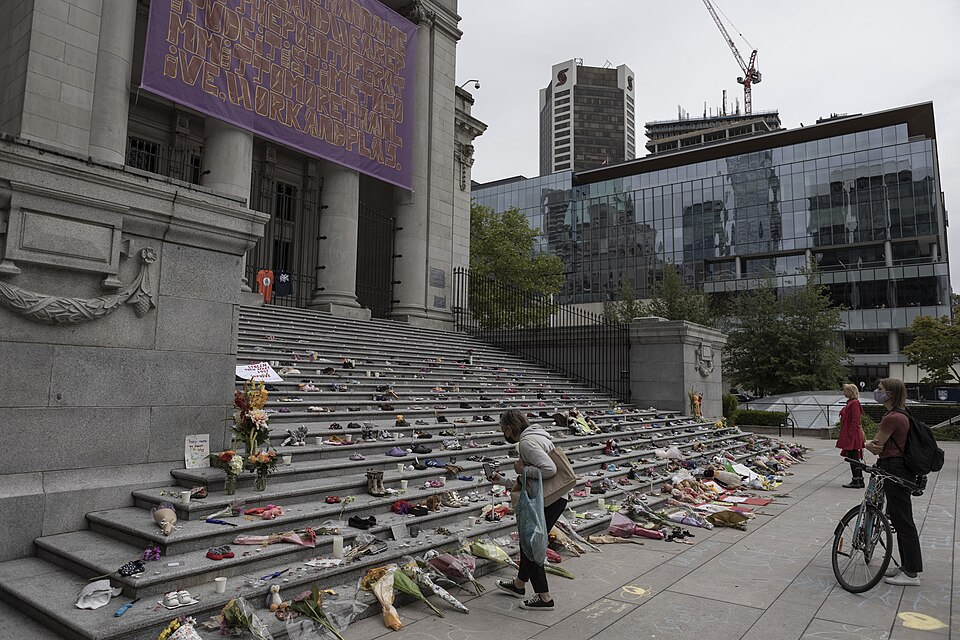
A residential-school memorial in Vancouver on 30 May 2021; an illustration of commemoration, not the NCTR building or its archival collection.
A residential-school memorial in Vancouver on 30 May 2021; an illustration of commemoration, not the NCTR building or its archival collection. Kamloops Residential School Memorial, May 30th 2021 · Source-supplied title: https://flickr.com/photos/gotovan/51214731153/in/photolist-2hCPesY-2hbv5X8-nvdavw-2hbyiJn-2m2z4Zy-2m2AcV3-2m2D3St-2m2D3ej-2m2voPm-2m2HFKU-2m2HFV3-2m2HFTK-2m2KfTG-2m2A7Gr-2m2DLDm-2m2KfRx-2m2ETh6-2m2DLzt-2m2HFLA-2m2KfLH-2m2KfL7-2m2ETc6 · GoToVan · Photo source · Photo licence: CC BY 2.0. Resized for display; item previews may be cropped. The image remains under the licence shown.
Factual accuracy review: No recorded challenge

No recorded challenge is not proof of accuracy. A challenge under review is not a finding that the item is false.

The National Centre for Truth and Reconciliation officially opened in 2015. Statements, documents and other materials gathered by the Truth and Reconciliation Commission became a central part of its work of preserving residential school history.

Scope & context

The Centre and the Commission have distinct roles.

Sources behind this record

1
Our Mandate ↗

National Centre for Truth and Reconciliation

About Truth and Reconciliation: the Centre opening in 2015