An independent Canadian knowledge project

Focused and Verified

Canadian knowledge base

Search by keyword

Choose one keyword, or combine two. Broader keywords include their descendants.

Keywords: 1900–1999

Clear search
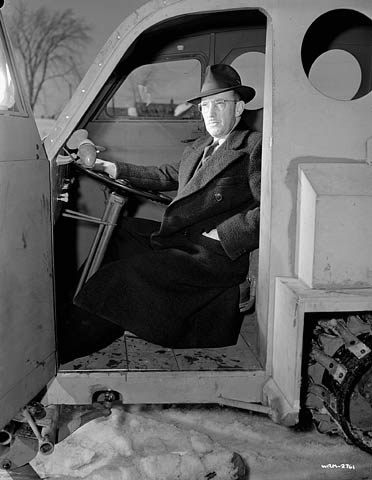
Joseph-Armand Bombardier at the wheel of a Bombardier military snowmobile, March 1943.
CA-K435Economy & trade

Joseph-Armand Bombardier and the snowmobile

Joseph-Armand Bombardier of Valcourt, Quebec, developed snow vehicles that helped reduce winter isolation in rural areas of Canada and elsewhere. He patented the snowmobile in 1937 and the smaller Ski-Doo in 1960, both designed and built in Valcourt, and after his death the company he founded became a world leader in transportation.

Factual accuracy review: No recorded challenge

Contributor: Citizen.ca

Verified against cited sourcesVerified on 2026-10-26↗
Photo: Unknown author · Photo licence: Public domain · Credit & context
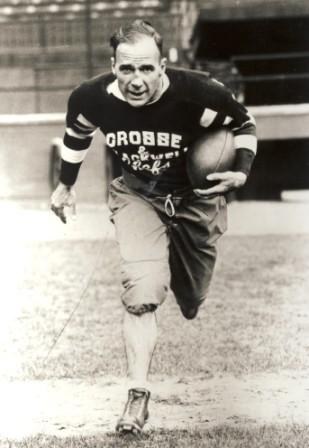
Lionel Conacher as a football player in Toronto, 1933.
CA-K430Culture & sport

Lionel Conacher, the “Big Train”

Lionel “Big Train” Conacher excelled at six professional sports and was voted Canada’s all-round male athlete of the half-century in 1950. A star of football and lacrosse who helped win the 1921 Grey Cup, he played in the National Hockey League from 1925 to 1937 on two Stanley Cup-winning teams, then was elected to the Ontario legislature and, in 1949, to the House of Commons.

Factual accuracy review: No recorded challenge

Contributor: Citizen.ca

Verified against cited sourcesVerified on 2026-10-26↗
Photo: Unknown author · Photo licence: Public domain · Credit & context
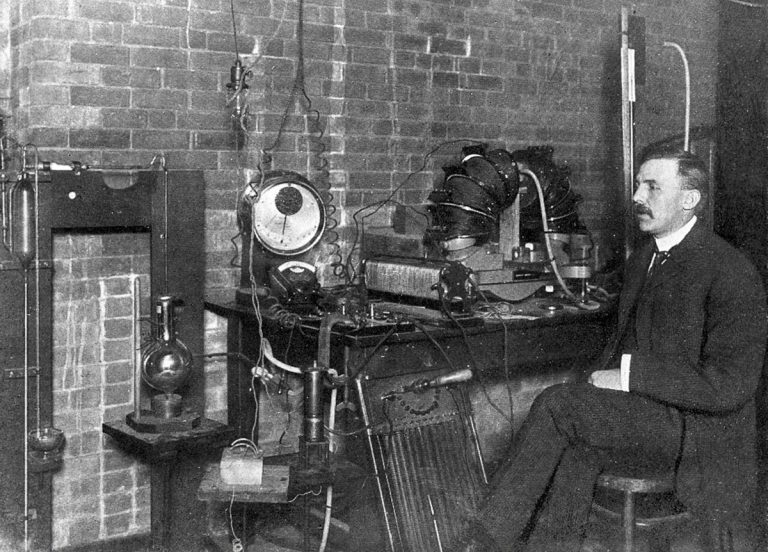
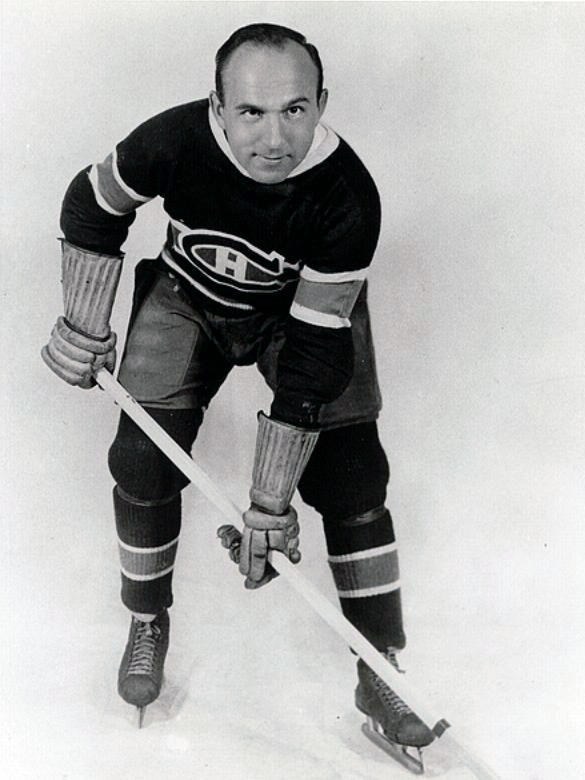
Howie Morenz of the Montréal Canadiens, around 1936.
CA-K429Culture & sport

Howie Morenz, the “Stratford Streak”

Howie Morenz of Mitchell, Ontario, joined the Montréal Canadiens in 1923 and helped them win three Stanley Cups, twice leading the league in scoring and winning the Hart Trophy three times. Probably the most exciting player of his day, he died in Montréal of complications from a hockey injury and was inducted into the Hockey Hall of Fame in 1945.

Factual accuracy review: No recorded challenge

Contributor: Citizen.ca

Verified against cited sourcesVerified on 2026-10-26↗
Photo: Unknown author · Photo licence: Public domain · Credit & context
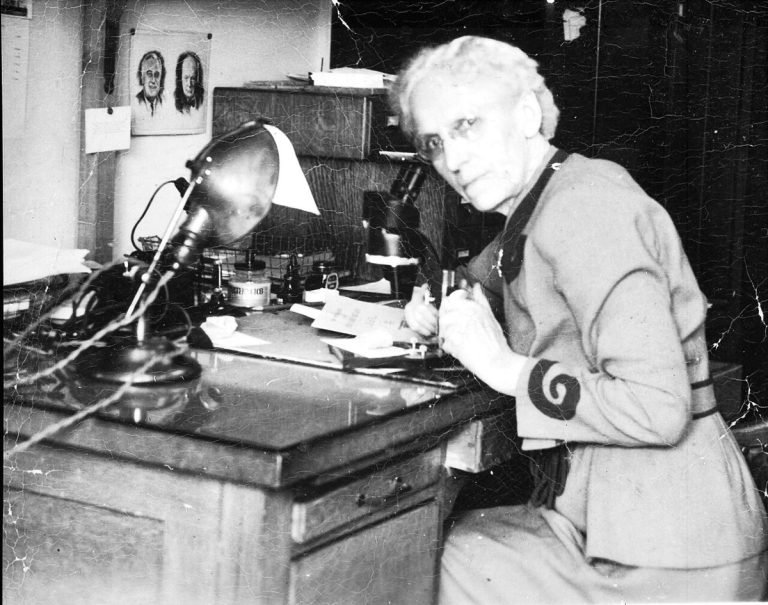
Ernest Rutherford at McGill University, 1905.
CA-K426History

Ernest Rutherford’s radioactivity research at McGill

As Macdonald Professor of Physics at McGill University from 1898 to 1907, Ernest Rutherford, working with Frederick Soddy, made fundamental discoveries about radioactivity that made McGill an important centre of atomic physics research. He later led laboratories at Manchester and Cambridge and received the Nobel Prize in Chemistry in 1908.

Factual accuracy review: No recorded challenge

Contributor: Citizen.ca

Verified against cited sourcesVerified on 2026-10-26↗
Photo: Unknown, published in 1939 in Rutherford : being the life and letters of the Rt. Hon. Lord Rutherford, O. M · Photo licence: Public domain · Credit & context
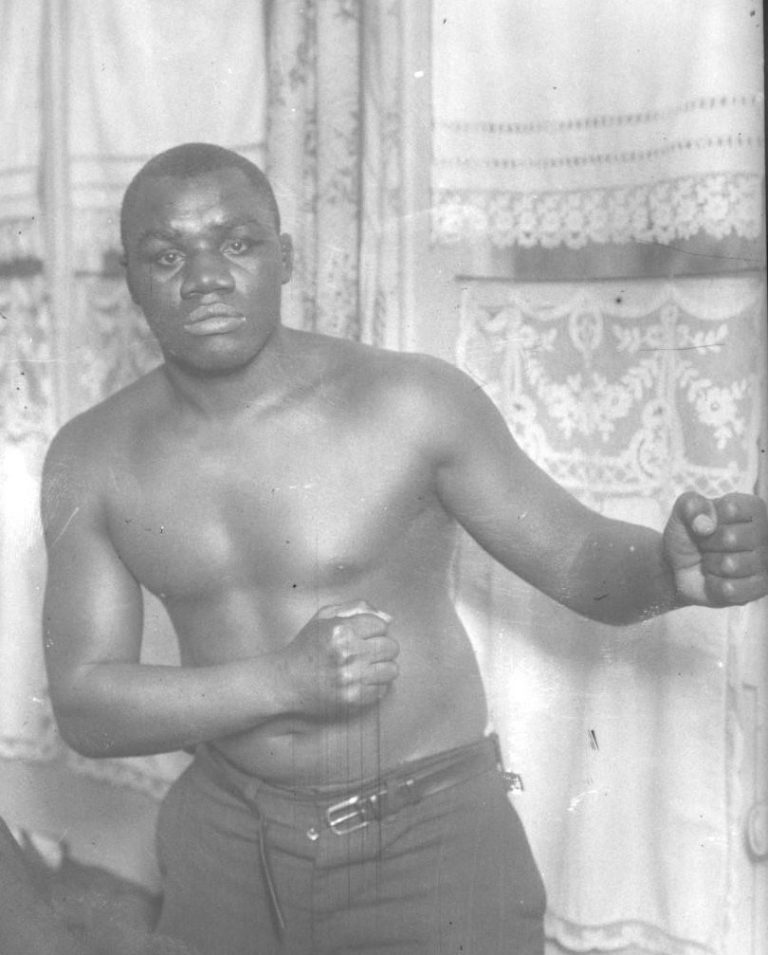
Alice Wilson at her desk with a microscope, Geological Survey of Canada, before 1946.
CA-K424History

Alice Wilson, the first woman geologist at the Geological Survey

Alice Wilson, a paleontologist and geologist who studied the Ottawa–St. Lawrence Lowlands, was the first woman employed as a geologist at the Geological Survey of Canada. She earned a doctorate in 1929 with support from the Canadian Federation of University Women, became the first female Fellow of the Royal Society of Canada, and helped open science and the federal public service to women.

Factual accuracy review: No recorded challenge

Contributor: Citizen.ca

Verified against cited sourcesVerified on 2026-10-26↗
Photo: Unknown author · Photo licence: Public domain · Credit & context
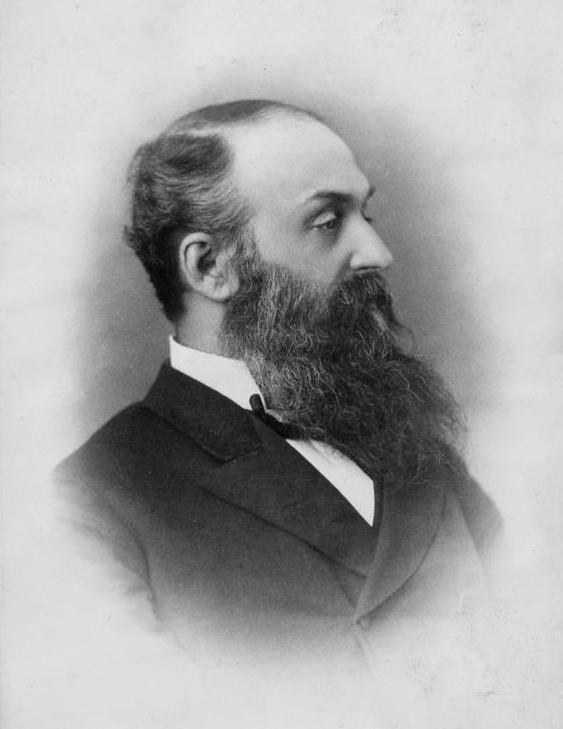
Sam Langford in 1913 (Agence Rol).
CA-K419Culture & sport

Sam Langford, boxer from Weymouth Falls

Sam Langford, a Black boxer from Weymouth Falls, Nova Scotia, fought professionally from 1902 to 1923 in divisions ranging from lightweight to heavyweight. Despite his achievements, he was denied the opportunity to challenge for the leading world heavyweight championship.

Factual accuracy review: No recorded challenge

Contributor: Citizen.ca

Verified against cited sourcesVerified on 2026-10-26↗
Photo: Agence Rol · Photo licence: Public domain · Credit & context
Alphonse Desjardins in Montréal, April 1882 (Notman & Sandham).
CA-K417Economy & trade

Alphonse Desjardins and the caisses populaires

Alphonse Desjardins of Lévis, a journalist and parliamentary stenographer, founded the caisse populaire movement in Quebec. Concerned about ordinary people’s finances and the lack of French-Canadian banks, he devised co-operative savings and loan societies organized by parish, founded the first in Lévis in 1900, and spent the last 20 years of his life spreading the movement.

Factual accuracy review: No recorded challenge

Contributor: Citizen.ca

Verified against cited sourcesVerified on 2026-10-26↗
Photo: Notman & Sandham · Photo licence: Public domain · Credit & context
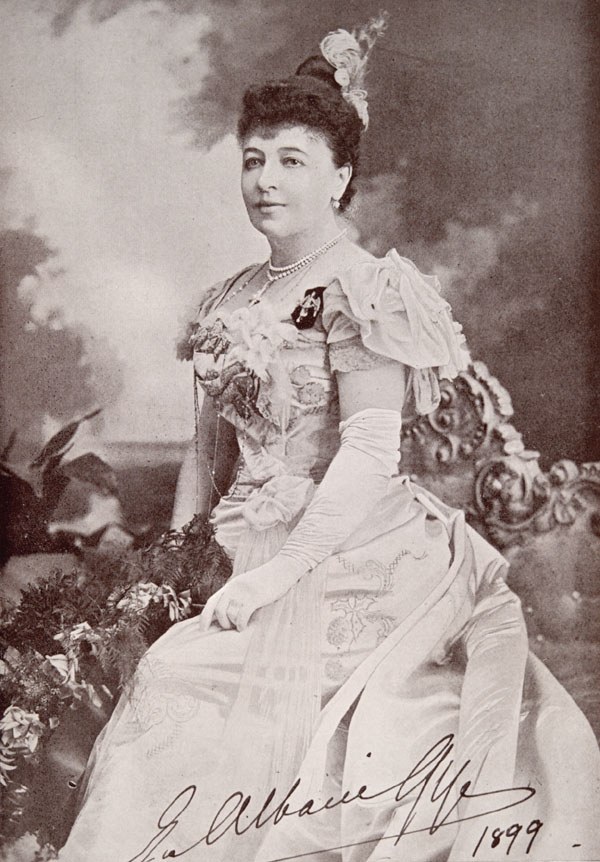
Emma Albani in 1899 (Talma and Company, Melbourne).
CA-K412Culture & sport

Emma Albani, soprano from Chambly

Emma Albani, born Emma Lajeunesse at Chambly, Quebec, was one of the great sopranos of her generation. For 24 years a principal artist at Covent Garden in London and a favourite of Queen Victoria, she sang Italian, French, German and English repertoire, from oratorio to Wagner, and was made a Dame Commander of the British Empire in 1925.

Factual accuracy review: No recorded challenge

Contributor: Citizen.ca

Verified against cited sourcesVerified on 2026-10-26↗
Photo: Talma and Company, Melbourne, Australia (Active: ca. 1899 - ca. 1912) · Photo licence: Public domain · Credit & context
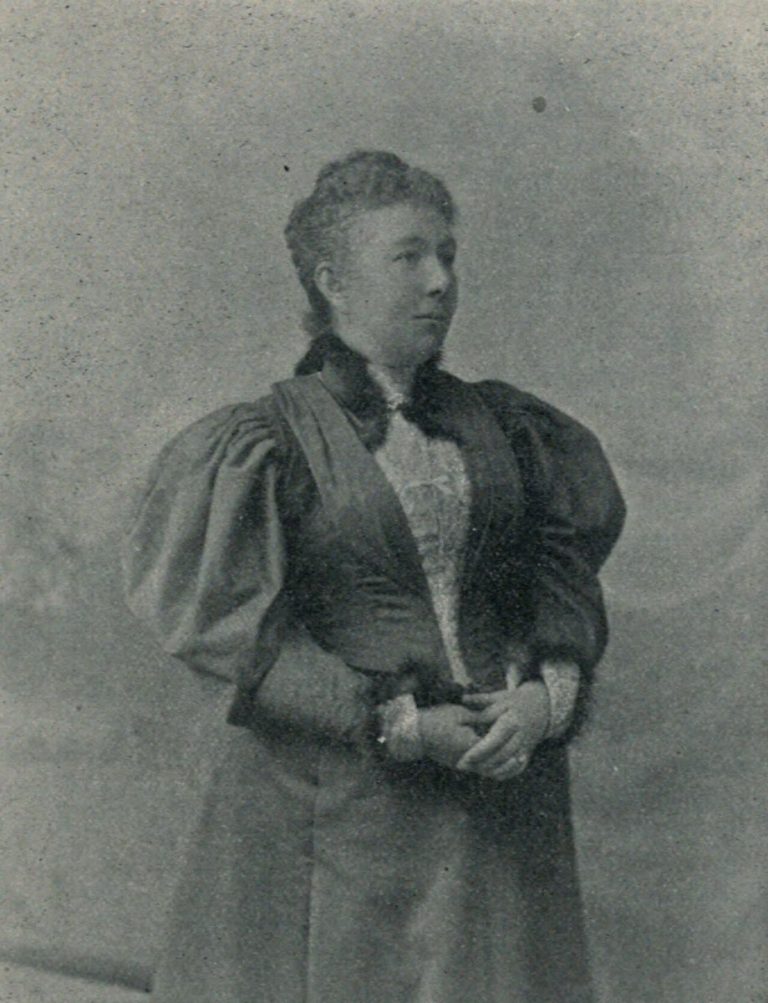
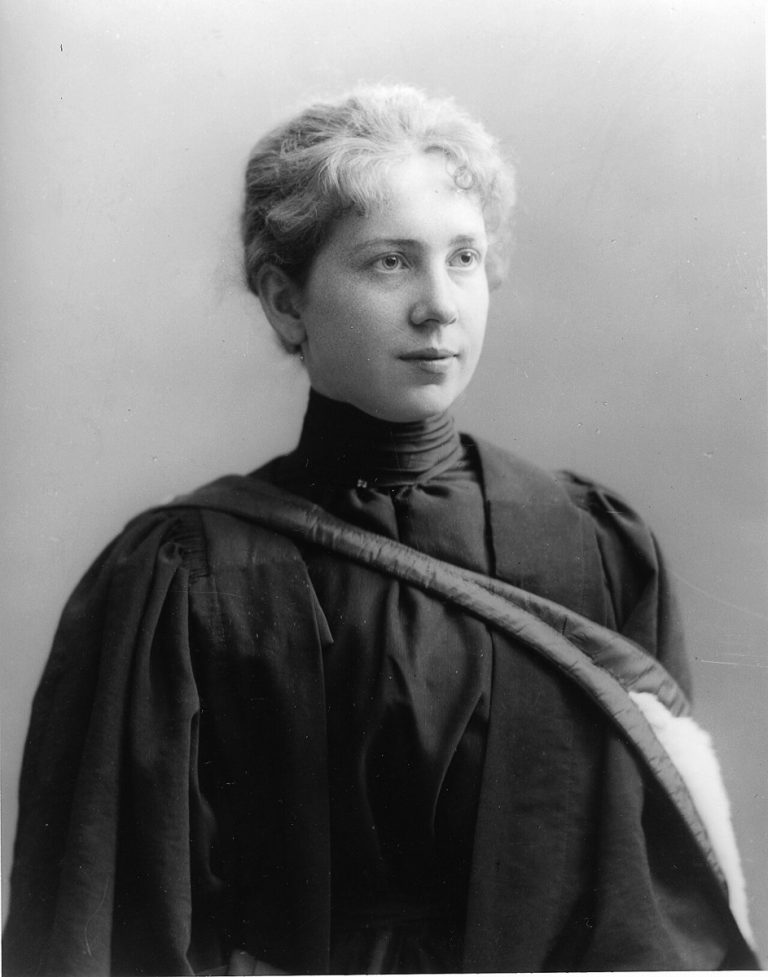
Portrait of Edith Archibald, no later than 1895.
CA-K396Institutions

Edith Archibald and women’s suffrage in Nova Scotia

For more than 30 years, Edith Jessie Archibald (1854–1936) championed women’s right to vote in Nova Scotia, achieved on 26 April 1918. As president of the Maritime Woman’s Christian Temperance Union and the Halifax Local Council of Women, she also worked to improve health and education services.

Factual accuracy review: No recorded challenge

Contributor: Citizen.ca

Verified against cited sourcesVerified on 2026-10-26↗
Photo: Unknown author · Photo licence: Public domain · Credit & context
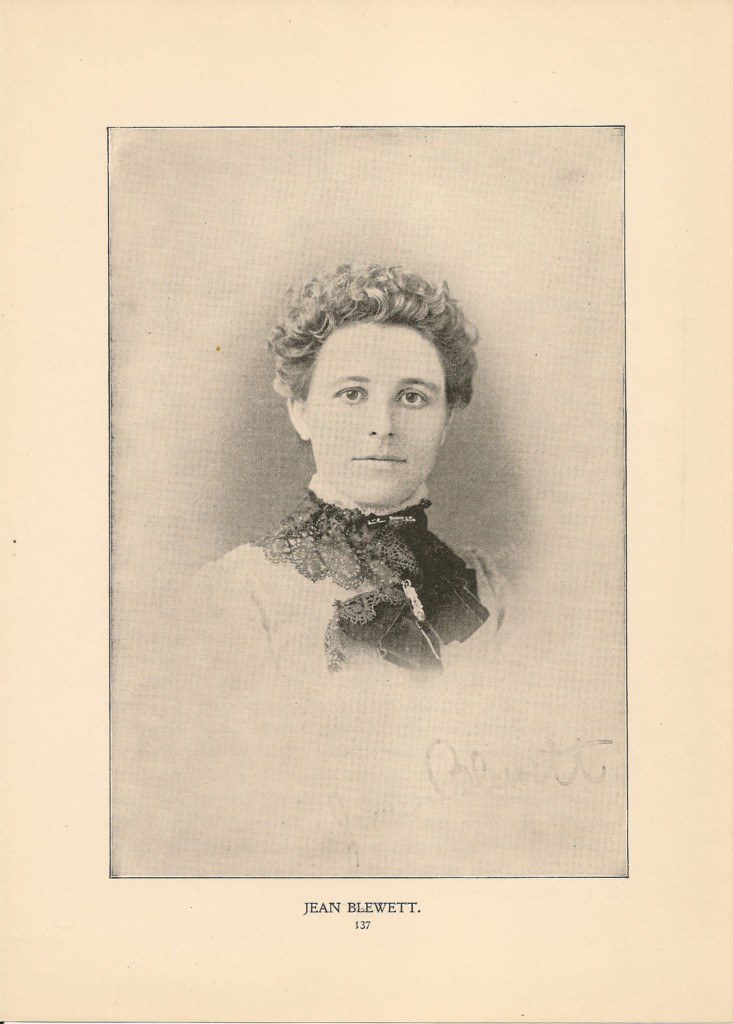
Jean Blewett, portrait from a book published around 1896.
CA-K392Culture & sport

Jean Blewett, poet and journalist

Jean (McKishnie) Blewett (1862–1934), born at Scotia, Upper Canada, was a popular early 20th-century poet and journalist. For many years on the staff of the Toronto Globe, she worked as a journalist until 1925 and published several volumes of poetry between 1897 and 1922, admired for their directness and simplicity.

Factual accuracy review: No recorded challenge

Contributor: Citizen.ca

Verified against cited sourcesVerified on 2026-10-26↗
Photo: Unknown author · Photo licence: Public domain · Credit & context
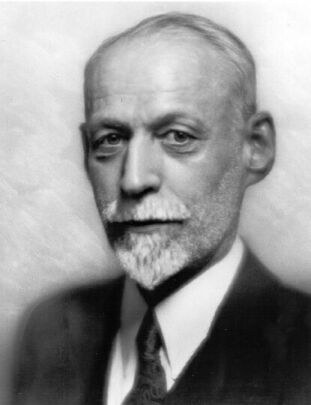
Portrait of J. S. Woodsworth.
CA-K391Institutions

J. S. Woodsworth and the CCF

J. S. Woodsworth (1874–1942), a Methodist pastor who confronted urban poverty in Winnipeg, was the leading socialist voice in Canada of his day and in 1933 became the first parliamentary leader of the Co-operative Commonwealth Federation. His book Strangers Within Our Gates (1909) relied on nativist views and a racist hierarchy of immigrants, and at times he proposed eugenic solutions to perceived social problems.

Factual accuracy review: No recorded challenge

Contributor: Citizen.ca

Verified against cited sourcesVerified on 2026-10-26↗
Photo: The original uploader was Adam Carr at English Wikipedia. · Photo licence: Public domain · Credit & context
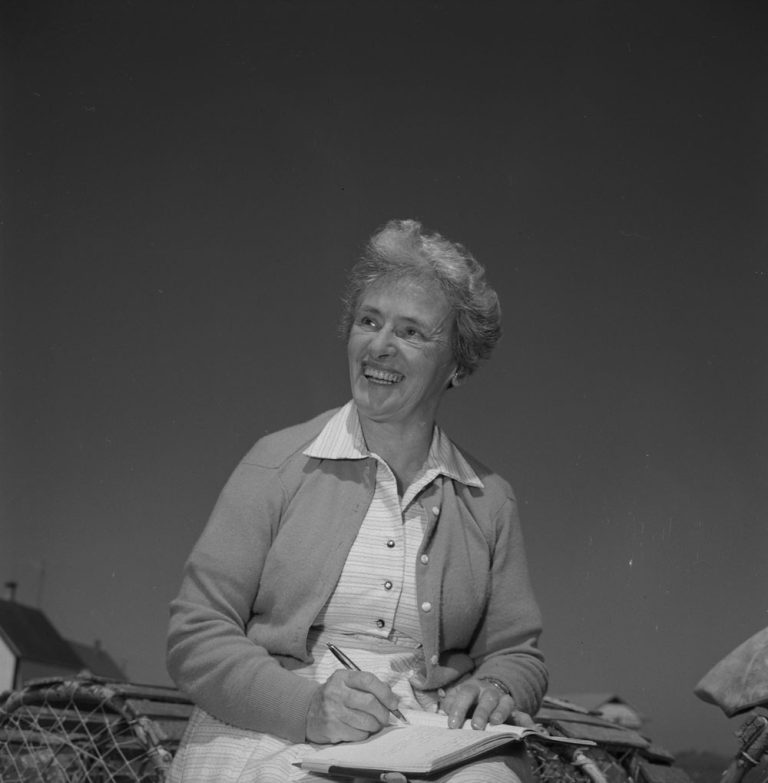
Dr. Helen Creighton in Nova Scotia, 1959 (National Film Board).
CA-K390Culture & sport

Helen Creighton, collector of Maritime folklore

Folklorist Helen Creighton (1899–1989) built one of Canada’s largest collections of songs, tales and customs between 1928 and 1975, making more than 4,000 recordings in British, Acadian, Gaelic, German, African Nova Scotian and Mi’kmaw communities across the Maritimes. She popularized these traditions through radio, television and publications, and songs such as “Farewell to Nova Scotia”.

Factual accuracy review: No recorded challenge

Contributor: Citizen.ca

Verified against cited sourcesVerified on 2026-10-26↗
Photo: Chris Lund · Photo licence: Public domain · Credit & context
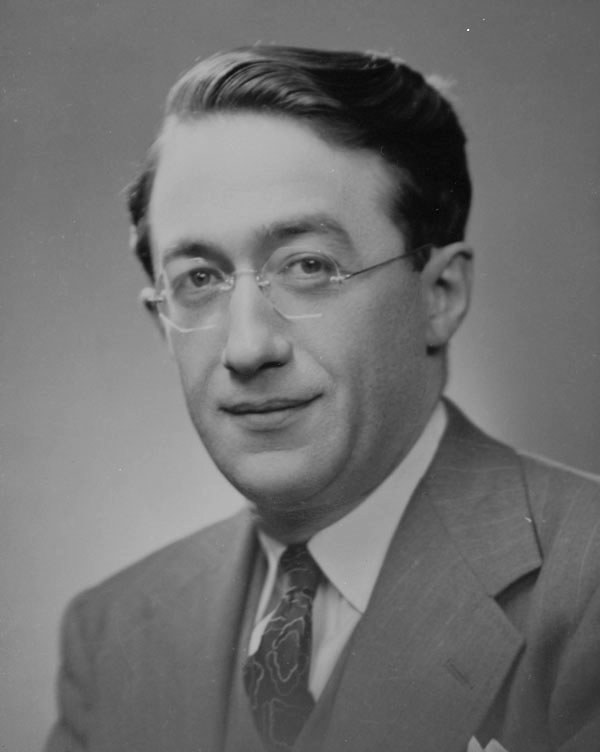
A. M. Klein in the mid-1940s (Library and Archives Canada).
CA-K383Culture & sport

A. M. Klein, poet of Jewish Montréal

A. M. Klein (1909–1972) combined modernism with Jewish literary traditions in poetry that portrayed his downtown Montréal neighbourhood. His collection The Rocking Chair and Other Poems, depicting Quebec and its people, won the Governor General’s Award in 1949.

Factual accuracy review: No recorded challenge

Contributor: Citizen.ca

Verified against cited sourcesVerified on 2026-10-26↗
Photo: Library and Archives Canada · Photo licence: Public domain · Credit & context
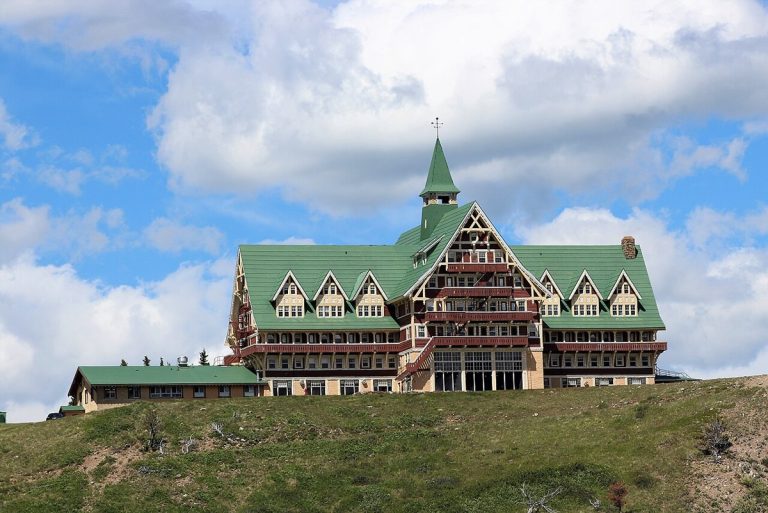
The Prince of Wales Hotel above Waterton Lake, Alberta, photographed in 2016.
CA-K382Places & geography

The Prince of Wales Hotel, Waterton Lakes

The Prince of Wales Hotel in Waterton Lakes National Park, Alberta, built in 1926–1927, is a grand survivor of the golden age of railway resorts in Canada. It was the only Canadian link in the Great Northern Railway’s chain of park hotels, and its soaring roof, gables and balconies give it the look of a giant alpine chalet.

Factual accuracy review: No recorded challenge

Contributor: Citizen.ca

Verified against cited sourcesVerified on 2026-10-26↗
Photo: Lazarus000 · Photo licence: CC BY-SA 4.0 · Credit & context
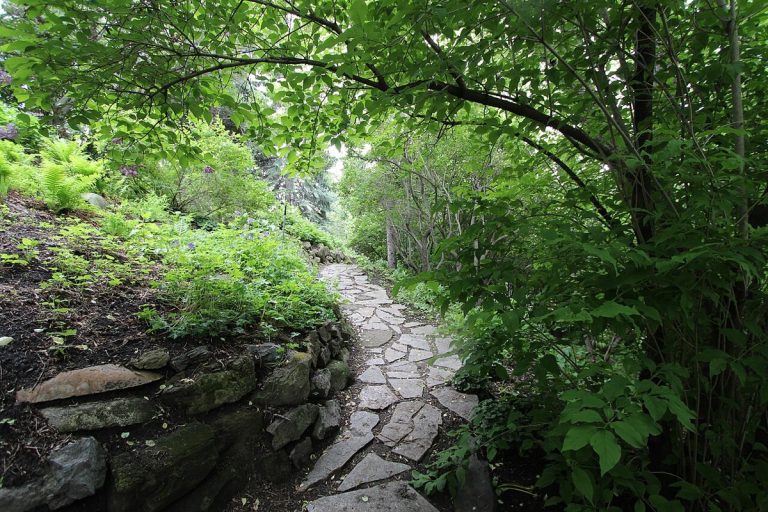
A stone path through Reader Rock Garden in Calgary, photographed in 2014.
CA-K380Places & geography

Reader Rock Garden, Calgary

Reader Rock Garden in Calgary is an Arts and Crafts-style alpine rockery laid out on a steep hillside by William R. Reader, the city’s parks superintendent from 1913 to 1942. Its planting beds tested and showed off what could grow in Calgary, challenging the belief that southern Alberta’s climate was too harsh for agriculture and horticulture.

Factual accuracy review: No recorded challenge

Contributor: Citizen.ca

Verified against cited sourcesVerified on 2026-10-26↗
Photo: Thank you for visiting my page from Canada · Photo licence: CC BY 2.0 · Credit & context
A pond in the Flowery Brook area of the Montréal Botanical Garden, photographed in 2017.
CA-K379Places & geography

The Montréal Botanical Garden of Brother Marie-Victorin

The Montréal Botanical Garden, founded in 1931, was developed through botanist Brother Marie-Victorin’s leadership and landscape architect Henry Teuscher’s design. It includes exhibition greenhouses, thematic gardens and an arboretum, combining botanical study with public horticultural education.

Factual accuracy review: No recorded challenge

Contributor: Citizen.ca

Verified against cited sourcesVerified on 2026-10-26↗
Photo: King of Hearts · Photo licence: CC BY-SA 4.0 · Credit & context
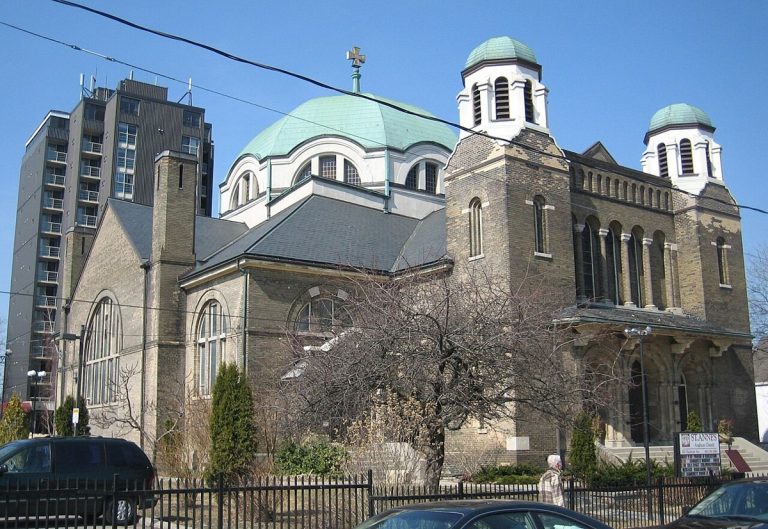
St. Anne’s Anglican Church in Toronto, photographed in 2009, before the fire that destroyed the historic building in June 2024.
CA-K378Culture & sport

St. Anne’s Church and its Group of Seven murals

St. Anne’s Anglican Church in Toronto was built in 1907–1908 in the Byzantine Revival style. Its 1923 murals included work by J. E. H. MacDonald, Frederick Varley and Franklin Carmichael of the Group of Seven. A fire destroyed the historic church building and its irreplaceable artwork on 9 June 2024.

Factual accuracy review: No recorded challenge

Contributor: Citizen.ca

Verified against cited sourcesVerified on 2026-10-26↗
Photo: SimonP · Photo licence: CC BY-SA 3.0 · Credit & context
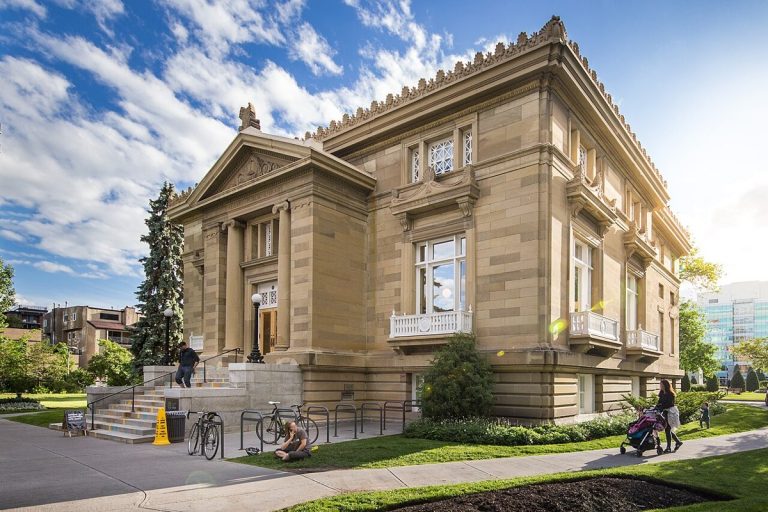
Memorial Park Library in Calgary, Alberta, photographed in 2017.
CA-K377Culture & sport

Calgary’s Central Memorial Library, a Carnegie library

Calgary’s Central Memorial Library and Park opened in 1912 and is one of the largest and most imposing of the 125 Carnegie libraries built in Canada. A project of local women led by Annie Davidson, funded with Andrew Carnegie, it served as the city’s main library until 1963 and as a social and cultural centre for more than a century.

Factual accuracy review: No recorded challenge

Contributor: Citizen.ca

Verified against cited sourcesVerified on 2026-10-26↗
Photo: Dean T Mullin of the Calgary Public Library · Photo licence: CC0 · Credit & context
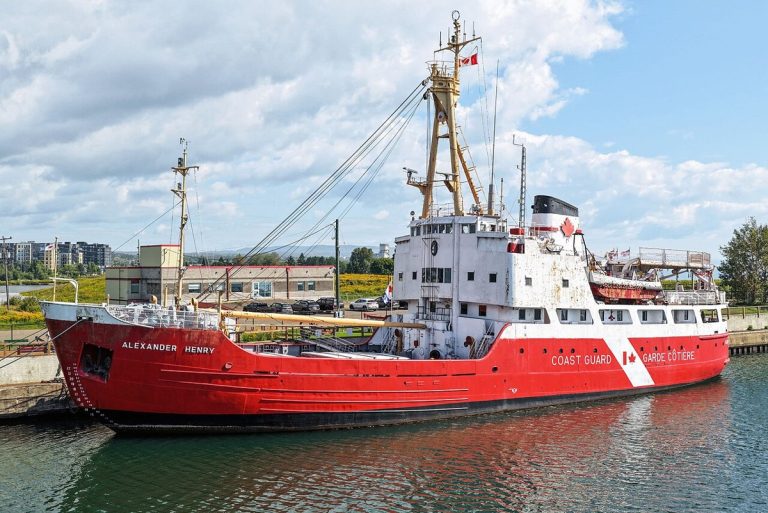
The former CCGS Alexander Henry, preserved in Thunder Bay, Ontario, photographed in 2026.
CA-K374History

CCGS Alexander Henry, Lake Superior icebreaker

The CCGS Alexander Henry, launched at Port Arthur (now Thunder Bay) in 1958, was the main Canadian icebreaker on Lake Superior from 1959 to 1985 and part of the first Canadian Coast Guard fleet in 1962. The red and white ship broke ice to lengthen the shipping season, supplied lighthouses, maintained buoys and carried out search and rescue.

Factual accuracy review: No recorded challenge

Contributor: Citizen.ca

Verified against cited sourcesVerified on 2026-10-26↗
Photo: Quintin Soloviev · Photo licence: CC BY 4.0 · Credit & context
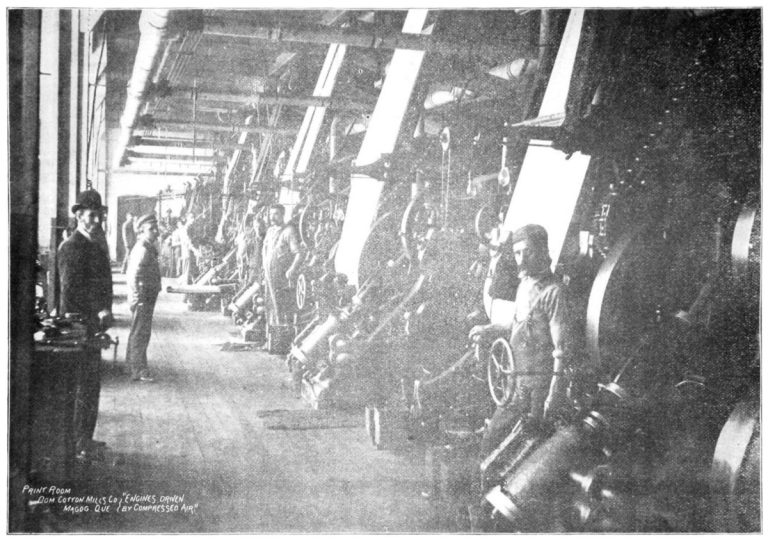
The print room of the Magog cotton mill in 1897.
CA-K373Economy & trade

The Magog Textile Mill, Canada’s first cotton printing

The Magog Textile Mill in Quebec, built in 1883 on the Magog River, began printing cotton in 1884 and was the country’s only cotton-printing mill until 1899. It was the only 19th-century mill where spinning, weaving, bleaching and printing were all done at one site; as part of Dominion Textile it employed 2,300 people by 1943.

Factual accuracy review: No recorded challenge

Contributor: Citizen.ca

Verified against cited sourcesVerified on 2026-10-26↗
Photo: Charles Havelock Taylor (1859-1953) · Photo licence: Public domain · Credit & context
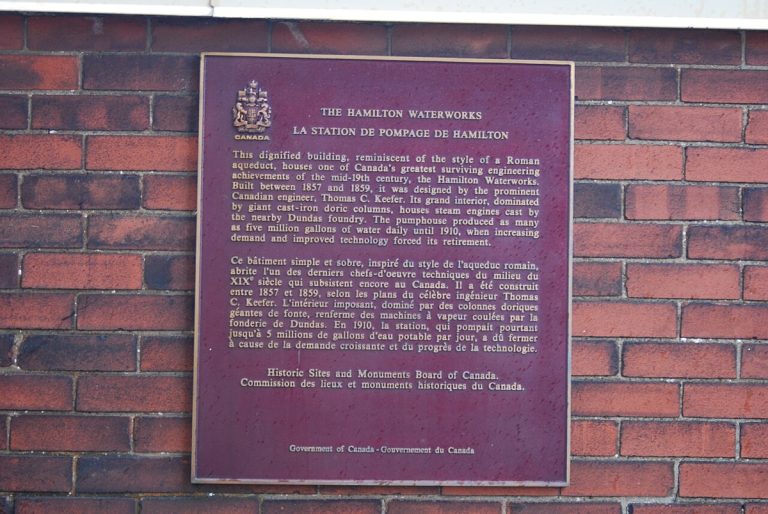
A commemorative plaque for the Hamilton Waterworks in Hamilton, Ontario, photographed in 2011.
CA-K372Economy & trade

The Hamilton Waterworks, a Victorian engineering feat

The Hamilton Waterworks in Ontario, built in 1857–1859 to a design by engineer Thomas C. Keefer, is one of Canada’s greatest surviving engineering achievements of the mid-19th century. Its steam-powered pumphouse supplied as much as five million gallons of water a day until 1910, and the complex survives largely intact.

Factual accuracy review: No recorded challenge

Contributor: Citizen.ca

Verified against cited sourcesVerified on 2026-10-26↗
Photo: John A. Speakman · Photo licence: CC BY-SA 3.0 · Credit & context
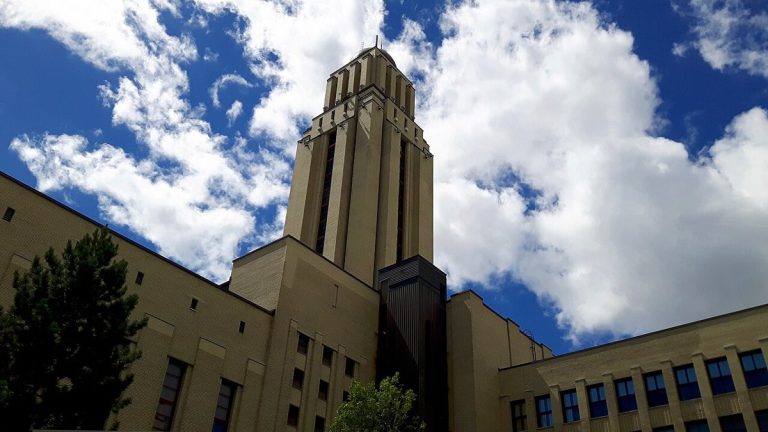
The Roger Gaudry Building and its tower at the Université de Montréal, photographed in 2017.
CA-K371Institutions

The Roger Gaudry Building, Université de Montréal

The Roger Gaudry Building at the Université de Montréal, built between 1928 and 1943 to designs by Ernest Cormier, is a Montréal landmark with an 82-metre central tower. Planned to include laboratories and a teaching hospital, it reflects French Canada’s new appreciation of science and research between the wars and the rise of a Francophone academic and scientific elite.

Factual accuracy review: No recorded challenge

Contributor: Citizen.ca

Verified against cited sourcesVerified on 2026-10-26↗
Photo: Funke · Photo licence: CC BY-SA 4.0 · Credit & context
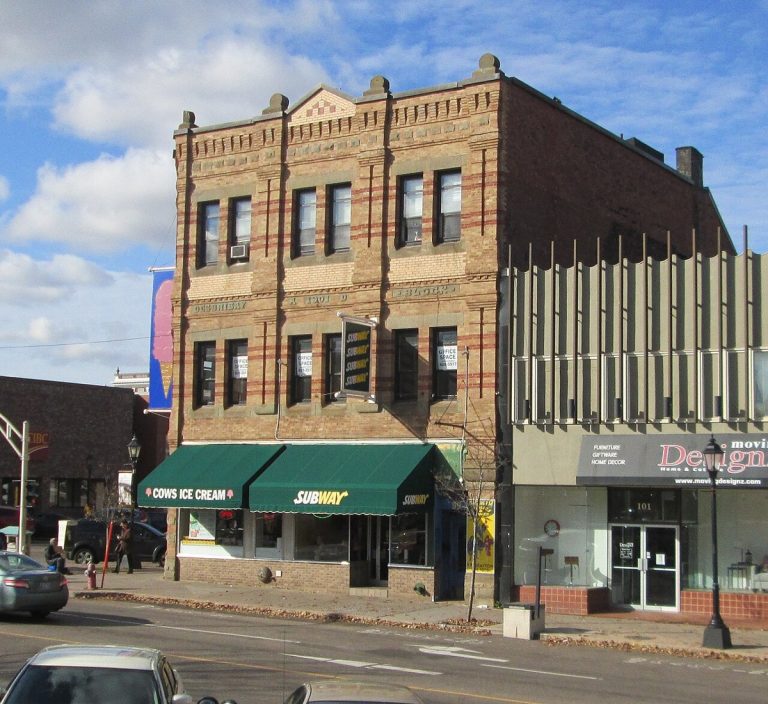
Apothecaries Hall on Queen Street, Charlottetown, Prince Edward Island, photographed in 2013.
CA-K368Economy & trade

Apothecaries Hall, a Charlottetown pharmacy from 1810

Apothecaries Hall in Charlottetown was the site of an apothecary shop opened by Thomas DesBrisay Jr. in December 1810 to supply medicines to Prince Edward Islanders. The present brick building replaced the wooden one in 1901, and when the drug store closed in 1986 it was one of the longest continuously operated pharmacies in Canada.

Factual accuracy review: No recorded challenge

Contributor: Citizen.ca

Verified against cited sourcesVerified on 2026-10-26↗
Photo: Larry · Photo licence: CC BY 2.0 · Credit & context