An independent Canadian knowledge project

Focused and Verified

Canadian knowledge base

Search by keyword

Choose one keyword, or combine two. Broader keywords include their descendants.

Keywords: 1900–1999

Clear search
The west entrance of the Festival Theatre in Stratford, Ontario, in 2025.
CA-K132Culture & sport

The Stratford Festival began in 1953

In 1953, Tom Patterson launched an annual festival of Shakespearean theatre in his hometown of Stratford, Ontario. First artistic director Tyrone Guthrie and designer Tanya Moiseiwitsch created the Festival Theatre’s thrust stage, surrounded by the audience on three sides.

Factual accuracy review: No recorded challenge

Contributor: Citizen.ca

Verified against cited sourcesVerified on 2026-10-26↗
Photo: Chris Woodrich · Photo licence: CC BY-SA 4.0 · Credit & context


The renewed entrance and façade of the National Arts Centre, Ottawa, photographed in 2019.
CA-K129Culture & sport

The National Arts Centre opened in 1969

Canada’s National Arts Centre in Ottawa opened on 2 June 1969, two years after the centennial that inspired it. Built to produce and present music, opera, theatre and dance, it was designed to be bilingual, reflecting Canada’s linguistic duality.

Factual accuracy review: No recorded challenge

Contributor: Citizen.ca

Verified against cited sourcesVerified on 2026-10-26↗
Photo: Thelongdarkteatimeofthesoul · Photo licence: CC BY-SA 4.0 · Credit & context
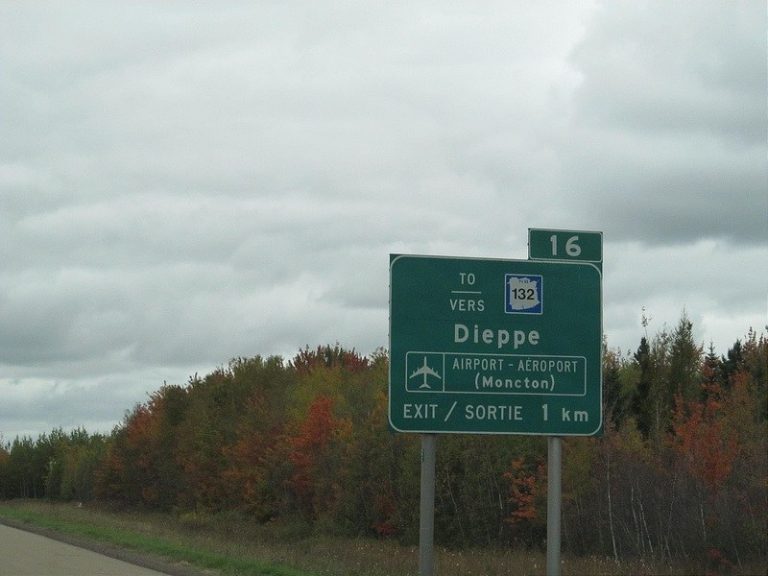
A bilingual road sign in New Brunswick pointing to Dieppe and the airport, photographed in 2012.
CA-K127Language & names

New Brunswick, Canada’s only officially bilingual province

New Brunswick’s first Official Languages Act, enacted on 18 April 1969, made it Canada’s first and only officially bilingual province. The Act made English and French the province’s two official languages and recognized the right to receive provincial government services in either.

Factual accuracy review: No recorded challenge

Contributor: Citizen.ca

Verified against cited sourcesVerified on 2026-10-26↗
Photo: Doug Kerr · Photo licence: CC BY-SA 2.0 · Credit & context
The entrance to the underground Robert-Bourassa generating station, part of the James Bay hydroelectric development, in 2000.
CA-K122Indigenous peoples & reconciliation

The James Bay and Northern Quebec Agreement, 1975

The James Bay and Northern Quebec Agreement was signed on 11 November 1975 by the Cree Nation of Eeyou Istchee, the Inuit of Nunavik, Canada, Quebec and Hydro-Québec, after Cree and Inuit court challenges to the James Bay hydroelectric project. The Cree Nation Government describes it as the first modern Indigenous land claim agreement and treaty in Canada.

Factual accuracy review: No recorded challenge

Contributor: Citizen.ca

Verified against cited sourcesVerified on 2026-10-26↗
Photo: Peter Van den Bossche · Photo licence: CC BY-SA 2.0 · Credit & context
Natan Obed, president of Inuit Tapiriit Kanatami, in 2016.
CA-K121Indigenous peoples & reconciliation

Inuit Tapiriit Kanatami was founded in 1971

Inuit Tapiriit Kanatami, the national Inuit organization formerly called the Inuit Tapirisat of Canada, was founded in February 1971 by seven Inuit community leaders. It grew out of shared concern about land and resource ownership in Inuit Nunangat.

Factual accuracy review: No recorded challenge

Contributor: Citizen.ca

Verified against cited sourcesVerified on 2026-10-26↗
Photo: U.S. Department of the Interior · Photo licence: CC BY-SA 2.0 · Credit & context
A wooded coastal view at SG̱ang Gwaay Llnagaay, photographed in 2016; the photograph does not show the village’s poles.
CA-K118Indigenous peoples & reconciliation

SG̱ang Gwaay: a Haida village and its poles

SG̱ang Gwaay Llnagaay (Nan Sdins), on an island at the southern tip of Haida Gwaii, British Columbia, bears unique testimony to Haida culture. The 19th-century village keeps the remains of 10 houses and 32 memorial or mortuary poles, and was inscribed as a UNESCO World Heritage Site in 1981.

Factual accuracy review: No recorded challenge

Contributor: Citizen.ca

Verified against cited sourcesVerified on 2026-10-26↗
Photo: Yvrsigmatech · Photo licence: Public domain · Credit & context
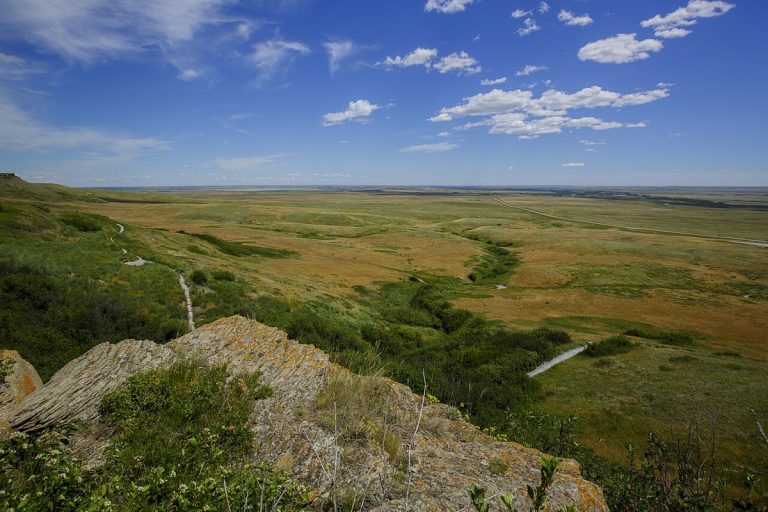
Head-Smashed-In Buffalo Jump World Heritage Site, Alberta, photographed in 2017.
CA-K117Indigenous peoples & reconciliation

Head-Smashed-In Buffalo Jump

Head-Smashed-In Buffalo Jump (estipah-skikikini-kots in Blackfoot), in southwestern Alberta, is the biggest, oldest and best-preserved buffalo jump in North America. Plains peoples drove bison over its cliffs for perhaps 5,700 years, until the mid-19th century; it became a UNESCO World Heritage Site in 1981.

Factual accuracy review: No recorded challenge

Contributor: Citizen.ca

Verified against cited sourcesVerified on 2026-10-26↗
Photo: Thomas Fuhrmann · Photo licence: CC BY-SA 4.0 · Credit & context
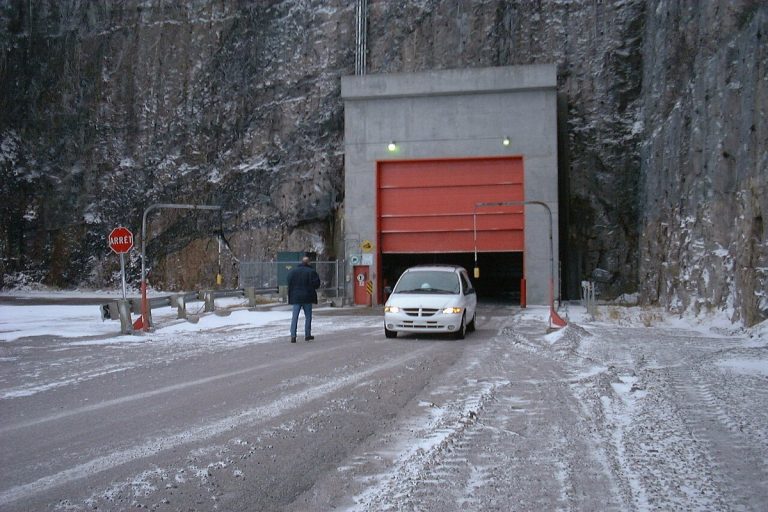
An Elections Canada polling station sign in Toronto during the 2025 federal election.
CA-K108Institutions

Elections Canada, an independent agency of Parliament

Elections Canada is an independent, non-partisan agency of Parliament, headed by the Chief Electoral Officer. The position of Chief Electoral Officer was created in 1920 by the Dominion Elections Act, largely to end political partisanship in the administration of federal elections.

Factual accuracy review: No recorded challenge

Contributor: Citizen.ca

Verified against cited sourcesVerified on 2026-10-26↗
Photo: Can Pac Swire · Photo licence: CC BY-SA 2.0 · Credit & context
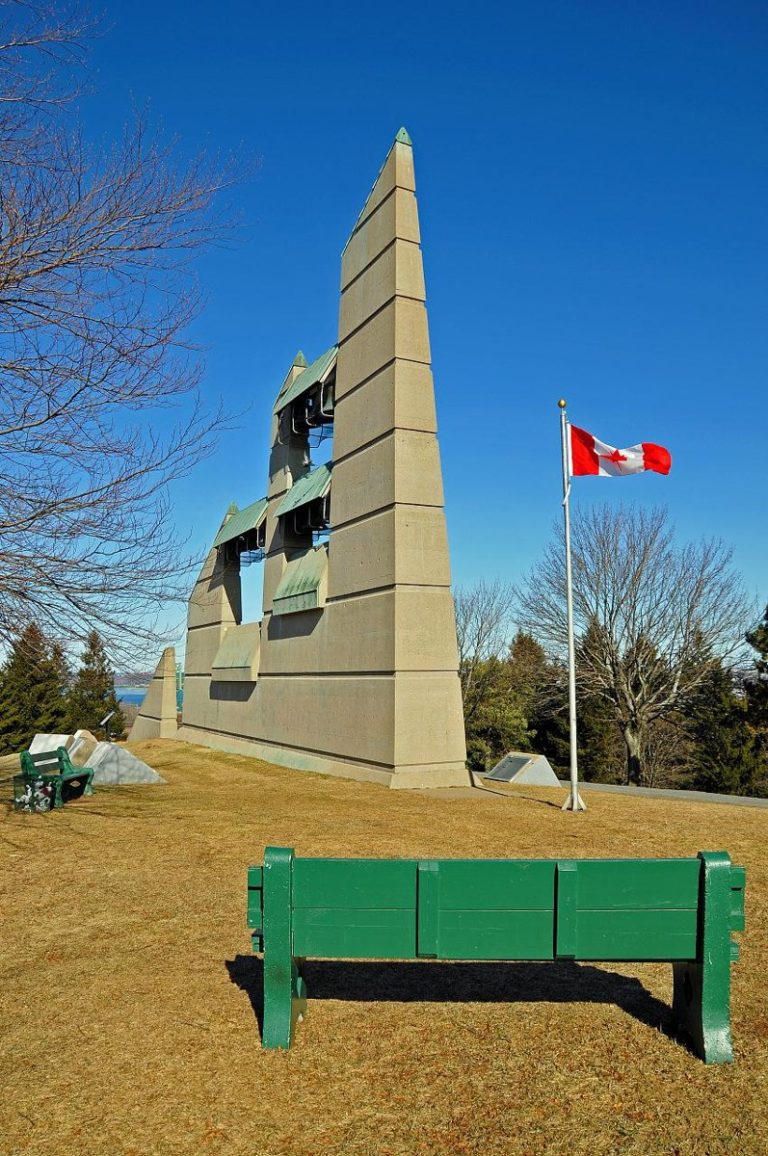
The Halifax Explosion Memorial Bell Tower at Fort Needham, photographed in 2008.
CA-K100History

The Halifax Explosion: 6 December 1917

On 6 December 1917, SS Mont-Blanc, which was carrying explosives, collided with SS Imo in Halifax Harbour. The resulting explosion, tidal wave and fires killed some 2,000 people. Parks Canada describes it as the largest human-made explosion before the atomic bomb.

Factual accuracy review: No recorded challenge

Contributor: Citizen.ca

Verified against cited sourcesVerified on 2026-10-26↗
Photo: Dennis G. Jarvis · Photo licence: CC BY-SA 2.0 · Credit & context
A polar bear near Churchill, Manitoba, in 2014; the animal on the coin’s reverse, not a photograph of the coin.
CA-K099Economy & trade

The two-dollar note became the toonie in 1996

In 1996, Canada’s two-dollar paper note was replaced by a coin as a cost-saving measure: a two-dollar note lasted about a year, while coins can last more than 10 years. The coin, known as the toonie, has carried a polar bear by nature artist Brent Townsend since 1996.

Factual accuracy review: No recorded challenge

Contributor: Citizen.ca

Verified against cited sourcesVerified on 2026-10-26↗
Photo: TravelingOtter from Houston, Texas, USA · Photo licence: CC BY 2.0 · Credit & context
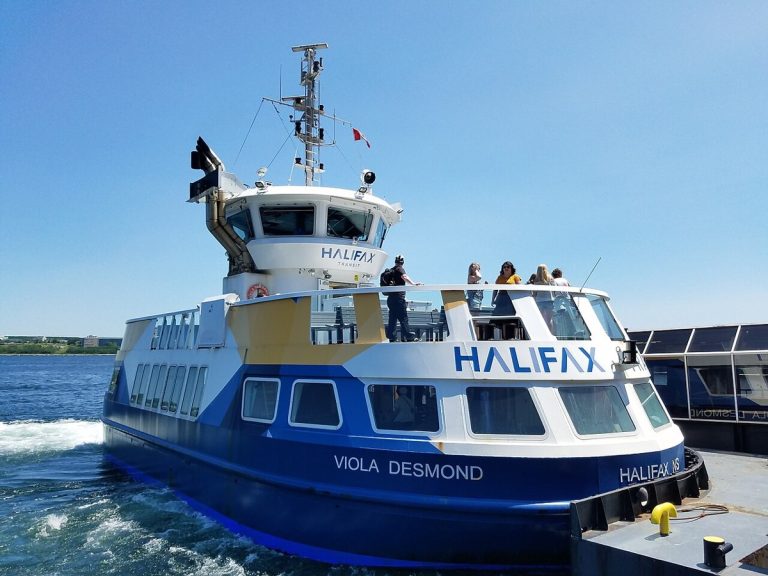
The Halifax harbour ferry named Viola Desmond, photographed in 2019; it does not show Desmond or the bank note.
CA-K098History

Viola Desmond and the vertical $10 note

In 1946, Viola Desmond, a successful Nova Scotia businesswoman, refused to leave a whites-only area of a movie theatre; her court case inspired the pursuit of racial equality across Canada. In 2018 she appeared on Canada’s first vertical bank note, the $10 note.

Factual accuracy review: No recorded challenge

Contributor: Citizen.ca

Verified against cited sourcesVerified on 2026-10-26↗
Photo: Colin Stepney · Photo licence: CC BY-SA 4.0 · Credit & context

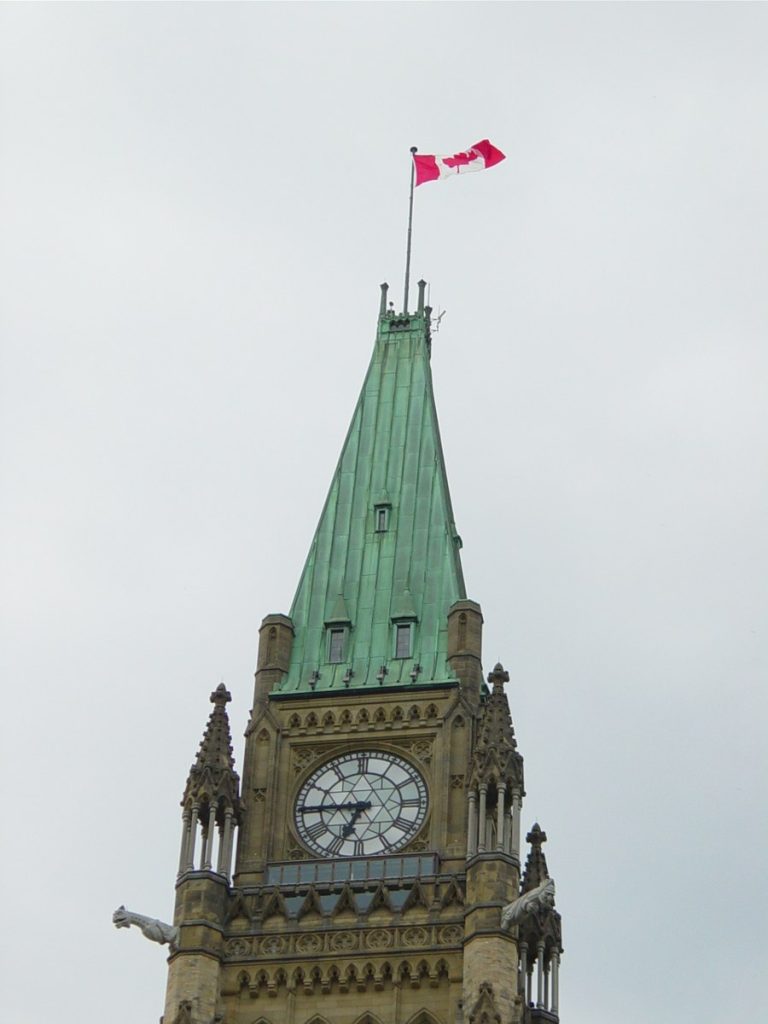
The national flag flying above the Peace Tower, Ottawa, in 2003.
CA-K096Symbols

Red and white: national colours by common use

It was long believed that King George V’s 1921 proclamation of Canada’s coat of arms designated red and white as the national colours, but the proclamation contains no such declaration. Canadian Heritage notes that red and white are not set in law as national colours but have become part of national identity through common use.

Factual accuracy review: No recorded challenge

Contributor: Citizen.ca

Verified against cited sourcesVerified on 2026-10-26↗
Photo: Sikander Iqbal · Photo licence: CC BY-SA 4.0 · Credit & context
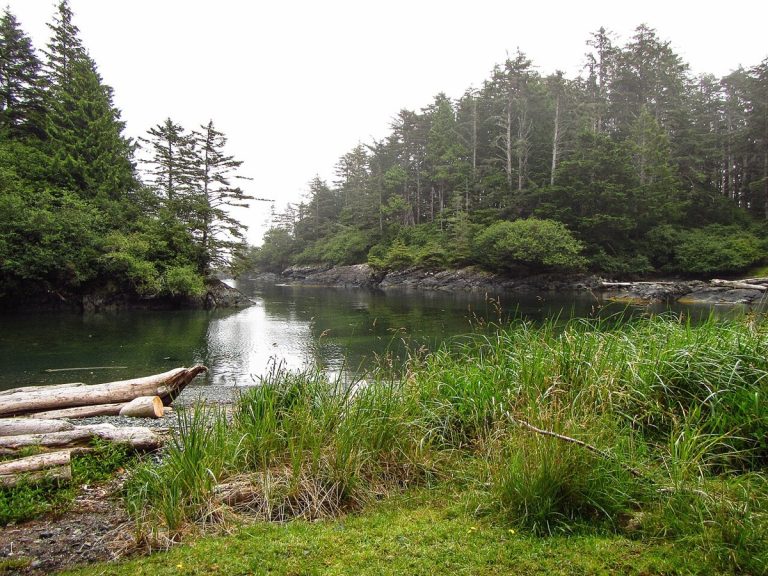
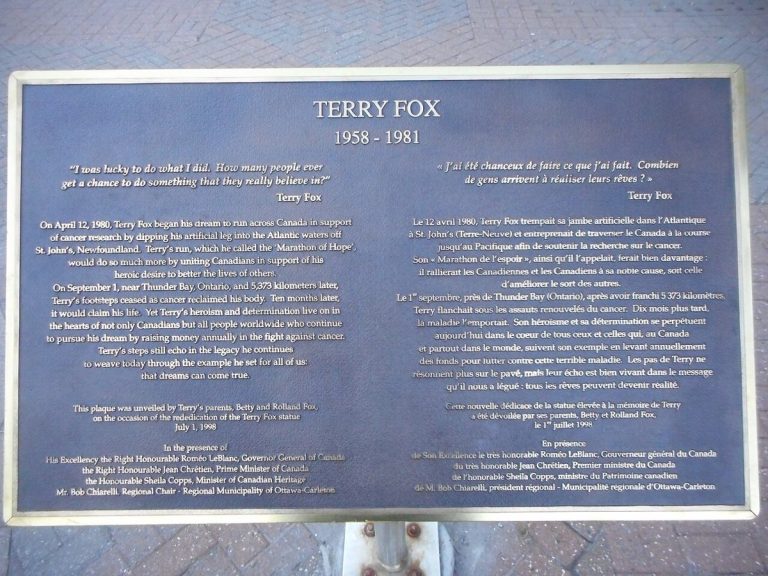
A commemorative plaque at the Terry Fox monument on Wellington Street, Ottawa, photographed in 2016.
CA-K088Culture & sport

Terry Fox’s Marathon of Hope, 1980

Terry Fox began his Marathon of Hope, a cross-Canada run to raise money for cancer research, by dipping his artificial leg in the Atlantic Ocean on 12 April 1980. After 143 days and 5,373 kilometres, he was forced to stop outside Thunder Bay, Ontario, on 1 September 1980 because cancer had appeared in his lungs.

Factual accuracy review: No recorded challenge

Contributor: Citizen.ca

Verified against cited sourcesVerified on 2026-10-26↗
Photo: Jeangagnon · Photo licence: CC BY-SA 4.0 · Credit & context